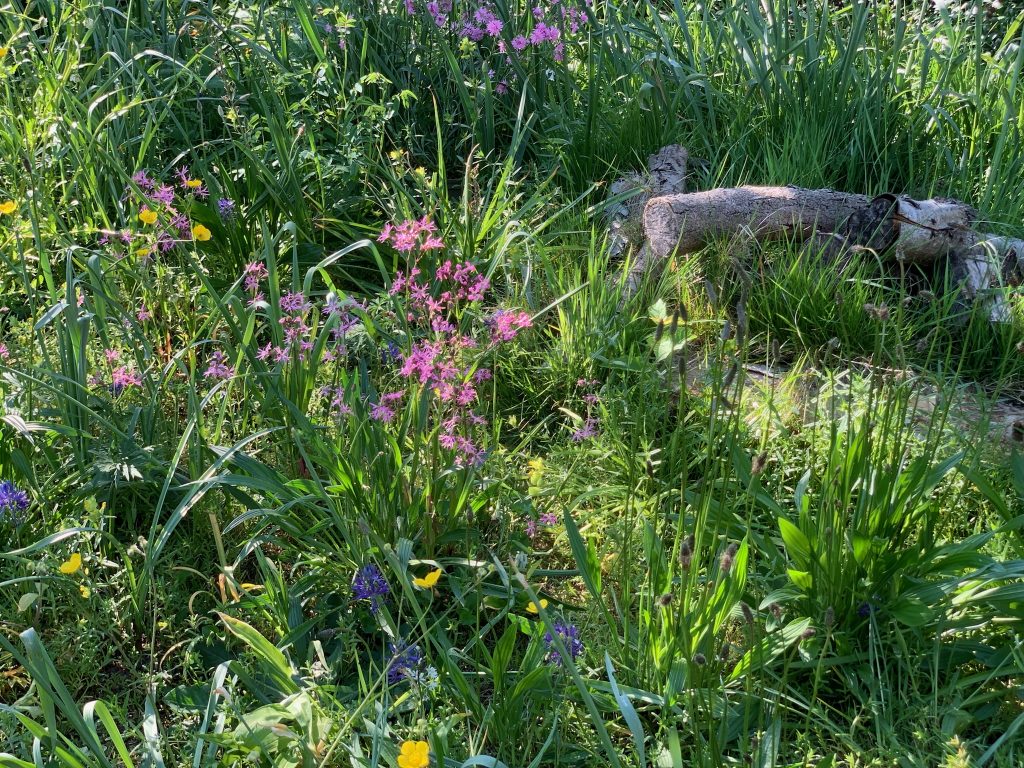
The first job is something you can tick off straight away! No Mow May. This initiative from Plantlife encourages us to not mow our lawns in May – either the entire thing, or a section of it. It’s something we think is a brilliant idea and have written about it in more detail here: No Mow May – Why you should take part. It could lead to something as beautiful as the below meadow, which started with simply not mowing a section of lawn.
Many of your spring bulbs will be coming to an end now, if not already. To give them the best change of blooming again beautifully next year, you should deadhead them. Cut off the flowering stem so that the plant doesn’t waste any energy producing seeds. Instead, its energy can be put back into the bulb.
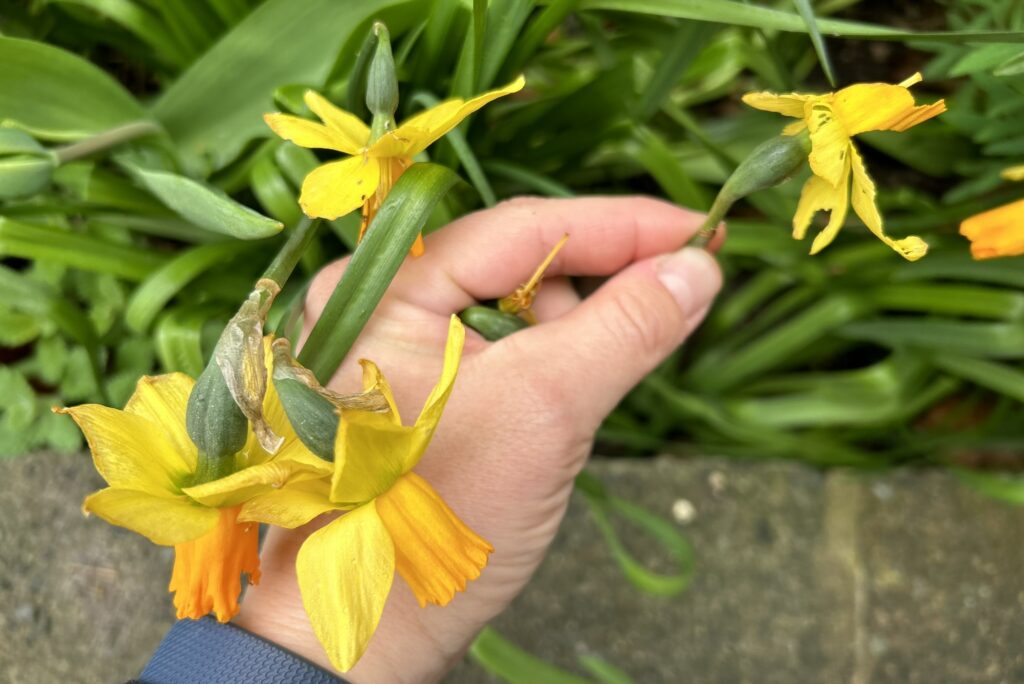
Don’t cut off or tie up the leaves, they need to be left to photosynthesise effectively to feed the bulb for next year. Once they have yellowed, you can tuck them under other plants and only when they have completely died back should you remove them. They will come away from the bulb without force and you’ll be left with a bulb ready to flower again next spring.
Bulbs can be left in the ground, but if they are in pots and you wish to move them to make way for new plants, take them out while their leaves are still fresh. Be careful not to damage the leaves or the bulb. Replant them in the earth and give them a good water and maybe even a feed. They should be planted at the same depth as they were in the pot.
If you have any crowded clumps of bulbs, you can lift and divide them now too. Use a garden fork to lift the clump from the ground, separate the clump into two (or more) sections and replant them where you’d like them to flower next year. Again, water them in well.
If you haven’t already pruned your hydrangeas, we suggest doing this early this month as they should be putting on some good new growth by now. Different hydrangeas need different treatment, and we detail what to do for each type here.
We have been seeing a lot of aphids around now, especially on roses. If you are too, please don’t be tempted to reach for the chemicals. Instead, you can pick off the aphids and squash them if they are causing damage to your plants. Hopefully birds and ladybirds will be attracted to your gardens to help manage the aphid numbers, along with hoverfly and lacewings (the larvae of which each aphids too). If the populations are large, you can spray them with a relatively strong hose. This will knock them off the plant, reducing the numbers you need to deal with by hand. If you do this, try to do it early in the morning so that the plant leaves aren’t left too damp overnight.
Once they have finished flowering, spring flowering shrubs such as choysia, ribes, japanese quince, forsythia, spiraea and philadelphus can be pruned. The flowering stems should be cut back to a new shoot, and the general size of the plant can be reduced if desired. Any rubbing stems should be dealt with, removing the one offering least to the plant, and you should check for any dead, damaged or diseased stems which should also then be removed.
With large, established plants, there may be some congestion and overcrowding in the shrub. To reduce this, remove a few of the oldest stems at ground level. This will promote new growth too.
Be careful that you don’t disturb any nesting birds. If you think there could be a nest in your shrub, leave it well alone. Pruning of hedgerows should be avoided until after nesting season.
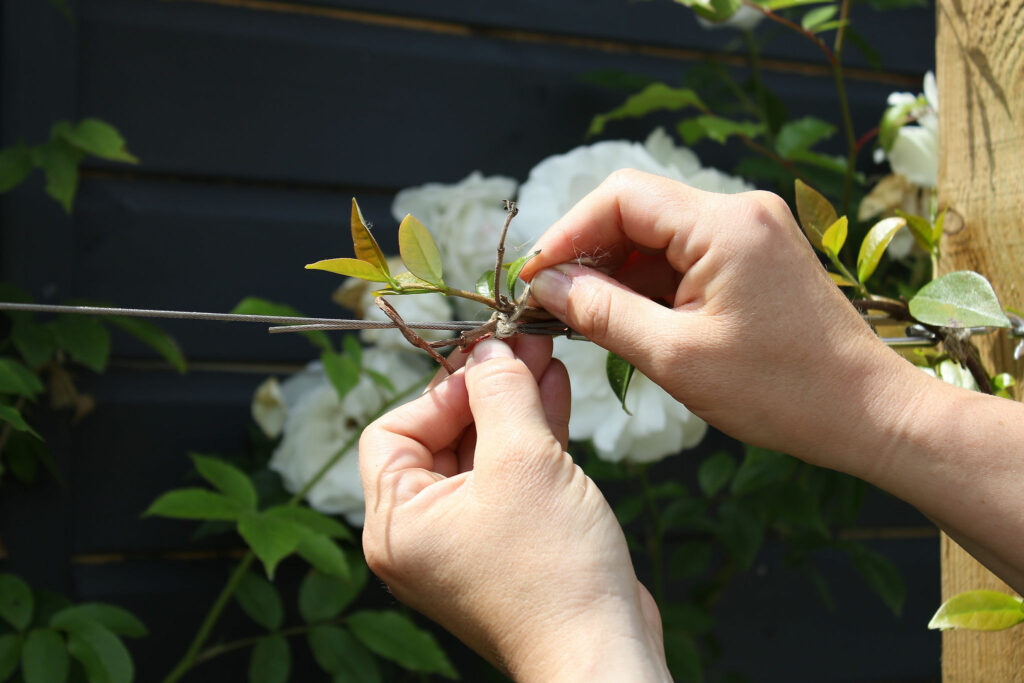
Clematis, jasmines, honeysuckle and climbing roses will all likely be growing well now and should all be tied in as new growth emerges. This supports the plant as well as allowing you to direct the growth. Use garden twine to gently tie the stems to their structure. If you are aiming to cover a flat wall, it is a good idea to fan the stems out to get an even spread across the wall. If you are covering a pergola or arch structure, we like to spiral the climbers around the uprights to get coverage all around the structure. Be patient and don’t pull on the stems, just gently tie them in so that they won’t move around too much in the wind and have enough support to grow in the intended direction.
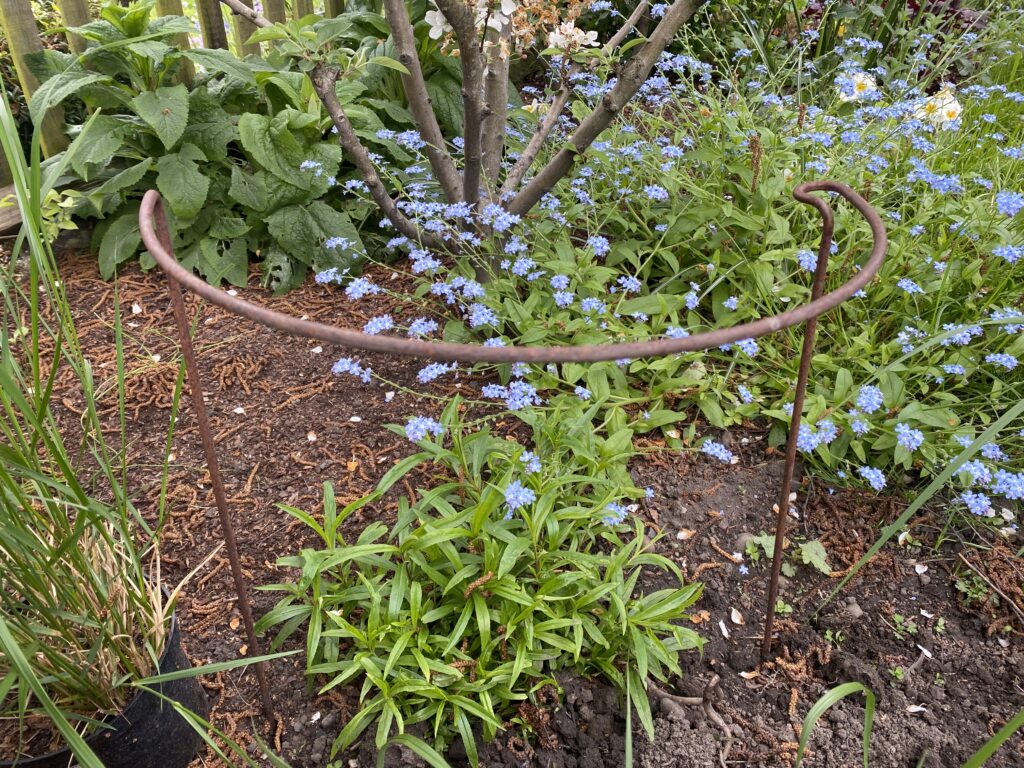
Many plants require some support when growing in herbaceous borders. Plants such as gaura, delphinium and penstemon will often benefit from a support. Before growth gets too large, it’s a good idea to get your supports in place. These could be half-moon hoops, metal grids or a homemade circle of bamboo or willow canes connected with twine. It’s far easier to place them now than when trying to get them under lots of foliage. In the image above, you can see a half moon hoop positioned ready for the penstemon to grow up through. The plant will lean forwards in to the hoop as it needs support due to the weight of the flowering stems. An additional hoop could be added at the back if needed, however in this instance we know the plant leans this way due to the aspect of its site.
Come mid to late May you can plant dahlias out into the ground. We suggest choosing pollinator-friendly varieties with open flowers. Dahlias are great additions if you like colour as they will flower from late summer until the first frosts. They are also great as cut flowers and bloom profusely so you will have a steady supply of colour as long as you keep cutting them and/or deadheading them. Some dahlias require staking so check this when you plant them and get the stakes in place before they are needed. It’s far easier that way around than trying to get a stake in once there’s lots of foliage to move out of the way.
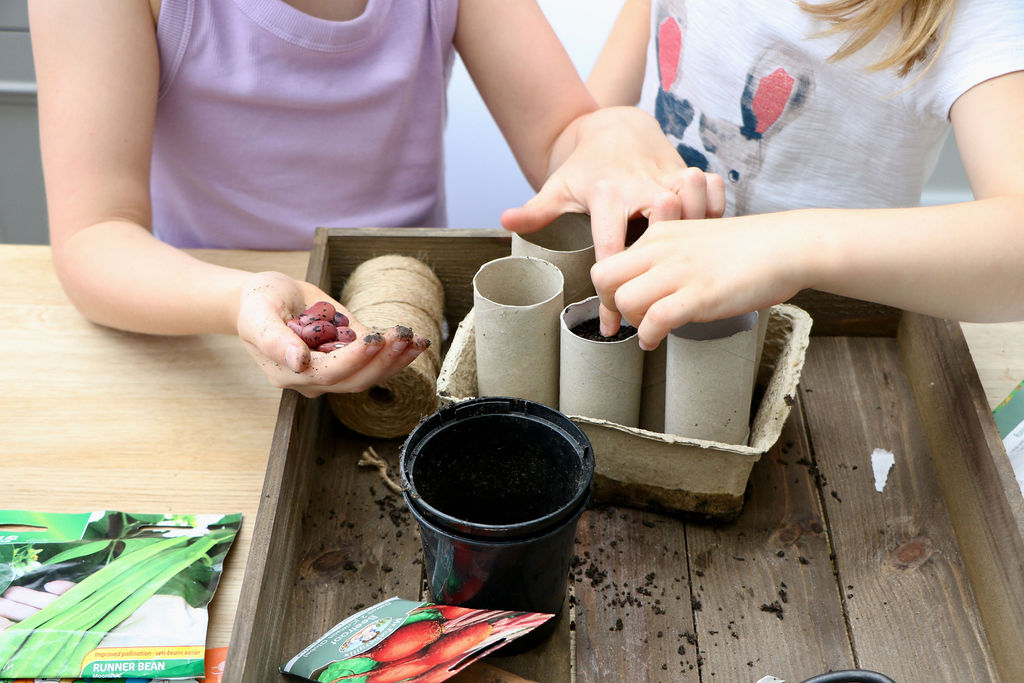
If you have any gaps in your borders that you’d like to fill for the summer months, you can do this cheaply with annuals such as cosmos or calendula. All you need is the pack of seeds, and they can be sown directly where they are to flower and will provide beautiful flowers this year.
Carrots, beetroot, radishes, cauliflower and purple sprouting broccoli can also be sown now and will crop this year, as will “cut and come again” lettuce. It’s lovely to pick fresh lettuce leaves from the garden as you need them. And they’re nice to look at too so work well in a little window box or at the base of a plant in a larger pot.
Lastly, there will likely be weeding to do. We always caveat this job with the reminder that weeds are just wildflowers, and most aren’t bad or damaging to have around. Weeds become a problem when they are outcompeting your intended plants for space and nutrients, or physically damaging them. For this reason, we always recommend removing bind weed which can quickly wrap around other plants and harm their growth, and we recommend removing weeds that are growing too close to, or in, other plants. Of course, if the look of weeds is spoiling your enjoyment of your borders or pots, they can be removed, but at the back of borders you might consider leaving some to flower as they are excellent for pollinators. You could even consider allowing an area of your garden to go wild if space allows.


Gardens by Anna Butterfield offer professional garden and planting design across London and the South East.
Our expert, organic garden care service is available across South East London as well as parts of Kent and Surrey.