One of the great pleasures of having a garden is watching wildlife use it; be that butterflies, bees or birds. But all too often, new clients of ours say they aren’t getting much wildlife in their garden. Usually, the reason for this is that there isn’t enough there to attract these welcome visitors. The good news is that it’s really rather easy to change this – you just need to provide food or shelter, or both! There are lots of ways that you can do this – some big and some small. Here are six ideas to help get your started.
As well as providing beauty, shade and privacy to a garden, trees are brilliant for wildlife, and some more so than others.
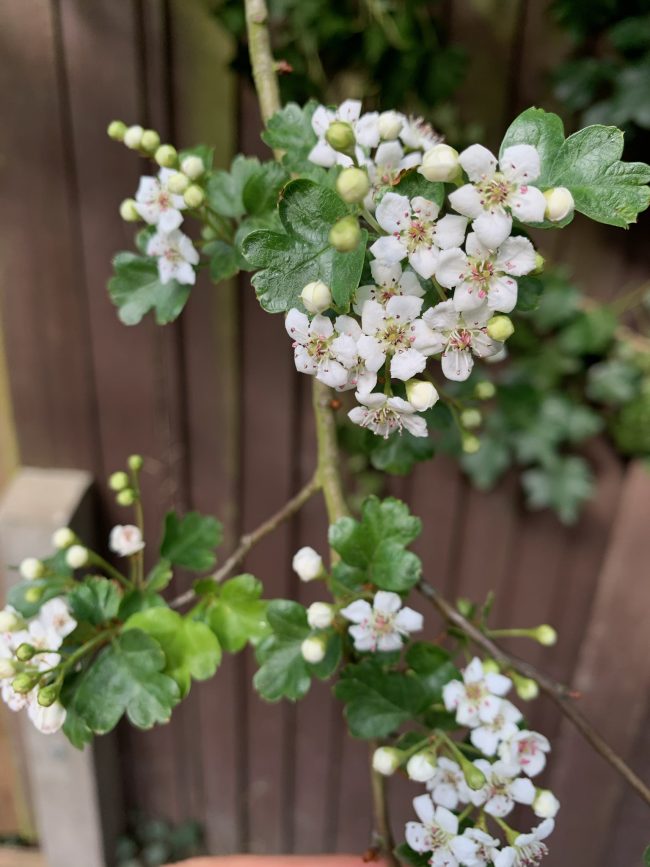
Firstly, you can choose a tree that produces blossom and fruits. These will feed pollinators with the nectar and pollen from the flowers, and birds with the fruits. For example, a native hawthorn (there are two to choose from) is the food source for many caterpillars, produces nectar and pollen that feeds many pollinators including bees, and then the fruits produced are eaten by birds. The birds will visit the tree to eat the caterpillars and other insects that are in it. It’s a beautiful choice, as you can see in this photo of its blossom.
Birds also make use of the shelter and cover trees provide. They are elevated positions from which birds can safely observe the garden looking for water, food and for predators. Birds can retreat to the tree if a predator comes by, they need a rest or to shelter from bad weather.
Our tree of choice for all round value to wildlife is a native hawthorn, but there are lots of other trees which are of great benefit too. You can read more about other trees (and shrubs) for wildlife here.
Adding shrubs or hedging has a similar effect to trees. They provide food, shelter and habitats to pollinators, insects and birds.
If you are able, you can use hedging instead of fencing to enable wildlife to easily travel through it, including crawling under it, which is of great benefit if you are trying to encourage hedgehogs into your garden.
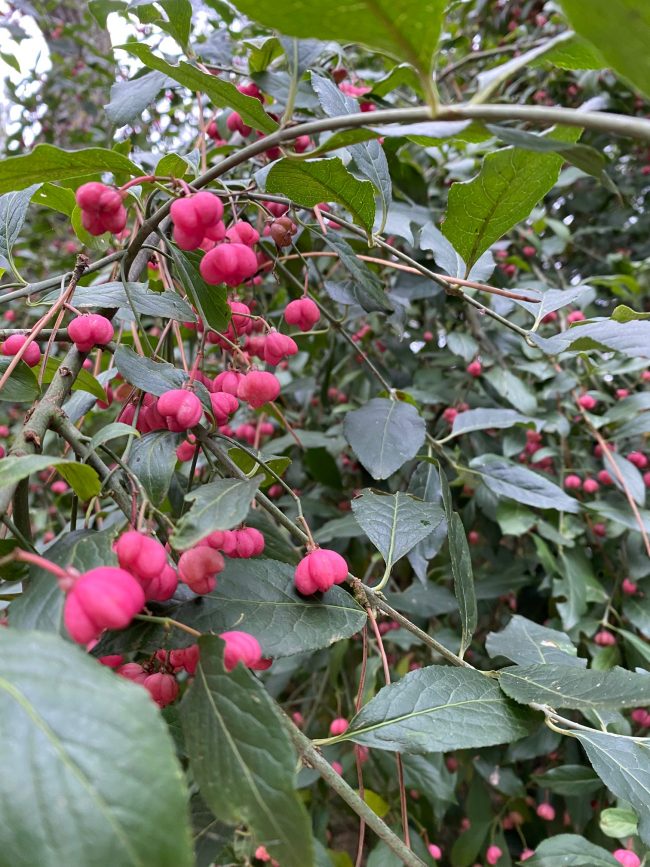
A mixed hedge will provide for a wider range of insects and pollinators as well as helping create a relaxed, natural feel in the garden. We love including hawthorn, blackthorn and euonymous europea (pictured here with its incredible autumn fruit) but there are lots of options to choose from.
If you prefer a more formal looking hedge with just one type of plant in it, you could opt for something that flowers and fruits so will provide food as well as shelter, but even if your choice doesn’t do that, a hedge will still provide shelter for insects and birds.
This is probably the easiest thing you can do to make a relatively easy and instant impact to your garden’s appearance alongside encouraging more wildlife. So many flowering plants are beneficial to insects. Encouraging more insects will in turn encourage more birds who will eat the insects helping to create a balanced and healthy ecosystem.
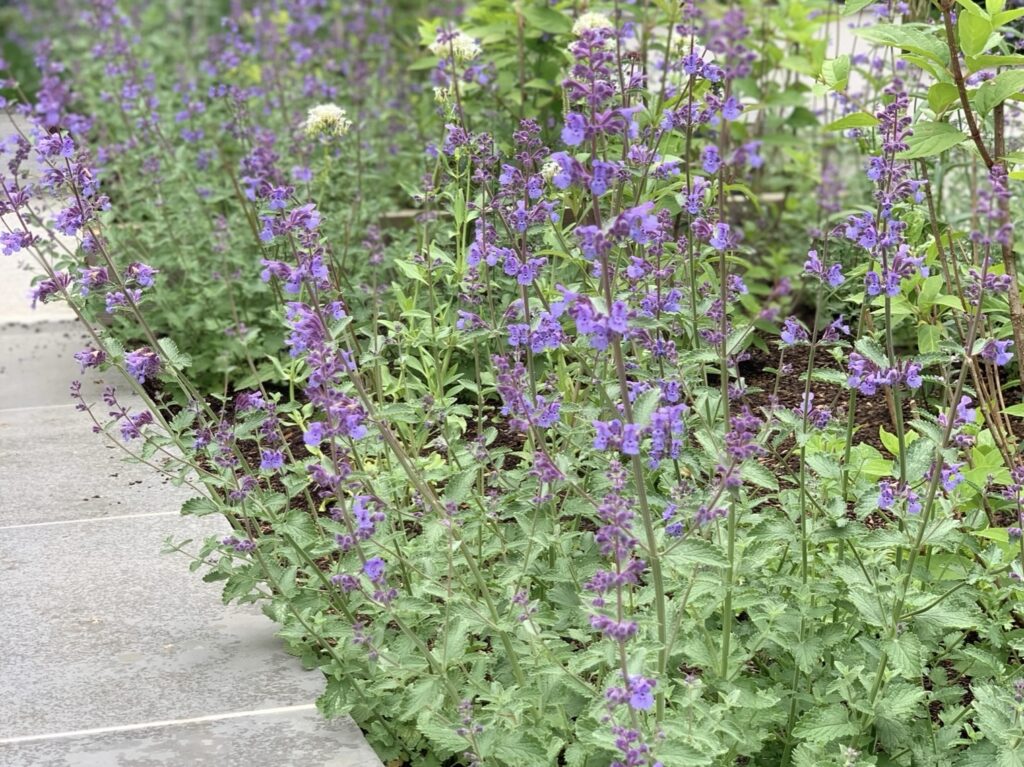
With flowers comes beauty and colour. Our very top choice would be Nepeta but really any nectar-rich plants are ideal. You can read in more detail about our favourite small plants for pollinators here.
When planning your planting, it’s worth considering successional flowering. Not only will this mean you can enjoy the beauty of your garden is in flower for a longer period of time, but food will be provided for longer too. This will keep the pollinators in your garden and with them birds.
Choosing plants that produce seed heads too will provide winter interest as well as food for bird in the Autumn and Winter. Verbena bonariensis produces seeds which are enjoyed by finches, and when in flower it is beloved by butterflies especially. Plants with hollow stems will provide good hibernating habitats for insects over winter too, buddleia for example are good for this. This brings us on to point 4 below…
It’s really important that insects not only have food provided, but places to live too. This will mean they aren’t just passing through, which will mean birds regularly visit your garden too. Insects don’t ask for much! Leaf piles, stick piles and old wood provide lots of nooks and crannies to live in. Half burring a log so that it starts to rot down will create a perfect habitat for stag beetle larvae that live underground feeding off of rotting wood for 3-7 years!
Creating a bug hotel is a great idea, and not only makes for a designated place within the garden for leaves to be stacked up, but is a great way to get children interested in insects and gardening too. You can make a bug hotel in lots of different ways but be sure to provide lots of different sized areas for different insects to make their homes in. You can create different layers or compartments and use fallen leaves or stacks of bark or twigs near the bottom to create spaces that can be crawled into for hibernation.
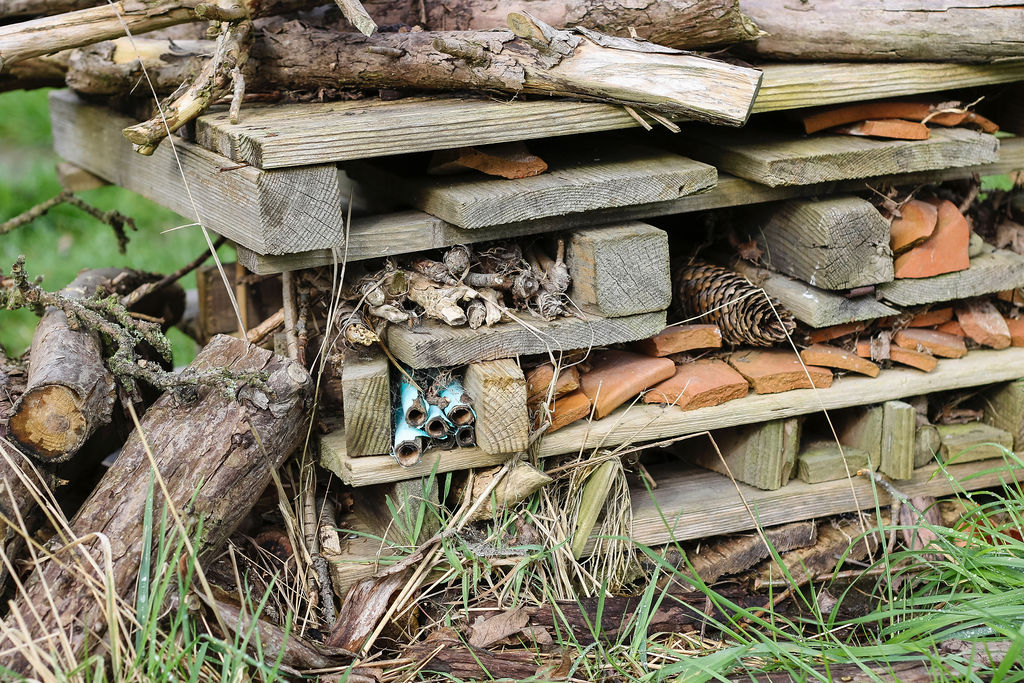
You can also buy kits from which to make bug hotels, or you can make them from scratch using materials you have available – for example, logs, offcuts of wood, stacks of roof tiles, layers of broken plant pots, twigs and sticks that have fallen from trees and bamboo canes all make for great habitats for wildlife.
You can also build specific bee houses. These are for solitary bees who nest in hollows as well as some who lay their eggs in tubes and seal them with leaves. Again, you can buy kits for these with lots of different sized holes to provide habitats for different species, or make your own. It’s important that the insides of the tubes are smooth so as not to damage the bee or the larvae.
These sorts of projects are wonderful ways to get children involved in the garden and perhaps a fun Easter holiday activity? Read more about creating habitats for beetles here.
As well as adding trees, shrubs and/or hedging you can help birds to build their nests by leaving twigs, long grass, leaves and even pet hair in the garden from which they can build their nests.
You can also install bird boxes. Different birds like different styles of boxes so if you have certain birds in your garden that you want to provide for, or certain ones you’d like to encourage, have a check of what sort of box they prefer. For example, robins like open fronted boxes, while a blue tit prefers a box with a small hole.
The site of the box needs to be safe, with natural cover and a clear flight path to the entrance. It should be north east facing so that it won’t overheat inside and tilted slightly forward to that rainwater runs clear of the entrance. It needs to be in a spot that predators such as domestic cats can’t easily reach.
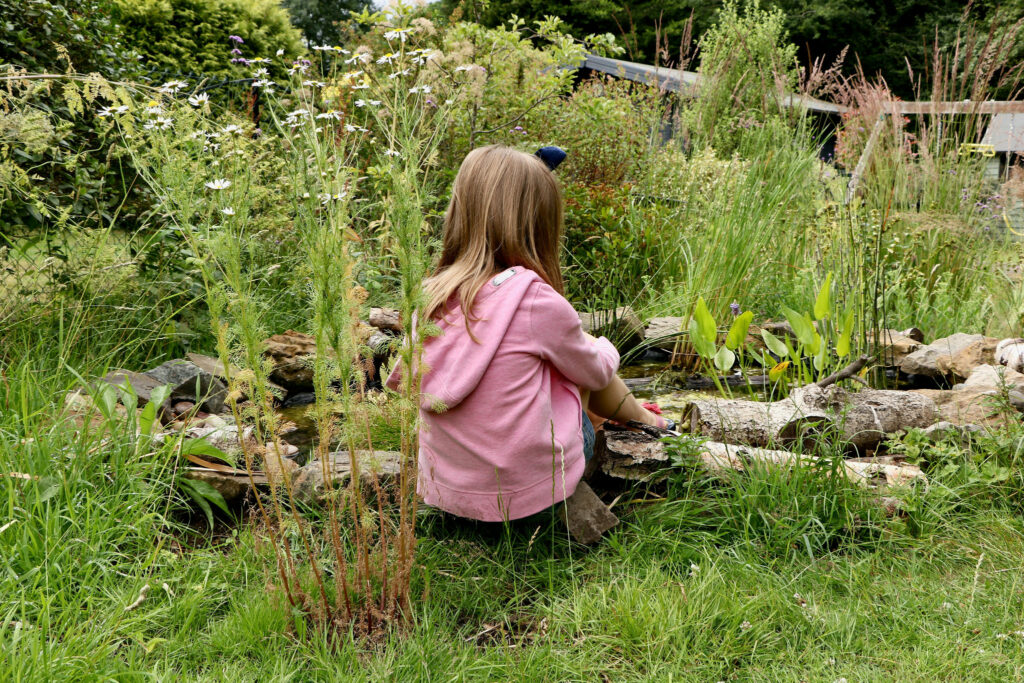
It is said that the single best way to encourage wildlife to your garden is to add water. This acts as a place for wildlife to drink, eggs to be laid, food to be caught. It will encourage frogs who are hugely beneficial for keeping slug populations under control. Again, this can be a great project to help inspire children to get out into the garden more and engage with wildlife too. You can add a bird bath, a shallow dish of water filled with pebbles or go full on with a wildlife pond dug into the ground. Read in more detail about why you should add a wildlife pond to your garden here.
We hope you have found some inspiration here for how to encourage more wildlife into your garden. Lastly, it would be remiss not to say one of the most important things for wildlife – and that is to never, ever use chemical pesticides. They are harmful to not only the intended target, but to water systems, other plants and creatures, the soil, pollinators and to humans. There is no need to use them in our gardens. Establishing a balanced ecosystem in your garden will do much more for keeping pests and weeds at bay, as will careful, organic garden care.
You can read more of our wildlife tips here – and do drop us an email if you have any questions or would like some help making your garden as wildlife friendly as possible!


Gardens by Anna Butterfield offer professional garden and planting design across London and the South East.
Our expert, organic garden care service is available across South East London as well as parts of Kent and Surrey.