Despite the cooler temperatures and rain we have had, it’s still essential to check your pots and newly planted gardens for drought. Pots will more than likely need water as the canopy of the plants often stops the rain getting into the soil, even during really rainy periods. Unless we are lucky enough to get long and gentle rain every few days, newly planted gardens will also need watering – especially larger specimen trees and shrubs – so do check on them regularly. Once your watering is done, here are a few more jobs to enjoy this month.
Later in the month, when the temperatures are cooler, you can start planting your bulbs (hold off on tulips though). If you haven’t ordered them already, we recommend you do so now! Many varieties sell out so it’s worth looking soon to avoid disappointment. We recommend Peter Nyssen as they sell bulbs that haven’t been treated with neonicotinoids and package them in compostable bags as well as having an excellent selection. If you are looking for inspiration on what to plant, we have written more about bulb choices here.
It’s worth taking a little time to think about where to add bulbs in your garden. They are often the first pops of colour and provide early nectar for pollinators. You can choose bulbs that will flower from as early as February which is always a welcome sight in the garden. If you choose a careful mix of bulbs, you will be able to have something flowering from February through to at least June.
Many hedges and shrubs can be pruned now.
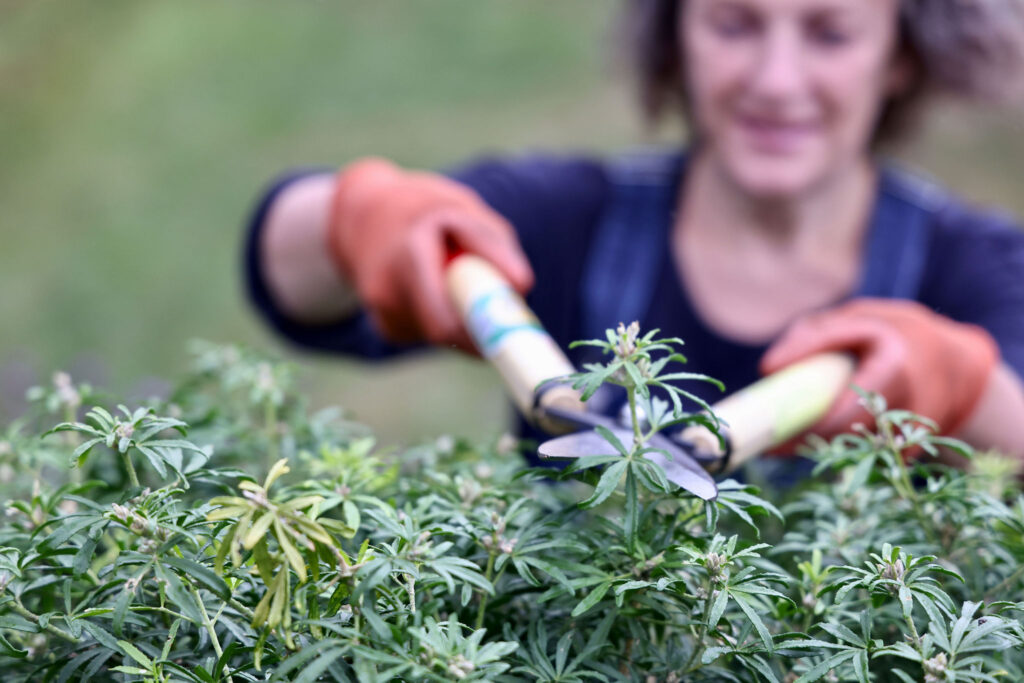
A general tidy can be given with shears, and more precise cuts made with secateurs or loppers. Make sure their blades are clean and sharp to neatly cut the plant rather than tearing it which can be unsightly and create sites of weakness where diseases can more easily set in. When cutting hedges or shaping shrubs, keep stopping to check your progress and that you’re cutting in a straight line/the desired shape.
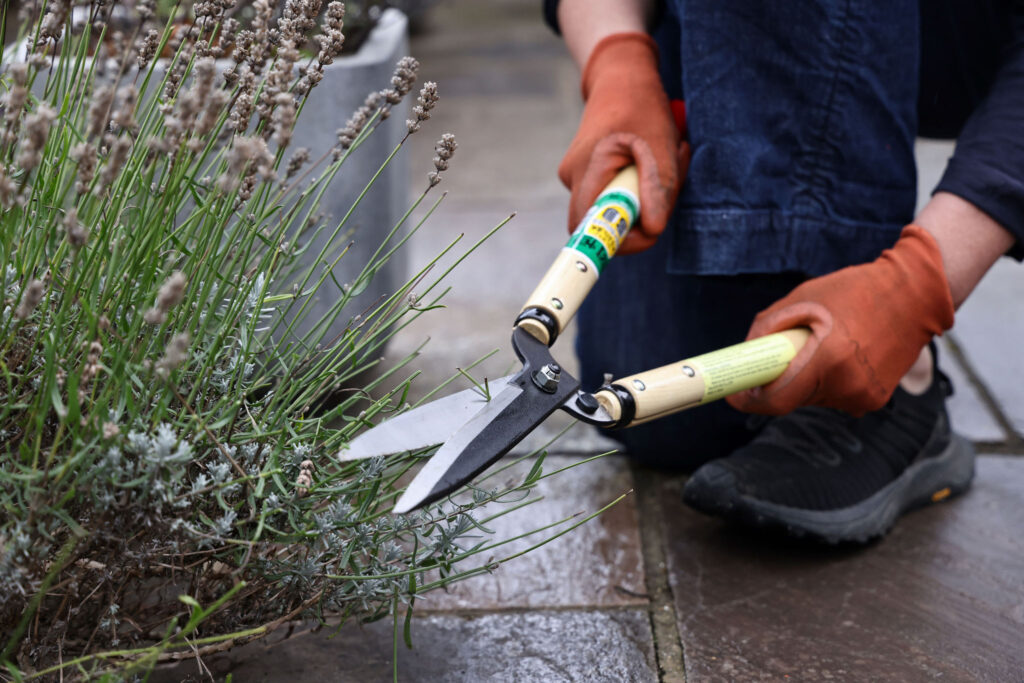
Once the flowers are fading on your lavender, it’s time to prune it. You want to do this to make sure the plant doesn’t get too leggy. Cut back the plant to a compact shape leaving a few shoots on each stem. Lavender doesn’t typically regrow from bare wood, so be careful not to cut down too far.
This is a job for later in the month when it cools down. There is increasing advice to move perennials in the autumn rather than the spring. Springs have been drier and so moving the plants ahead of the wetter season, i.e., in autumn, so that they have some time to establish root systems before winter means they will be better prepared in spring to put on new growth and grow well that year without so much rain.
If you want to move or divide any perennials, lift the plant getting as much of the root system as possible. A good rule of thumb is to dig at around the width of the plant above ground using a spade or garden fork. If the plant has become too large or congested, you can divide it at this point and have some new plants for free! If your plant is still in flower, it is still ok to move it, and it will mean that you can see how the plant will look in the new site. However, after you have relocated it, you should cut it back in order that it can focus its energy on root growth. While it’s a shame to lose the flowers, you could make an arrangement for the house with them, and you will thank yourself next year when the plant will hopefully be healthier and stronger for establishing its root system now.
Plants that benefit from division every few years or so include geum, astrantia, perennial geraniums and agapanthus. Once you relocate them, be sure to give a good water to help the plant establish well. If you’re not sure where you want to put your new plant, you can pot it up and decide next year. Be sure to look after the potted plant well to give it the best chance of survival though! Leave standing any plants that will provide winter interest – plants such as gaura, rudbeckia, sedum, ornamental grasses and achillea. They can be divided in the spring once you have enjoyed the structure and texture they provide over winter.
This year seems to have a been a bumper year for bindweed. We have seen it thriving and have spent a lot of time trying to keep on top of it in effected gardens. It’s an important weed to keep on top of because of the way it grows. By binding around other plants, it can damage them and it can also entwine itself in root systems underground too. The best way is to weed little and often. Every time you see it, weed it out and try and get as much of the root system out as possible. If you don’t have time to get out every couple of days, you could try trying to train it up a bamboo cane instead of nearby plants which then makes it easier to weed out when you can. This isn’t a failsafe method but does help to decrease it wrapping itself around intended plants.
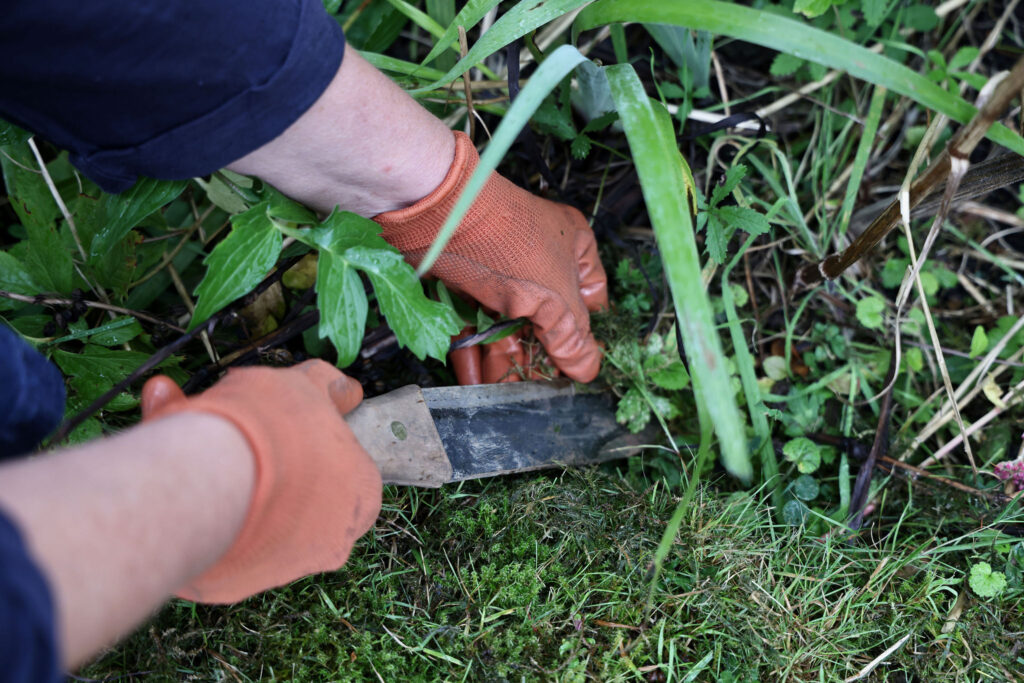
Other unintended wildflowers – aka weeds – should be weeding out too. Anything that is competing with intended planting or likely to self-seed prolifically and take over should be removed. We find using a tool called a hori hori to be the most effective way to remove most weeds . It’s one of our favourite items in our toolkits – the whole team has one and and wouldn’t be without them!
Lastly, now is a good time to give your lawn some love. Bare patches can be repaired using seed or even sections of turf if the damaged areas are large. You can thatch the moss off of the lawn if you wish to have a very neat finish (do leave this around though as it’s an important material for birds to make nests with). Lawns can be aerated too. This can simply be done with a garden fork. Poke holes at intervals of around 30cm. You can fill these with sand which is especially beneficial if your lawn is very compacted or on heavy soil. The addition of the sand helps with the soils’ drainage and allows the grass to grow better. If you already have very sandy soil, you won’t need to do this.
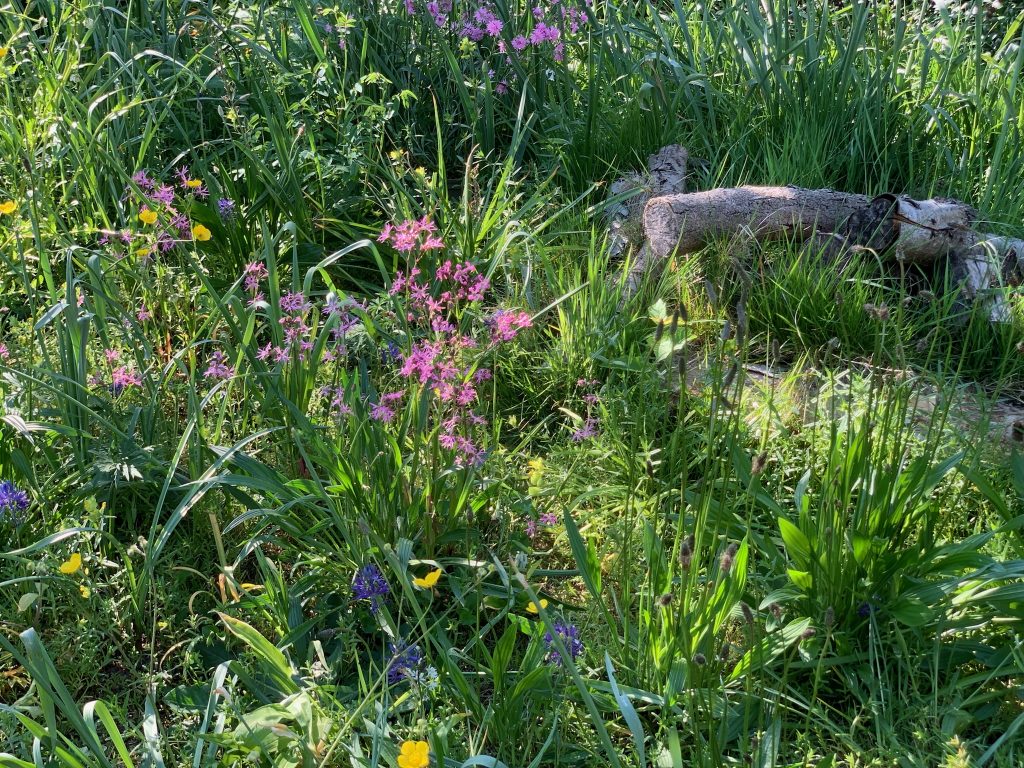
While you are thinking about your lawn, you could also consider whether you might like to create a mini meadow. Often lawns are a default in a garden. While they’re wonderful for playing on, and for creating negative space, for many they are unused spaces. We think creating a wilder lawn or mini meadow is a lovely idea. Not only does it add interest to your garden, but it adds diversity, encourages pollinators and once established is lower maintenance than an immaculate green lawn. If you are interested in how to do this, we have written an article with lots more information here: How to create a meadow lawn.


Gardens by Anna Butterfield offer professional garden and planting design across London and the South East.
Our expert, organic garden care service is available across South East London as well as parts of Kent and Surrey.