Inspired by our love for wildlife friendly gardens and No Mow May we thought we’d write this month about how to create a wilder, meadow-style lawn in your garden.
So often gardens have a big expanse of lawn that is under utilised and have very little value for wildlife. Have you considered creating a wilder area of lawn – either the whole of it if you find you don’t use it much, or a section of it which can have a path mown through it? Meadow-style areas can be a really beautiful addition to your garden, not to mention excellent for wildlife. As we start using our gardens more and more as the weather improves, it’s a good time to start thinking about how you use, or rather want to use, your garden and planning changes for your lawn so you’re ready to hit the ground running when it’s time.
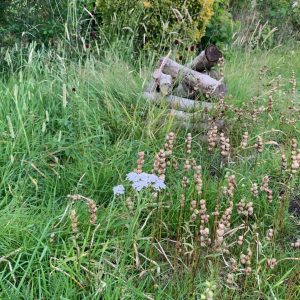
First off, and depending on the time of year, we suggest following No Mow May and leaving the lawn to grow throughout the month of May and seeing what comes up. You may just have grass to start with, especially if your lawn has been chemically treated in the past. But more likely than not you will start to see a selection of wildflowers pretty quickly – the problem can then become that the grass will out-compete these other species. So, come late Autumn you should cut the lawn very short, rake or scarify it and sow Rhianthus minor seeds, better known as Yellow Rattle. Yellow Rattle is semi-parasitic to grass so it will weaken its vigour which prepares the area for other wildflowers to grow well (more on the adding wildflowers later in this post). Without Yellow Rattle the grasses will always end up taking over so it is an essential part of developing your standard lawn into a wilder, more species rich one.
Before you sow your Yellow Rattle, you can also plant bulbs through the lawn. Scatter these on the ground so you get a natural look and layout. Our favourites to include are crocus, a succession of narcissus/daffodils to flower from February/March to April, fritillaria and camassia which will give you a flowering time of around February to end of May. We also love Leucojum – also know as ‘Summer snowflake’ – which despite their name actually flower in the Spring, and are a bit like a large snowdrop (more on snowdrops below!).
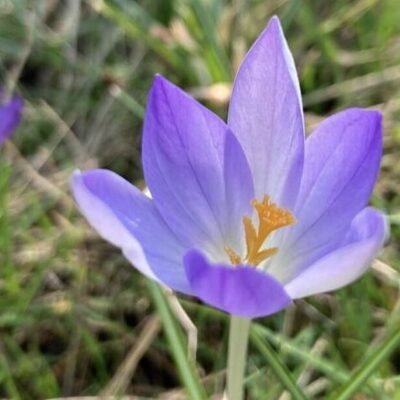
Crocus, which will flower first, are so cheerful and an important source of early nectar for pollinators. They are low growing, only around 10cm, but as they emerge at a time when the grass is still short they should be very visible. More is more with crocus (well with all bulbs in fact!), and we recommend starting with as many as you can, ideally a few hundred crocus as they are small and look really effective en-masse. Fortunately they are a pretty cost effective bulb!
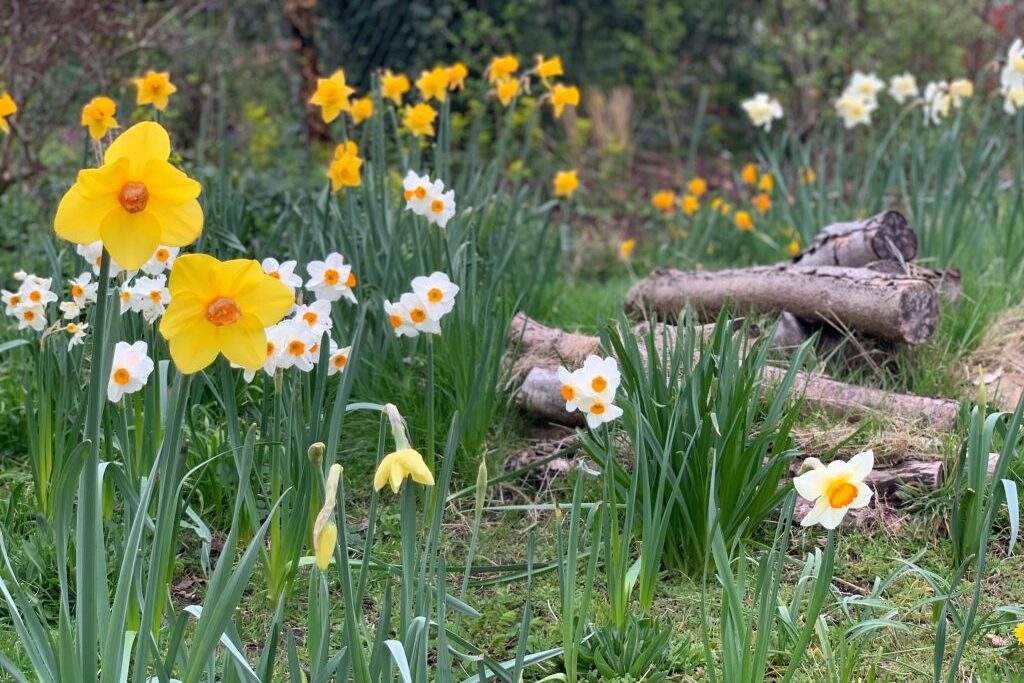
A range of narcissus/daffodils and fritillaria will provide more nectar as well as colour. Narcissus pseudonarcissus is a native daffodil so a great one to include, although can take a while to establish – once happy it will spread. We like to add other Daffodils too for extra interest and to elongate the flowering time of the area. One of our favourites is Narcissus Geranium which smells beautiful and naturalises well.
Fritillaria meleagris (Snake’s head fritillary) are a really delicate addition pollinated by bees. They come in purple and white and their nodding heads are truly beautiful.
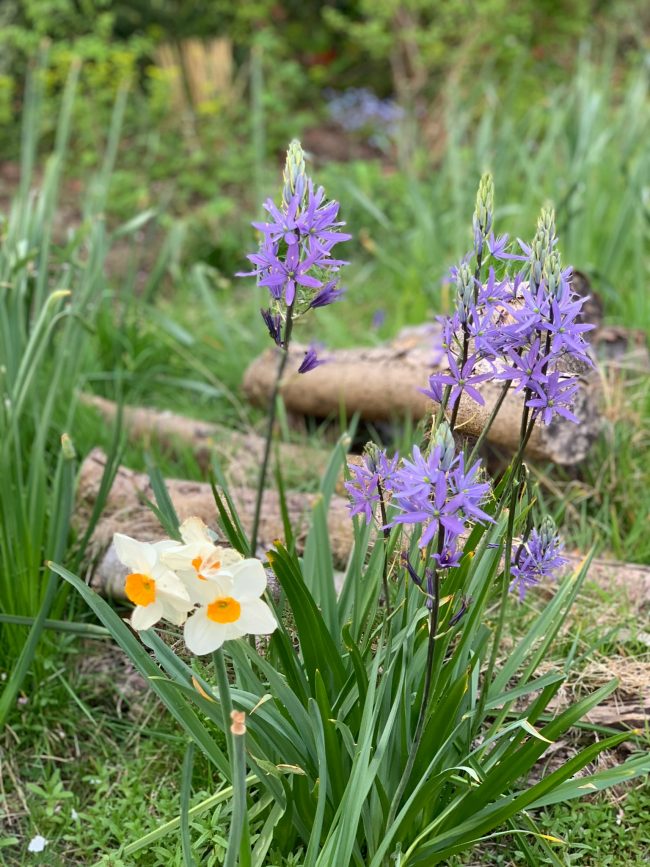
Last of the bulbs to plant in your meadow in the Autumn are camassias. These come in blue and white and in varying heights and they flower in May, providing nectar for several types of bee, hoverflies and some beetles so are a very wildlife friendly addition. We absolutely love them – one of our favourite bulbs!
It is perfectly possible to add tulips and/or alliums to the meadow lawns too. These too should be planted in the autumn. Many tulips are not perennial and so won’t return year on year. Even those labelled as perennial can be a little unreliable. If you’d like to try alliums, short varieties such as Allium amplectens Graceful Beauty, Allium Cowanii or Allium Roseum would be a lovely choice.
This may seem like a lot of bulbs to add – and as we said, more is more. So it might be an idea to start with one or two species, such as Daffodils and/or Crocus, and then add more bulbs in subsequent years.
This is all we recommend for the first year – getting the rattle sown and some bulbs added. Don’t mow the grass over the winter or spring. If you really wanted to you could mow after the bulbs have totally died back in late spring but we prefer to just pull the bulb foliage out by hand once it has gone completely brown and comes away very easily. Then just let the grass grow all spring and summer and see what emerges – you may be pleasantly surprised! Don’t worry if you don’t have much in that first year, especially if you have had the lawn treated in the past. If the rattle is doing it’s job and there are some slightly bare patches of grass, then wildflowers (aka weeds!) will gradually find those patches and start to emerge. It may take a few years so be patient – remembering that plants which naturally sow and establish themselves will almost certainly be happier than ones you choose to plant!
Once your rattle has established and is happily self sowing every year (perhaps with a little help from you, shaking the seedheads around in areas where you have less rattle) and you have seen what has emerged naturally, you can start to think about adding some more wildflowers. Perhaps repeat what has already emerged as these species successfully germinated in your garden conditions. Other great additions are Oxeye Daisy, Ragged Robin, Red or White Campion, Achillea……there are many to choose from and there are also several excellent, organic suppliers of wildflower seeds and plugs.
You can sow perennial wildflower seeds in Autumn (a year or two after you begin your meadow project) either as individual species or a perennial wildflower seed mix. Note this is very different to the many annual wildflower mixes available, which will flower one year and only come back the following year if they self sow or you re-sow them. It is perfectly possible to have an annual meadow area however it takes more work every year, whereas a perennial wildflower meadow should get better year on year with minimal intervention (but perhaps a little more work to start with!).
So, if you can, we suggest opting for perennial wildflowers, either buying seed of individual species to sow into trays, or a seed mix to sow directly. Another option is to buy perennial wildflower plugs. As mentioned above, it really isn’t a good idea to sow seeds directly into the lawn in the first year because until the Yellow Rattle establishes and weakens the vigour of the grass, they can easily get out competed. If you are really keen to get sowing, you could sow them in seed trays and grow them on until the rattle has taken hold – however this means keeping them alive for at least a year!
The wildflowers that will work well in your lawn will vary depending on your soil type – most of the wildflower websites allow you to filter to see which are good for different types of soil, e.g. clay, sandy etc. The majority do need to be sown in Autumn to have a period of cold before they germinate.
As mentioned, you can buy seed mixes as well as individual seed varieties. We recommend going for individual varieties if you are sowing into seed trays. If you are going to sow directly into the grass once the rattle has established, you could try a seed mix, but generally the plants will establish better when grown on into plugs before planting out. You should sow directly or into trays in the Autumn.
You can also sow the seed mixes onto bare soil (and this is often assumed on the seed instructions) so if you are just creating a wildflower area in a border, rather than changing a grassy lawn to a wild lawn, you can go ahead and sow directly. Or, you may decide to remove your existing lawn, prepare the soil and sow – however you will still need Yellow Rattle as any grass roots left in the soil will soon colonise, or nearby grassy areas will spread and sow.
An alternative to sowing your own seeds is to buy plug plants or small plants in the Spring. These in theory should establish more quickly and reliably. Please note they will need to be carefully looked after though and watered regularly once planted. When you are planting plugs, manually remove some of the grass from the immediate surrounding area to help them to establish. It is even possible to buy 9cm or 1-2 litre pots of some wildflower varieties and plant these out in a grass area. This uses more established plants so if you are looking for a quicker impact it could be a good option. Again we really recommend letting the yellow rattle become established first.
Finally, in the Spring you can add in Bluebells (make sure you go for our native variety) and Snowdrops which are best planted “in the green” i.e. not as a bare bulb but as a bulb with foliage attached which will be lifted and shipped to you just after flowering. These make for a lovely addition to a wilder lawn and are again a very pollinator friendly choice. They can take a few years to establish, but once they have done so they will naturalise and spread gradually.
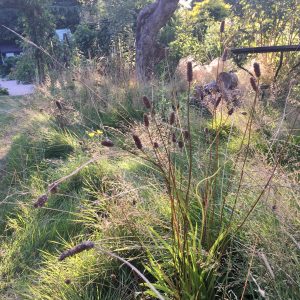
If you are after a quicker way to an instant wildflower meadow, you can buy wildflower turf. For this option you would need to remove your existing turf using a turf cutter in Autumn, leave it for 4 weeks and remove any regrowth. Plant your chosen bulbs and then immediately lay a wildflower turf over the top of them. Be sure to pick one which is not grown on a plastic netting (try Harrowden Turf for meadow turfs which are a mix of grasses and wildflowers or Lindum turf if you’re just after a wildflower mix). These usually have a tried and tested mix of species which should work well together for many years to come – check they are suitable for your soil and site conditions first. This can have a really fast impact, but is a much more costly outlay to begin with.


Gardens by Anna Butterfield offer professional garden and planting design across London and the South East.
Our expert, organic garden care service is available across South East London as well as parts of Kent and Surrey.