As ever with gardening, we have half of our heart in the now, enjoying the last of the summer blooms. The other half is planning ahead for seasons to come. Believe it or not, now is the time to be thinking about spring in the garden. We have entered bulb planting time. From now until December, spending time planting bulbs in your garden will result in beautiful flowers come Spring.
There are so many different spring flowers to choose from that it can be hard to know where to start. We love to use a mix to ensure there’s almost always something to enjoy, and from as early as February too. There’s a bulb for almost every spot, whether you have a shady plot, a sun trap, clay soil or only lawn. Read on below for our favourite bulbs to use over the months. There’s something for every type of garden too.
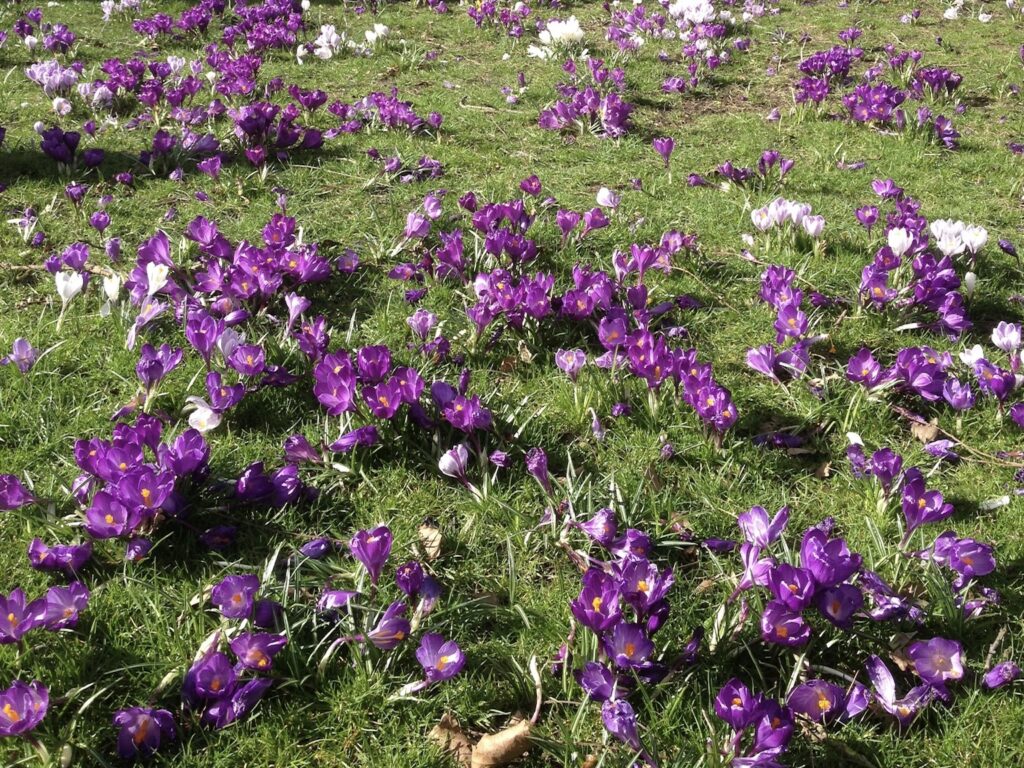
Amongst the first bulbs to flower are crocus, iris reticulata and snowdrops. These are three dainty choices that will brighten the end of winter for you.
Crocus are one of our favourites and an important early nectar source for pollinating insects. They look beautiful planted in lawns and along the front of borders. We also love them in pots that can be brought close to the house to be enjoyed from the warmth of indoors. Crocus do well in full sun and you will be able to see their flowers opening and closing as the light levels change. Iris reticulata have the same requirements and look wonderful mixed in amongst crocus, or on their own.
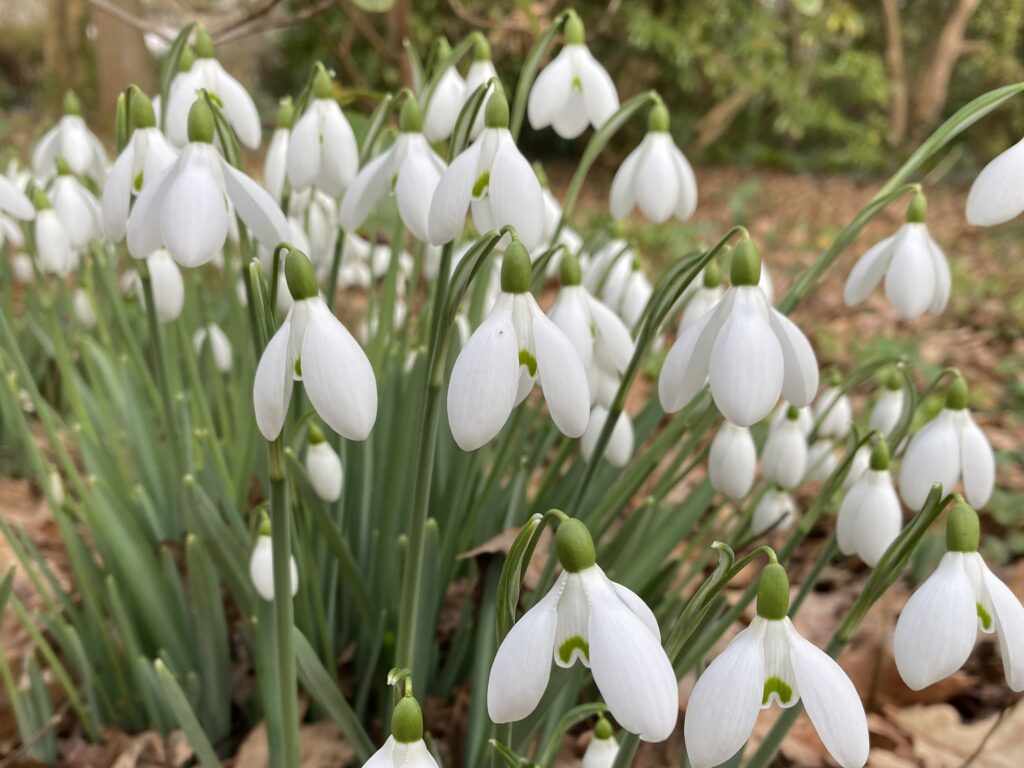
Snowdrops (Galanthus) are the perfect choice for early flowers but in a full or partially shaded spot. Their understated beauty is unrivalled, and they too can be a good source of nectar for pollinators. Though snowdrops are most successfully planted “in the green” (when they have above ground growth), you can also buy them as bulbs to plant in Autumn. They grow at the edges of woodlands in the wild, and so mimicking this in your garden if you have lots of mature trees if another lovely way to plant them.
There are so many narcissi to choose from ranging in shape, size, colour and flowering time. We love to plant these in clusters of 7-10 bulbs through the front to middle of borders, in lawns and meadow areas. Most varieties do best in sun but will tolerate part shade too, and tend to be happy on all soils including heavy clay, where they won’t rot away over winter like many other bulbs.
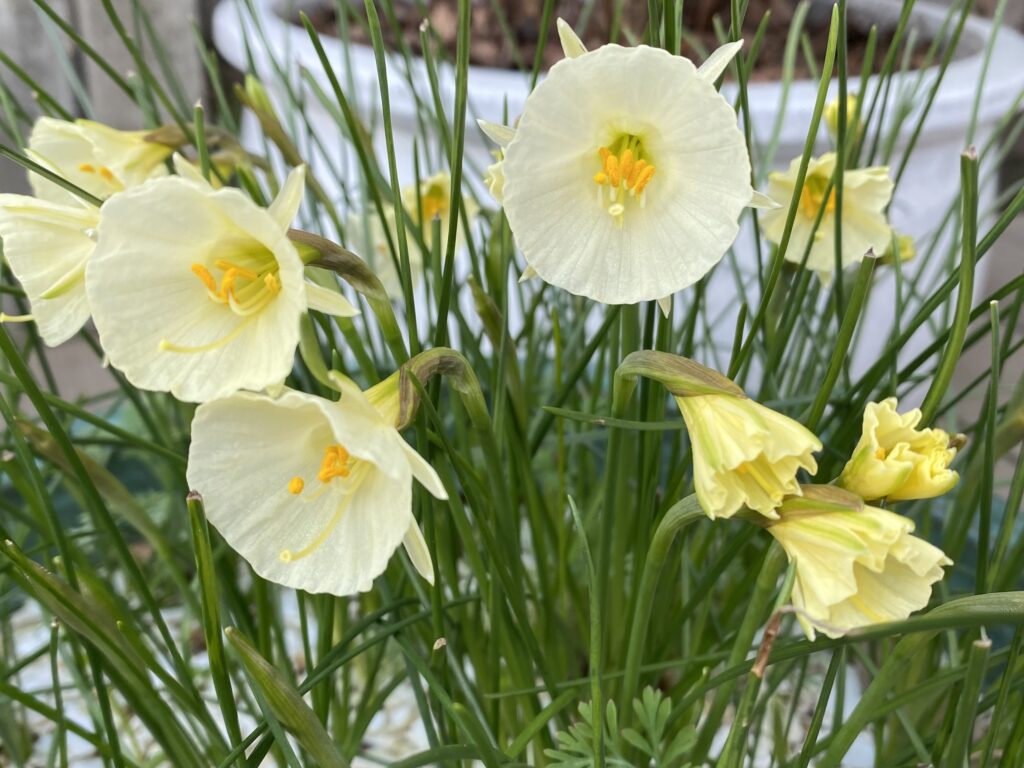
A striking choice for early March flowers is Narcissus Bulbucodium. They’re not your usual daffodil but look beautiful at the front of borders or in pots.
For a more traditional shape we love Narcissus Jetfire with its slightly reflexed cheerful yellow petals and bright orange trumpet. A late March favourite is Narcissus Falconet which has a wonderful fragrance.
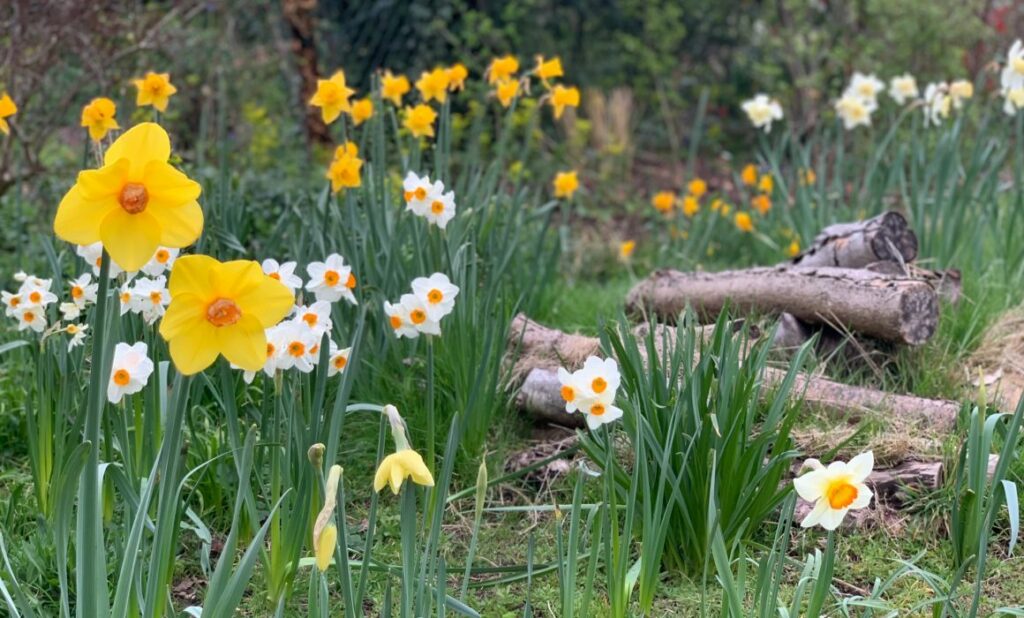
For April flowers, our favourite is Narcissus Geranium, with its white petals and rich orange centre. It has multiple flowers per stalk and the most dreamy scent – great for snipping a few to take indoors! We plant them in small groups in borders and lawns – you can see them below (orange trumpets) in this mini meadow, planted alongside Ellen, Dutch Master and a few surprise varieties which cropped up after a mass bulb planting!
In late April you get the wonderful time when narcissi and tulips are flowering together. It can be an effective design choice to mix these in borders so that you get a mix of colours, shapes and textures at the same time. Here you can see a mix of yellow and white narcissus (Tamara, Martinette, Minnow and Tresamble), planted with white (Exotic Emperor), purple (Synaeda Blue) and pink (Salmon Prince) tulips to create a colourful statement.

A mixture like this does a great job of adding colour and interest to the borders when everything has had it’s spring cut back and the new growth of perennials and grasses is just starting to emerge. The tulips will then continue flowering on through May, being joined by early flowering perennials such as Geums and Nepeta. Think about what plants you have which will be in flower in May and plant complimentary coloured tulips to really enhance your view.
Tulips need sunshine to grow well and won’t thrive in shaded or even partially shaded gardens. Wet and heavy soils, such as clay, also don’t suit tulips well and while they may flower the first year, it is unlikely they will survive over winter – you might get a few stragglers the following year! Even on lighter soils, tulips often don’t flower as well the second year. They are best treated as annuals, which means replanting the same varieties every year and that way you keep the same colours each year and any that do come up from previous years are a bonus!
Tulips need to be planted later than other bulbs as they need to go into cooler ground. It’s really important to wait until November to plant them, although last year November was so mild that we were planting them right at the end and into December. This is because the ground is cooler which helps prevent tulip fire disease and other fungal diseases that can affect tulips.
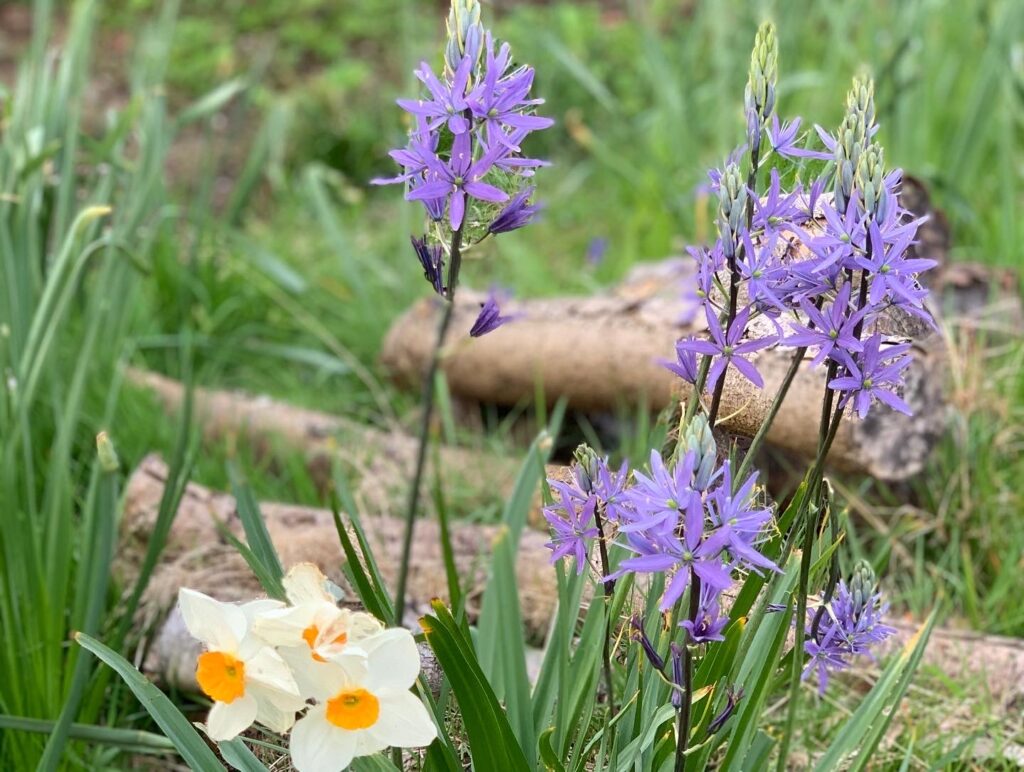
Camassia are one of our absolute favourite flowers. In white and blue tones, they are an elegant choice for a garden that add both height and colour. Flowering around May, there are varieties that work in full sun and partial shade. We love them in meadows and borders alike. Planted in swathes or en masse, they are very pretty and an underused choice in our opinion! Two of our favourite varieties are Leichtlinii Caerulea (pictured below) and Leichtlinii Alba (white).
Late May, June and July bring the alliums. A wonderful option to add height and sculptural qualities to your planting design. There’s even a variety which will tolerate partial shade!
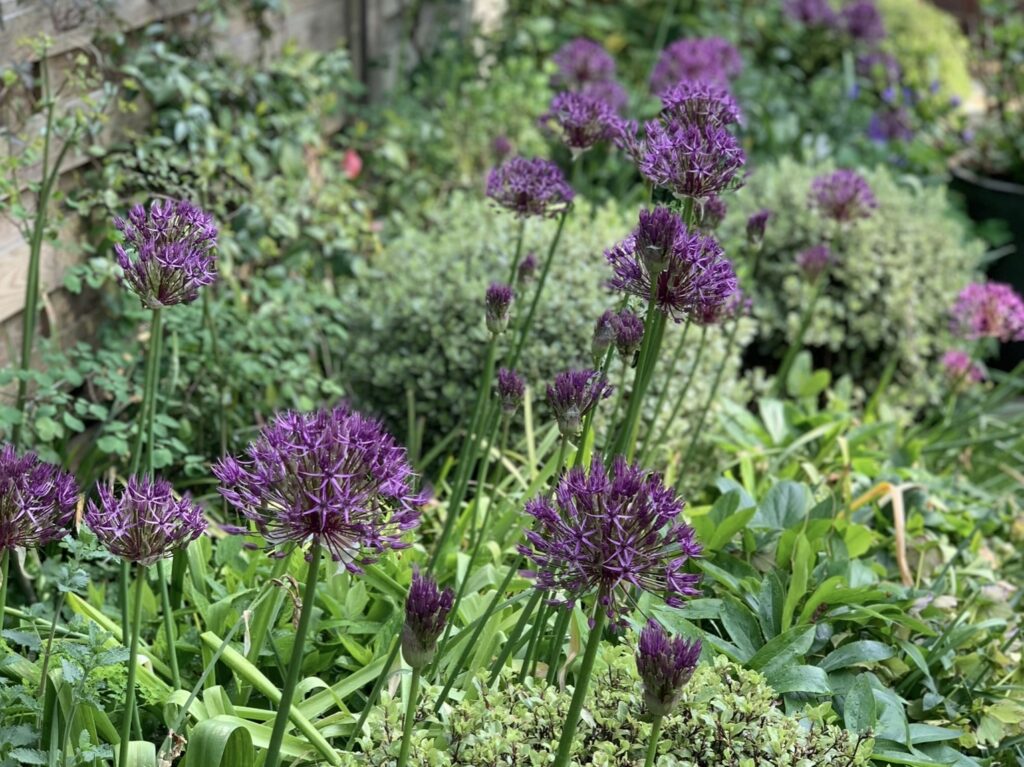
We like to plant allium in drifts (rather than clusters) through the border. Weaving them through your other plants is very effective and means that their foliage, which can become rather unsightly, can be tucked up amongst other plants to hide it away. Like tulips, alliums won’t last long in wet or very heavy soils and so should be treated as an annual.
Most Alliums work best in full sun. Here you can see Allium sphaerocephalon in one of our Beckenham garden design projects. It’s a magnet for bees and changes colour as it opens. It’s also excellent value for money.

For a more looking allium, we often use Purple Sensation, which dries beautifully for use in vases as well.
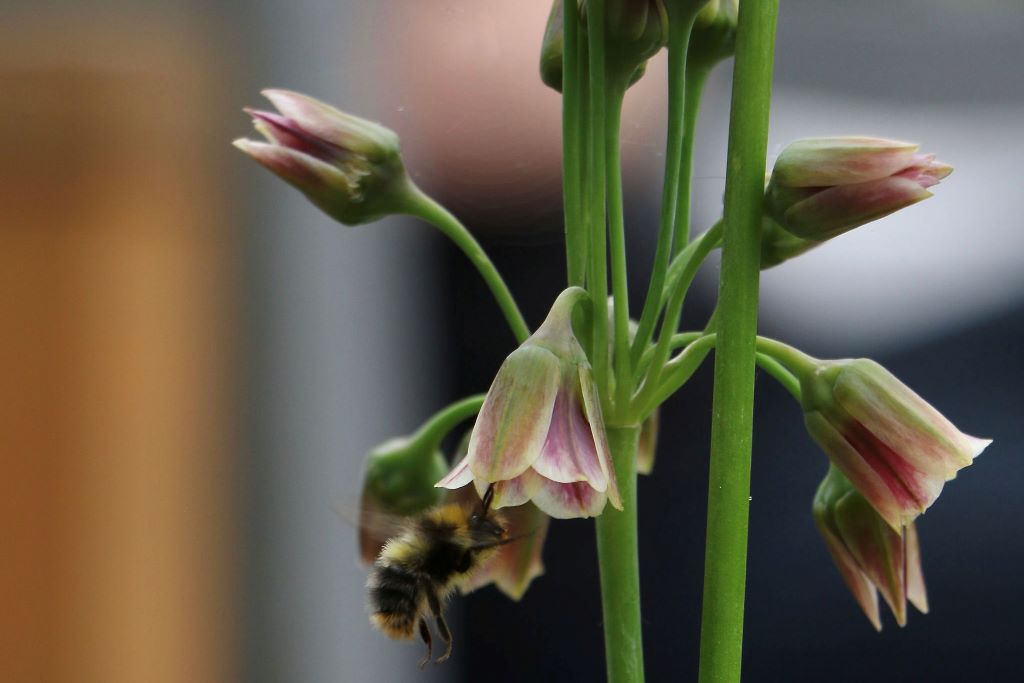
We also love Allium Nectaroscordum Siculum. Not only for its beauty, but also because it works in partially shaded borders as well as in full sun. Because it tolerates both positions, it can be used to create continuity between borders of different aspects within the same garden which is especially lovely.
As you can see, there are so many bulbs to choose from for flowers from February to July. They are well worth taking some time to research and start planting from the end of September (hold off until November for tulips). You will thank yourself next year when you are enjoying beautiful flowers springing up from the earth. For more on specific varieties, read our article “Spring Bulb Inspiration” here.


Gardens by Anna Butterfield offer professional garden and planting design across London and the South East.
Our expert, organic garden care service is available across South East London as well as parts of Kent and Surrey.