Now is not the time for a big prune of roses, but it’s an important time to reduce any unbalanced growth or long shoots that have been sent out. This is to help reduce the likelihood of wind rock which is where the root system is damaged by the plant rocking around in the ground. Simply cut back stems in line with the rest of the plant. Cut on an angle so that water will run off the stem. This is all the roses will need now until their proper prune next year. If you have a rose that produces hips, be sure to leave these on both for their beauty and to feed the birds. If you have climbing roses, be sure to make sure they are tied in well to sturdy supports. Again, this is to prevent wind rock and also damage to individual stems by the wind and heavy rain.
Now is the perfect time to plant roses, including bare root roses which are, as the name suggests, roses supplied unpotted and without any soil. They are more cost effective than potted roses and will take just as well, still flowering in their first year. It’s also a more sustainable way of buying roses as no plastic pot or soil is used, and they are lighter for transportation, so a great option to consider. Bare root roses are usually supplied from november until the spring, whilst the plants are dormant. They need to be planted as soon as possible after arrival, and following the growers’ planting instructions. We’ve written about some of our favourite roses here to help you narrow down which ones you may like to add to your garden.
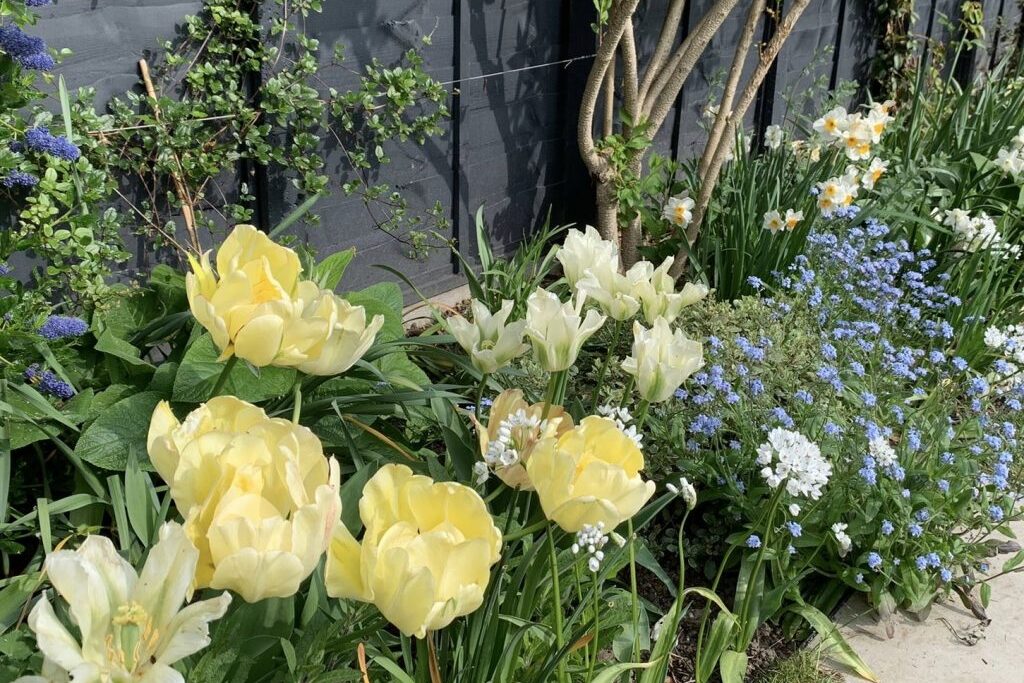
You can plant tulips any time from now until Christmas. We recommend following the supplier’s guidance on planting but as a rule of thumb, they do well planted deeply and in well drained soil.
It’s worth noting that tulips are not reliably perennial. To ensure you have a good stock of tulips every year, it’s prudent to add more each year. This is obviously budget and time permitting! Some varieties are said to be more reliably perennial than others, so if you haven’t already bought your bulbs, you may wish to check this too.
While talking about bulbs, it’s not too late to plant other spring flowering bulbs now, including crocus, narcissus, allium and fritillaria. You can find some inspiration for what bulbs to choose here, if you haven’t chosen yours yet.
As more and more leaves fall from our deciduous trees, it’s a great idea to continue raking them up to make leafmould. We wrote in our october blog about how to do this, which you can find here. It is free plant food for the future so absolutely worth the effort!
Tree ferns (Dicksonia antartica) aren’t completely hardy so it’s essential to protect them over winter. It is the crown of the plant, where the leaves grow out from, that can be damaged by frost and so it is here that needs protecting. We pack straw into the crown to insulate it and to absorb any water that does get through, and then wrap the top 20cm or so of the stem and base of the leaves near the crown in horticultural fleece or hessian tied with twine. The leaves will die back over time, but don’t need to be pruned until after the last frosts.

Now until early spring is a good time to plant deciduous trees, hedges and shrubs. This is because they are dormant so the process of being planted will be less disruptive for them at this time. As with the roses mentioned earlier, many can be bought as bare root specimens currently, which can be a more cost-effective way of adding structure and height to your garden as well as generally being more sustainable and often better for the plants.
Plants should be put into well prepared ground, and watered in well, even if rain is forecast. They will need watering 2-3 times a week and should then settle in well over winter ready to put on new growth come spring. In order to prepare your ground, make sure you dig holes wider and slightly deeper than the plant’s roots. Then fill in the hole a bit so that the top of the root ball sits at the same level as the soil around it. The reason you dig the hole a little deeper than you need and then fill it in again is to avoid the plant sitting on densely packed soil. This will make it easier for the roots to grow. Once you have got the level right, place the plant in the hole and fill it in with soil, firming as you go. It’s important to get the level right, with the stem clear of the soil but all roots under it. It’s better to be too high in the ground when first planted than too low. There will be some settlement of the soil after planting and you don’t want water (or soil) to pool around the stem of the specimen which can cause both rot and drowning of the plant.


Gardens by Anna Butterfield offer professional garden and planting design across London and the South East.
Our expert, organic garden care service is available across South East London as well as parts of Kent and Surrey.