Before we get into some alternative options for shady spots, let’s give a moment to ferns. They can be a divisive plant and some people are really not keen on them, but we love them! Ferns add beautiful texture and come in a huge variety of sizes and shapes. They look wonderful planted in groups with shade loving perennials in drifts between them.
Evergreen varieties offer year round structure and greenery, whilst deciduous varieties such as Dryopteris erythrosora give you beautiful autumn colour. One of favourite evergreen ferns is Polystichum polyblepherum which has a lovely upright habit and beautiful fresh green fronds. When something smaller is needed we love using Polystichum tsussimense, also known as Korean rock fern, Aspelnium scolopendrium or Blechnum spicant – or a mixture of all of them to create evergreen interest with differing textures and shades of green. They look wonderful with perennials such as Astrantia and Polygonatum planted in between them.

If you’re looking for more of a statement in your shaded space, Dicksonia antarctica (aka tree ferns) are a really striking choice. They add height and drama and can be great fun, especially for children, when the new fronds are unfurling as they are quite fascinating. They also work really well in large containers too, so if you have a shaded patio or courtyard they can be a great addition.
They do need special care in the winter, when they should be carefully wrapped up to protect them from the frost. We think they’re well worth it though, look at this garden we designed in Bromley a few years ago were the tree ferns create a wonderful impact!
There are also many beautiful herbaceous perennials which will thrive in the shade and part shade including Astrantia, Geraniums, Thalictrum, Brunnera and many more. Lots of them provide flowers and interest for many months, and can really light up a darker border with their foliage or blooms. So let there be no more gloom and doom about shady, dark borders – here is a selection of our favourite shade loving flowering beauties for you!
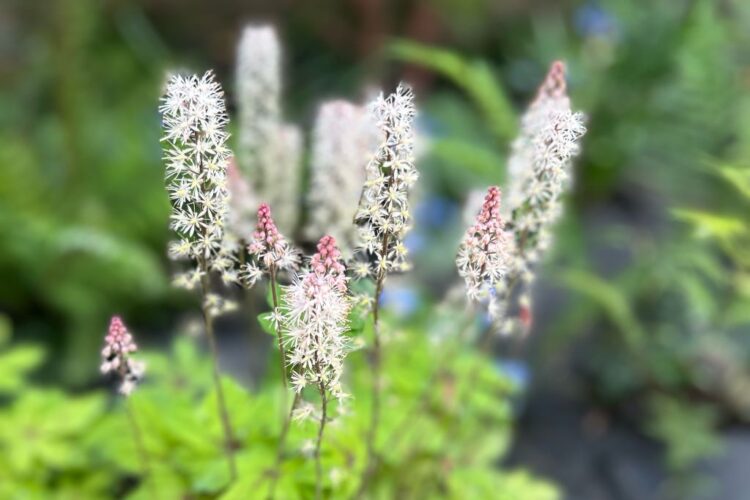
One of our very favourite perennials for shade is Tiarella ‘Spring Symphony’. It has delicate, upright spires of light pink to white flowers, and flowers from late Spring to early Summer. Its leaves are beautiful all summer too, with lovely dark purple markings against the green foliage – making it really interesting from Spring right through to late Autumn/early Winter when the foliage will die back.
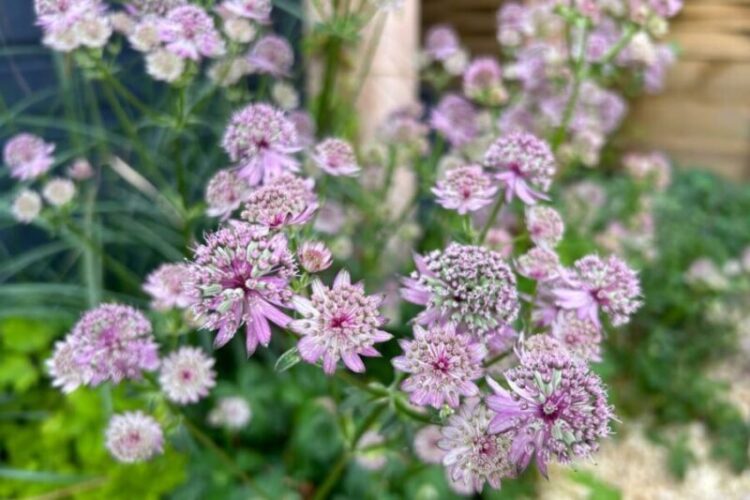
With many varieties to choose from, most enjoying partially shaded areas, Astrantia are a really wonderful choice for shadier borders. They look just gorgeous mingling en-masse in between ferns and are also great for pollinators. A favourite of ours is Astrantia major ‘Star of Beauty’. As with many Astrantia, they begin white and fade to a dusky pinky/purple. They are also happy in full sun so are a great choice for repeating in different parts of the garden. Astrantia maxima works well in full shade and has a delicate pink flowers reaching around 60cm high.
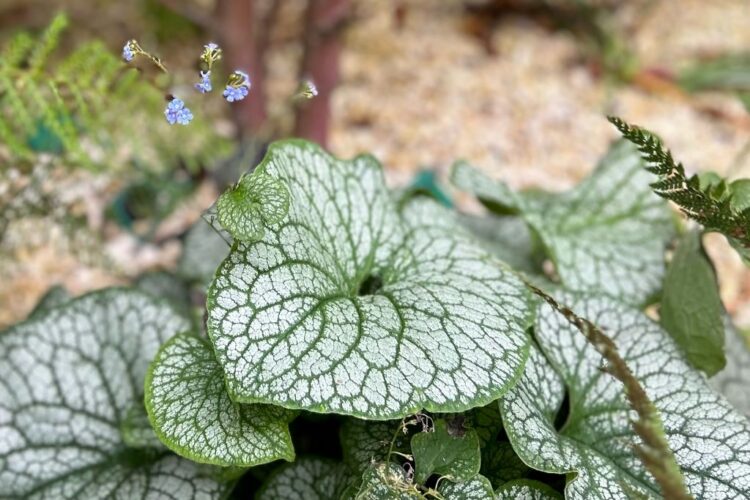
An ever popular perennial for shade is Brunnera macrophylla ‘Jack Frost’ but personally our favourite variety is Brunnera macrophylla ‘Alexander’s Great’ with large variegated foliage in silvery tones which really lights up a dark corner of the garden. It’s delicate blue flowers are forget-me-not like in size and colour. They flower in the spring (and sometimes again later in the summer) and look wonderful planted along the front of a border, or as underplanting.
Whilst paler leaves and flowers can really light up a darker part of the garden, you may also want to add a splash of colour to a shaded area – and there are numerous options.
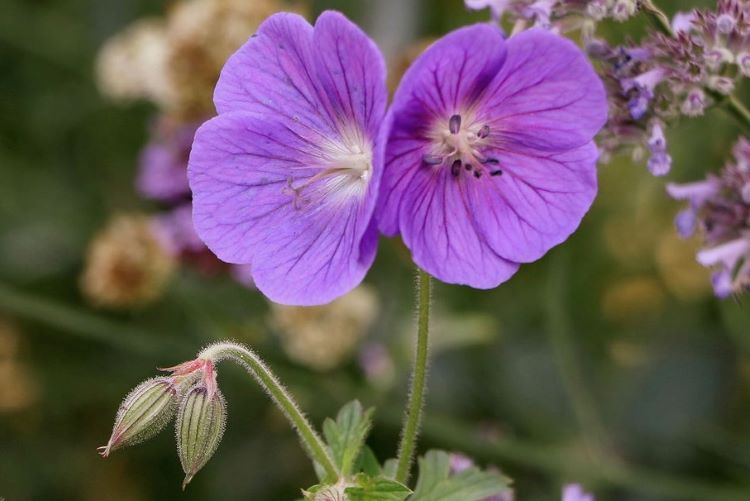
Most Geraniums will work well in either part of full shade, and all are loved by bees and other pollinators. Many of the classic blue-purple varieties such as Geranium ‘Johnson’s Blue’ will be very happy in part-shade and bring some very welcome colour for months, with their main show being in early summer and a second flowering again later in the year if you cut them back. Geranium nodosum is a great option for dry shade, and will contribute lovely dots of magenta pink through your planting bed from around May to September. It is great for underplanting shrubs or adding groundcover in a tricky spot. Geranium phaeum is another fantastic option for growing in part to full shade.
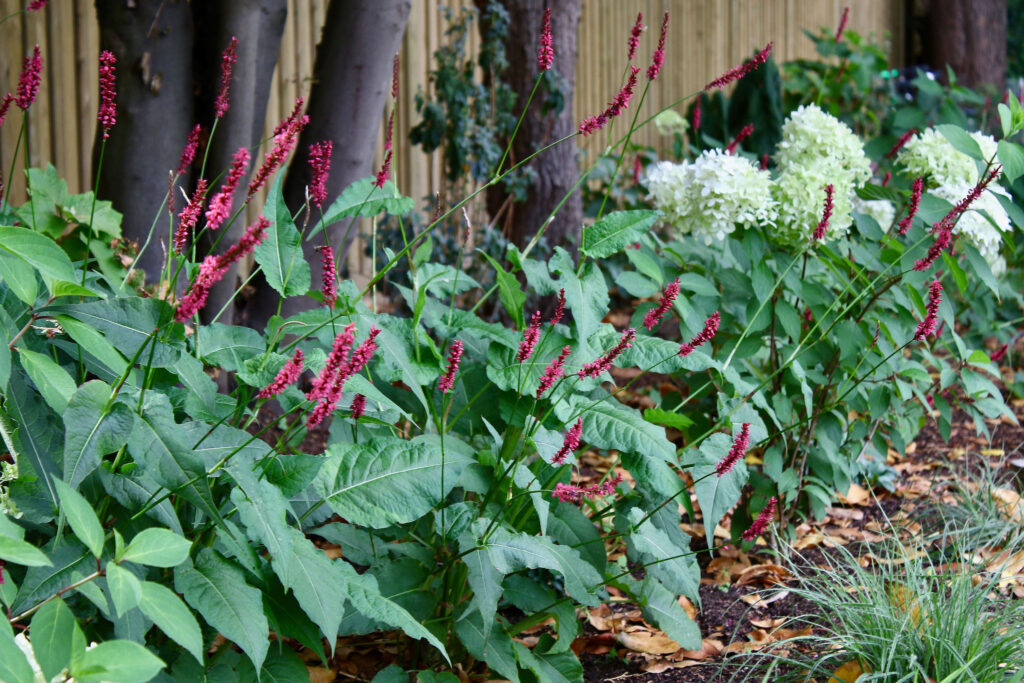
For any spots in partial shade and perhaps on the damp side we love Persicaria, with a particular favourite being Persicaria amplexicaulis ‘Firetail’. Again, this is a plant loved by pollinators and it looks very effective when planted en mass towards the middle or front of a border, mixed with different forms such as Hydrangeas, as you can see here in one of our Beckenham garden designs. Whilst it likes damp conditions it will also tolerate drier soil if it doesn’t receive too much sun.
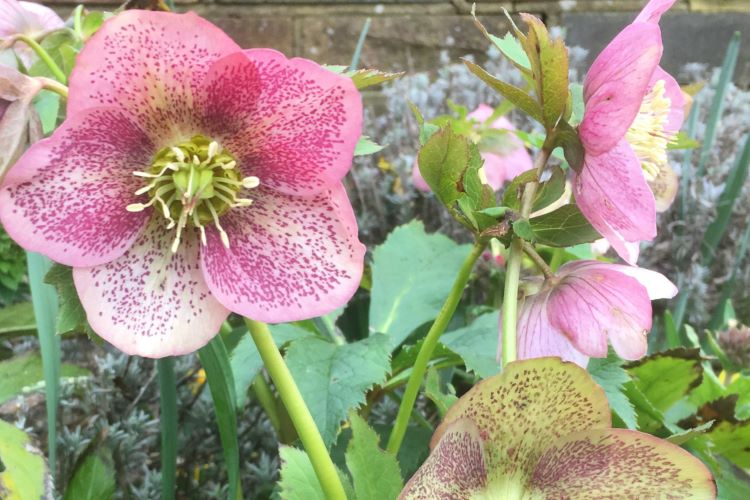
These early flowering beauties thrive in shade and come in beautiful fresh whites, tinted creams, rich pinks and deep clarets. They are a gorgeous plant that flower very early in the year providing much needed nectar for early pollinators. They flower in late winter/early spring and then provide evergreen foliage for the rest of the year. No garden should be without!
Lastly, roses! Not all roses will thrive in shaded areas, but there are a number that do. Our favourites include Rose Kew Gardens and Rosa The Lark Ascending, both of which are also pollinator friendly. Rambling Rector and Wedding Day are rambling roses that do well in shaded spots and can be used to over north facing walls or fences, as can The Generous Gardener. This is a beautiful pale pink climbing rose that repeat flowers (unlike the ramblers) and has a lovely scent as well.
One of our favourite evergreen shrubs to use for structure in full shade is Sarcococca. It has beautiful dark green leaves and the scent of the flowers in winter is sublime. If you can, plant it in places you will walk past in winter, for example front gardens/near an entrance, and you will be able to enjoy the scent every time you pass.
Camellias also work well in shade. Do note that they need ericaceous compost or acidic soil to really thrive. When choosing a camelia, try to go for one with an open flower as this will provide for pollinators, as well as being beautiful to look at.
To add some evergreen structure towards the middle or front of a border, Luzula nivea is a great choice. It reaches around 40cm with flat, linear evergreen leaves, it’s almost like an ornamental grass in structure. Its delicate white flowers in the summer grow to around 60cm and make a soft, airy addition to the border.
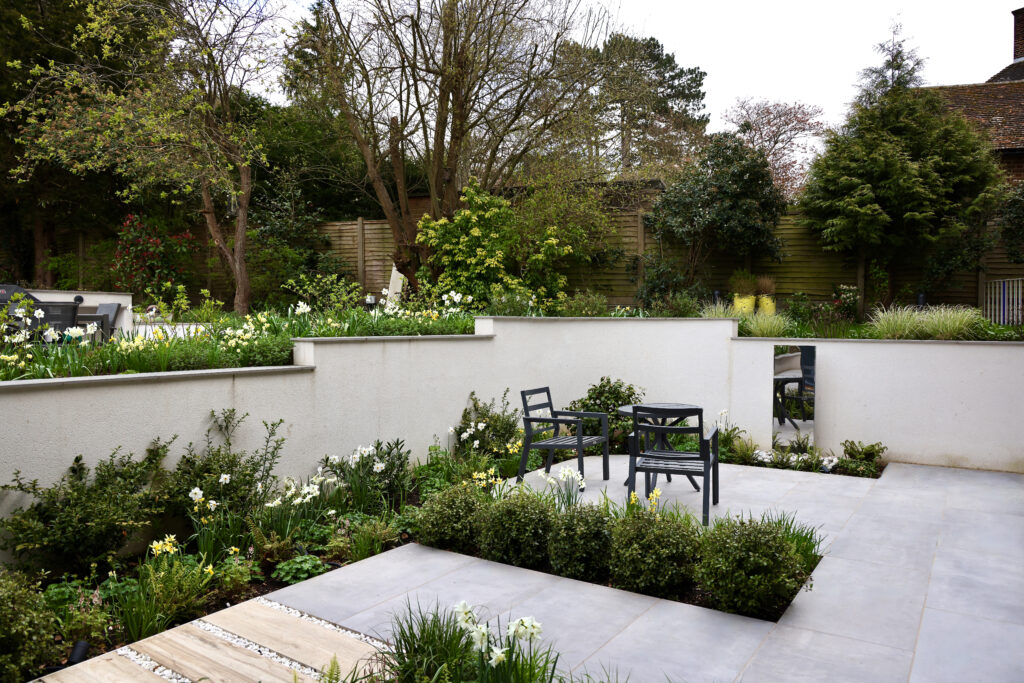
We have already mentioned Dicksonia antartica above which is also a fabulous choice for adding both height and structure to your garden. Another tree that works well in light shade is an acer. There are many types to choose from ranging in size and colour. We have recently planted a beautiful specimen in our multilevel garden design in Bromley – an Acer plamatum ‘Sango Kaku’. It has beautiful foliage which changes colour over the seasons, reddish stems and looks wonderful against the paddlestone walling as you can see here:

Another beauty of a shaded border is that woodland plants will grow there. This means you can add Bluebells and Snowdrops which are both gorgeous bulbs and will naturalise over time too. These are best planted in the green (meaning just as they have flowered and have green growth still, rather than are bare bulbs) and so look to order them around February. Be sure to go for our native Bluebells!
Shade is also the perfect place for Convallaria majalis, more commonly known as Lily of the Valley. It has beautiful bell shaped white flowers and its smell is unrivalled. It’s a really delicate, pretty addition to the front of shady borders or below trees and shrubs.
As ever with gardening, we have half of our heart in the now, enjoying the last of the summer blooms. The other half is planning ahead for seasons to come. Believe it or not, now is the time to be thinking about spring in the garden. We have entered bulb planting time. From now until December, spending time planting bulbs in your garden will result in beautiful flowers come Spring.
There are so many different spring flowers to choose from that it can be hard to know where to start. We love to use a mix to ensure there’s almost always something to enjoy, and from as early as February too. There’s a bulb for almost every spot, whether you have a shady plot, a sun trap, clay soil or only lawn. Read on below for our favourite bulbs to use over the months. There’s something for every type of garden too.
Amongst the first bulbs to flower are crocus, iris reticulata and snowdrops. These are three dainty choices that will brighten the end of winter for you.
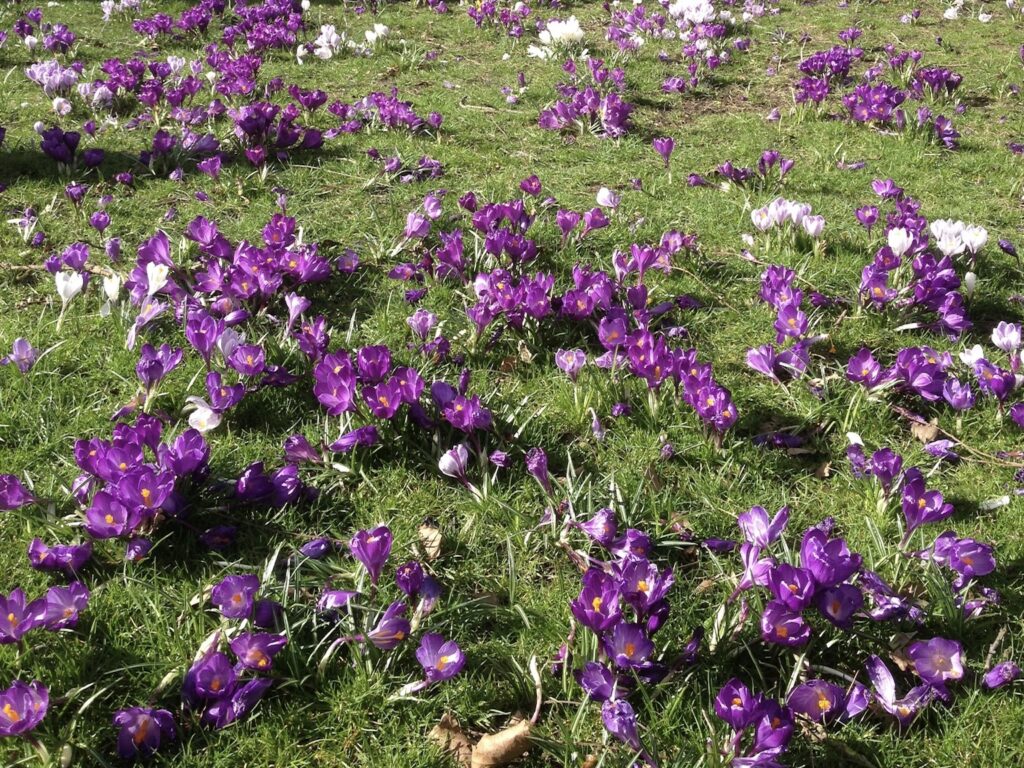
Crocus are one of our favourites and an important early nectar source for pollinating insects. They look beautiful planted in lawns and along the front of borders. We also love them in pots that can be brought close to the house to be enjoyed from the warmth of indoors. Crocus do well in full sun and you will be able to see their flowers opening and closing as the light levels change. Iris reticulata have the same requirements and look wonderful mixed in amongst crocus, or on their own.
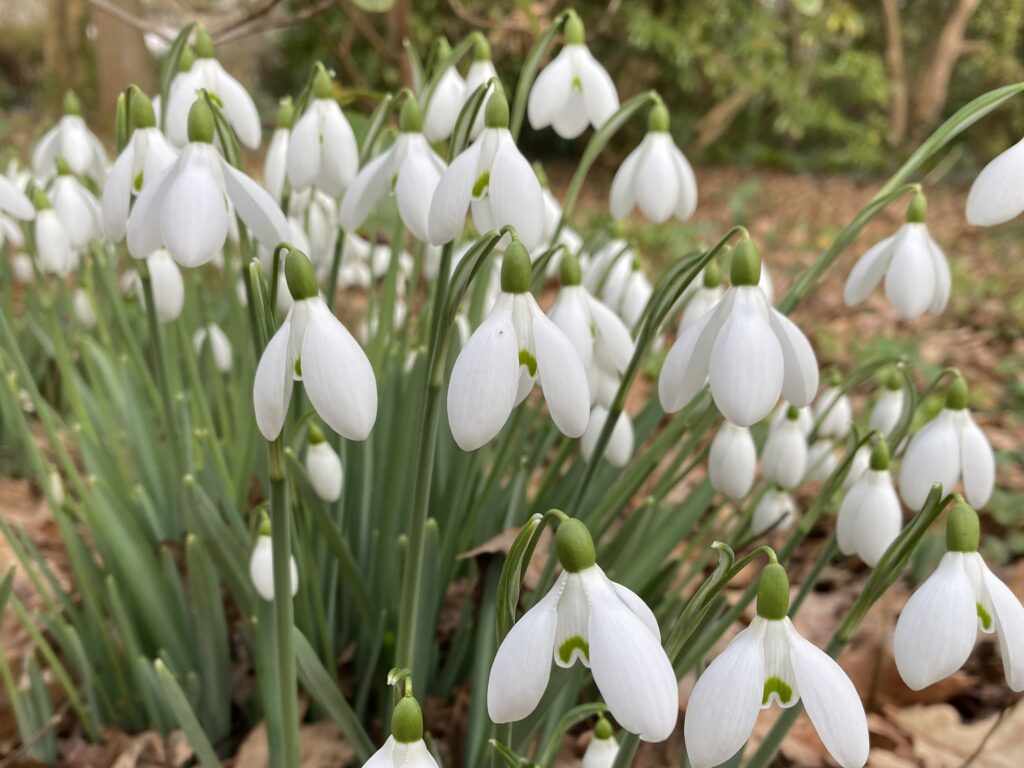
Snowdrops (Galanthus) are the perfect choice for early flowers but in a full or partially shaded spot. Their understated beauty is unrivalled, and they too can be a good source of nectar for pollinators. Though snowdrops are most successfully planted “in the green” (when they have above ground growth), you can also buy them as bulbs to plant in Autumn. They grow at the edges of woodlands in the wild, and so mimicking this in your garden if you have lots of mature trees if another lovely way to plant them.
There are so many narcissi to choose from ranging in shape, size, colour and flowering time. We love to plant these in clusters of 7-10 bulbs through the front to middle of borders, in lawns and meadow areas. Most varieties do best in sun but will tolerate part shade too, and tend to be happy on all soils including heavy clay, where they won’t rot away over winter like many other bulbs.
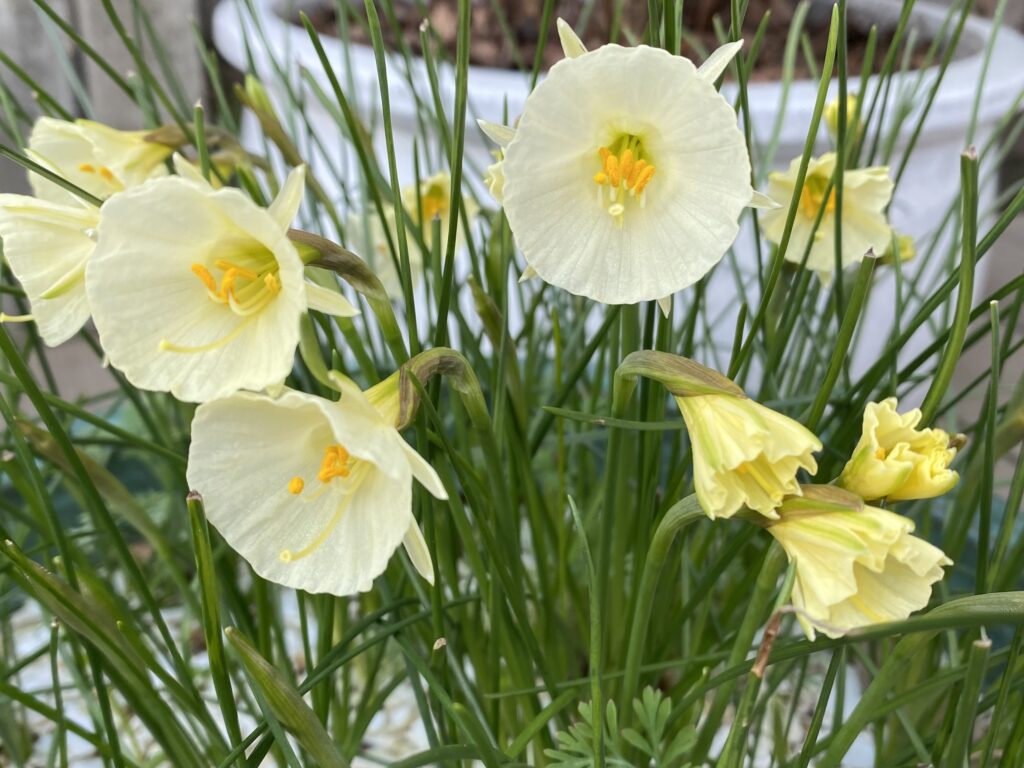
A striking choice for early March flowers is Narcissus Bulbucodium. They’re not your usual daffodil but look beautiful at the front of borders or in pots.
For a more traditional shape we love Narcissus Jetfire with its slightly reflexed cheerful yellow petals and bright orange trumpet. A late March favourite is Narcissus Falconet which has a wonderful fragrance.
For April flowers, our favourite is Narcissus Geranium, with its white petals and rich orange centre. It has multiple flowers per stalk and the most dreamy scent – great for snipping a few to take indoors! We plant them in small groups in borders and lawns – you can see them below (orange trumpets) in this mini meadow, planted alongside Ellen, Dutch Master and a few surprise varieties which cropped up after a mass bulb planting!
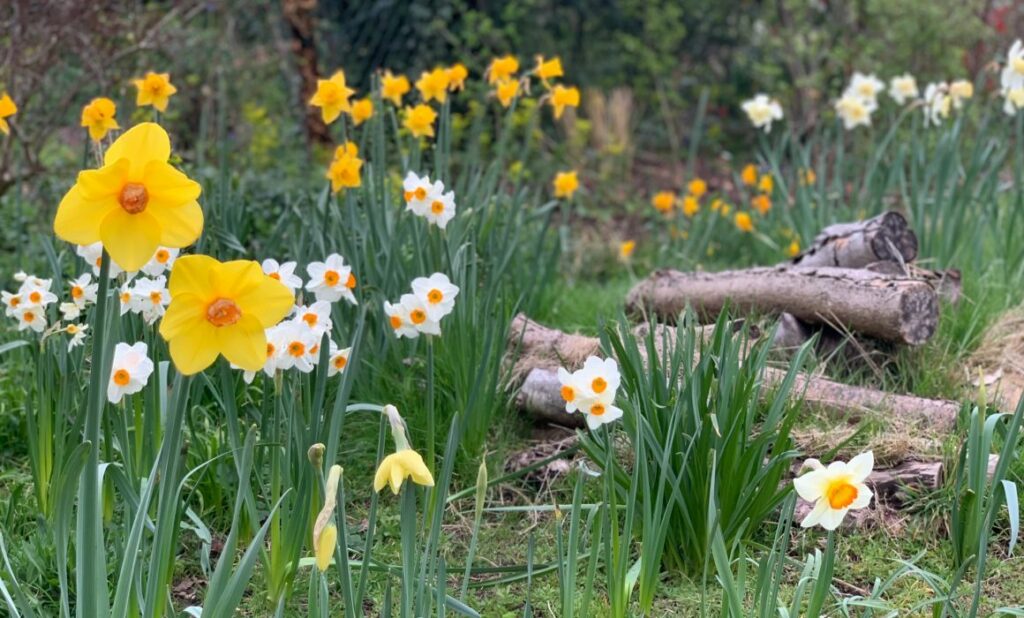
In late April you get the wonderful time when narcissi and tulips are flowering together. It can be an effective design choice to mix these in borders so that you get a mix of colours, shapes and textures at the same time. Here you can see a mix of yellow and white narcissus (Tamara, Martinette, Minnow and Tresamble), planted with white (Exotic Emperor), purple (Synaeda Blue) and pink (Salmon Prince) tulips to create a colourful statement.

A mixture like this does a great job of adding colour and interest to the borders when everything has had it’s spring cut back and the new growth of perennials and grasses is just starting to emerge. The tulips will then continue flowering on through May, being joined by early flowering perennials such as Geums and Nepeta. Think about what plants you have which will be in flower in May and plant complimentary coloured tulips to really enhance your view.
Tulips need sunshine to grow well and won’t thrive in shaded or even partially shaded gardens. Wet and heavy soils, such as clay, also don’t suit tulips well and while they may flower the first year, it is unlikely they will survive over winter – you might get a few stragglers the following year! Even on lighter soils, tulips often don’t flower as well the second year. They are best treated as annuals, which means replanting the same varieties every year and that way you keep the same colours each year and any that do come up from previous years are a bonus!
Tulips need to be planted later than other bulbs as they need to go into cooler ground. It’s really important to wait until November to plant them, although last year November was so mild that we were planting them right at the end and into December. This is because the ground is cooler which helps prevent tulip fire disease and other fungal diseases that can affect tulips.
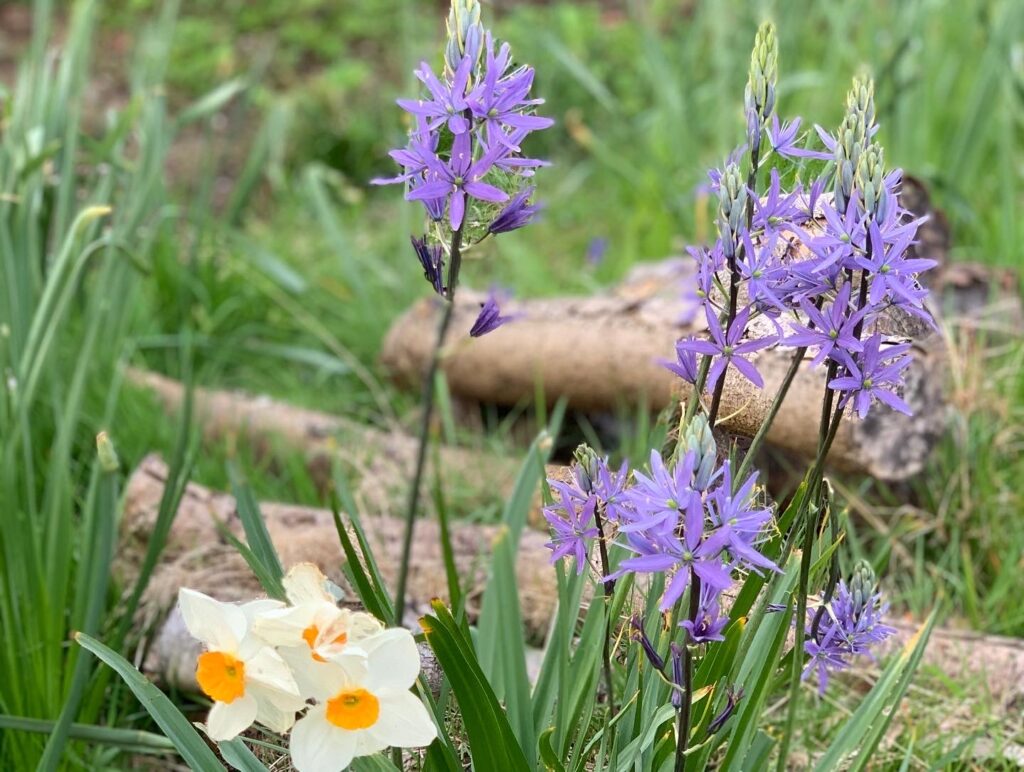
Camassia are one of our absolute favourite flowers. In white and blue tones, they are an elegant choice for a garden that add both height and colour. Flowering around May, there are varieties that work in full sun and partial shade. We love them in meadows and borders alike. Planted in swathes or en masse, they are very pretty and an underused choice in our opinion! Two of our favourite varieties are Leichtlinii Caerulea (pictured below) and Leichtlinii Alba (white).
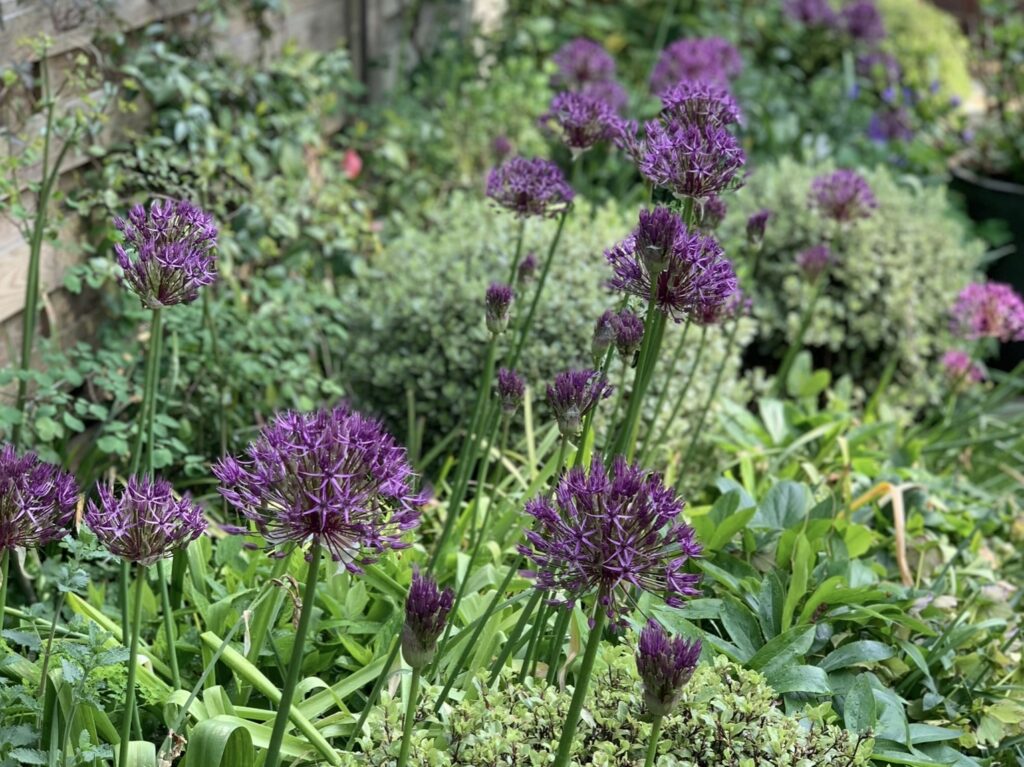
Late May, June and July bring the alliums. A wonderful option to add height and sculptural qualities to your planting design. There’s even a variety which will tolerate partial shade!
We like to plant allium in drifts (rather than clusters) through the border. Weaving them through your other plants is very effective and means that their foliage, which can become rather unsightly, can be tucked up amongst other plants to hide it away. Like tulips, alliums won’t last long in wet or very heavy soils and so should be treated as an annual.
Most Alliums work best in full sun. Here you can see Allium sphaerocephalon in one of our Beckenham garden design projects. It’s a magnet for bees and changes colour as it opens. It’s also excellent value for money.

For a more looking allium, we often use Purple Sensation, which dries beautifully for use in vases as well.
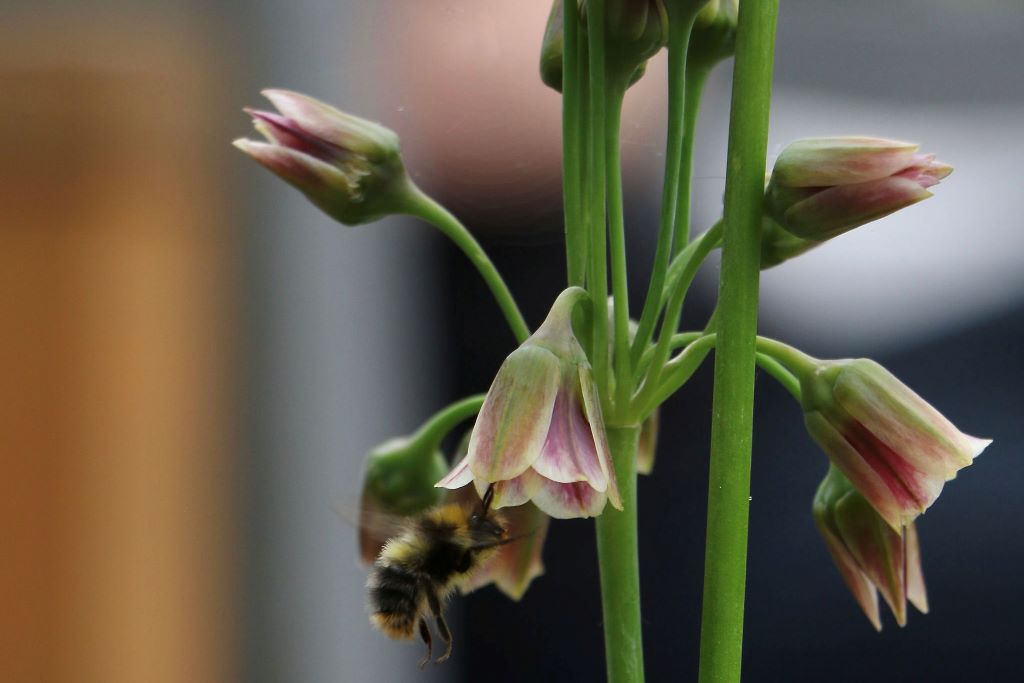
We also love Allium Nectaroscordum Siculum. Not only for its beauty, but also because it works in partially shaded borders as well as in full sun. Because it tolerates both positions, it can be used to create continuity between borders of different aspects within the same garden which is especially lovely.
As you can see, there are so many bulbs to choose from for flowers from February to July. They are well worth taking some time to research and start planting from the end of September (hold off until November for tulips). You will thank yourself next year when you are enjoying beautiful flowers springing up from the earth. For more on specific varieties, read our article “Spring Bulb Inspiration” here.
Every May, the charity Plantlife encourages garden owners and green space managers to take part in “No Mow May”. By not mowing your grass, Plantlife says you will be “liberating your lawns and providing a space for nature”. And we think this is a fantastic idea and something we strongly encourage you to do. Here’s why!
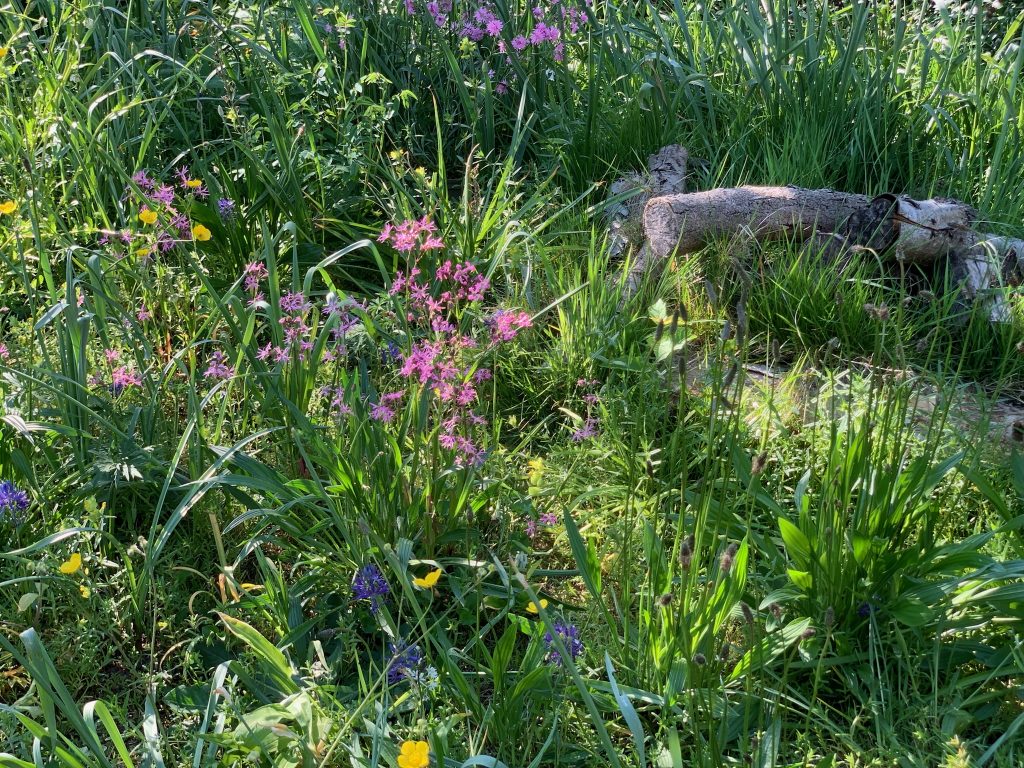
Since the 1970s the UK has lost nearly 97% of its flower rich meadows. Not only is this a huge loss of plant life, but it’s a huge loss of food sources for pollinators too. As we all know, pollinators are essential for life on earth and so we should be helping them out where we can. And it can’t get much easier than not mowing your lawn, can it?!
Leaving your lawn for the month will allow wildflowers to grow and flower. These will provide vital food sources for pollinators such as bees and butterflies, as well as looking really rather beautiful too. Flowers such as clover and daisies, dandelions and buttercups will flower, but you may be surprised by what other wildflowers grow too.
As well as providing food sources for pollinators, allowing your lawn to go wild can also help to tackle pollution and can lock away atmospheric carbon below ground. It’s definitely something that could make a significant difference to the environment, especially as there are over 20 million gardens in the UK. Imagine the increase in wildflower areas if even just 10% of people joined in!
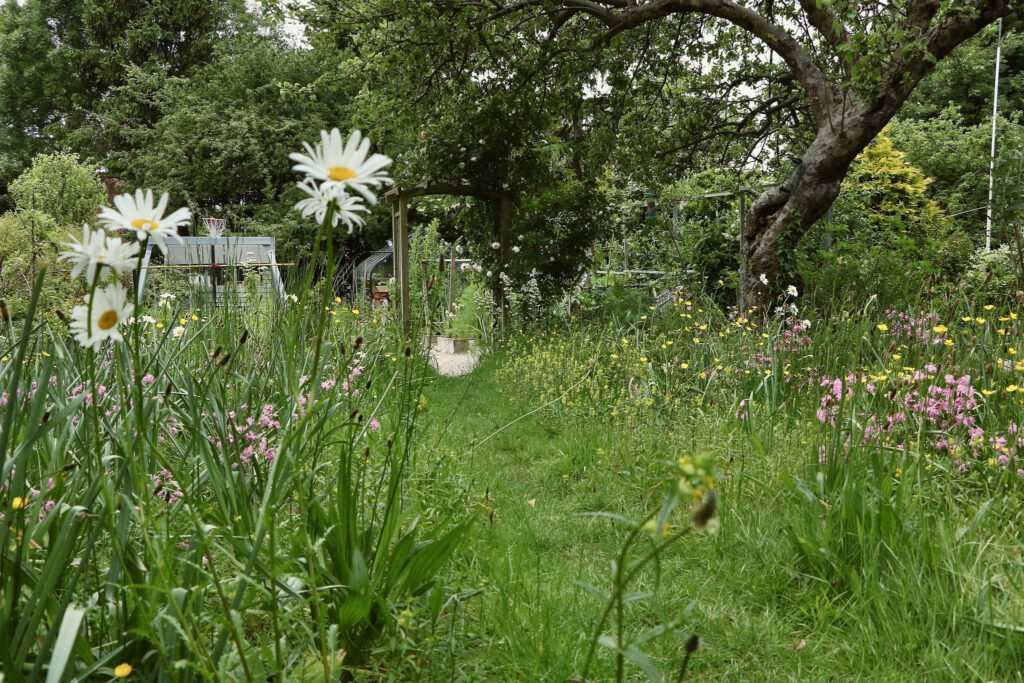
Once May is over, perhaps you would consider leaving your lawn to develop into a wildflower meadow. If converting the whole lawn won’t work for you, perhaps a section of it could be allowed to rewild? Not only would there be great benefits for pollinators and wildflower populations, but it would be a beautiful addition to your garden space too. Below you can see a photo of a meadow area that started life as a section of unmown lawn. We have developed this over several years to become a beautiful, species rich area, with lots of native and non-native flowering plants and wildflowers. If you’d like to rewild an area of your lawn, we’ve written more about how to do this here. We highly recommend it!
One of the great pleasures of having a garden is watching wildlife use it; be that butterflies, bees or birds. But all too often, new clients of ours say they aren’t getting much wildlife in their garden. Usually, the reason for this is that there isn’t enough there to attract these welcome visitors. The good news is that it’s really rather easy to change this – you just need to provide food or shelter, or both! There are lots of ways that you can do this – some big and some small. Here are six ideas to help get your started.
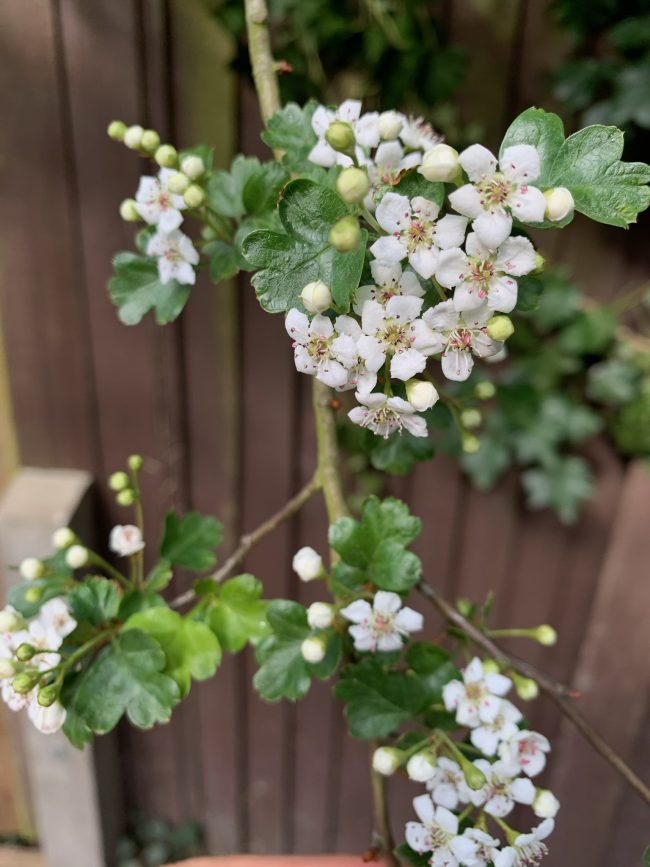
As well as providing beauty, shade and privacy to a garden, trees are brilliant for wildlife, and some more so than others.
Firstly, you can choose a tree that produces blossom and fruits. These will feed pollinators with the nectar and pollen from the flowers, and birds with the fruits. For example, a native hawthorn (there are two to choose from) is the food source for many caterpillars, produces nectar and pollen that feeds many pollinators including bees, and then the fruits produced are eaten by birds. The birds will visit the tree to eat the caterpillars and other insects that are in it. It’s a beautiful choice, as you can see in this photo of its blossom.
Birds also make use of the shelter and cover trees provide. They are elevated positions from which birds can safely observe the garden looking for water, food and for predators. Birds can retreat to the tree if a predator comes by, they need a rest or to shelter from bad weather.
Our tree of choice for all round value to wildlife is a native hawthorn, but there are lots of other trees which are of great benefit too. You can read more about other trees (and shrubs) for wildlife here.
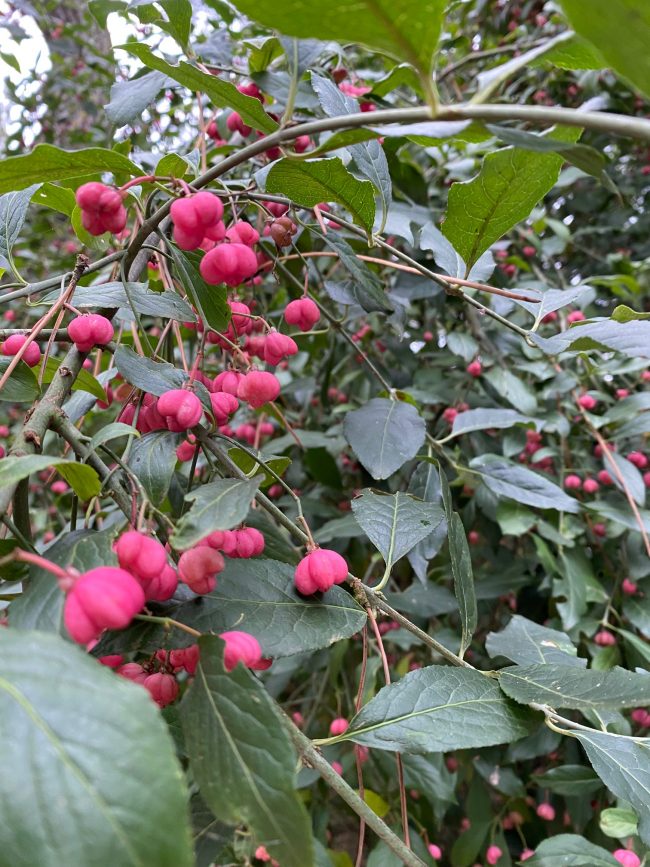
Adding shrubs or hedging has a similar effect to trees. They provide food, shelter and habitats to pollinators, insects and birds.
If you are able, you can use hedging instead of fencing to enable wildlife to easily travel through it, including crawling under it, which is of great benefit if you are trying to encourage hedgehogs into your garden.
A mixed hedge will provide for a wider range of insects and pollinators as well as helping create a relaxed, natural feel in the garden. We love including hawthorn, blackthorn and euonymous europea (pictured here with its incredible autumn fruit) but there are lots of options to choose from.
If you prefer a more formal looking hedge with just one type of plant in it, you could opt for something that flowers and fruits so will provide food as well as shelter, but even if your choice doesn’t do that, a hedge will still provide shelter for insects and birds.
This is probably the easiest thing you can do to make a relatively easy and instant impact to your garden’s appearance alongside encouraging more wildlife. So many flowering plants are beneficial to insects. Encouraging more insects will in turn encourage more birds who will eat the insects helping to create a balanced and healthy ecosystem.
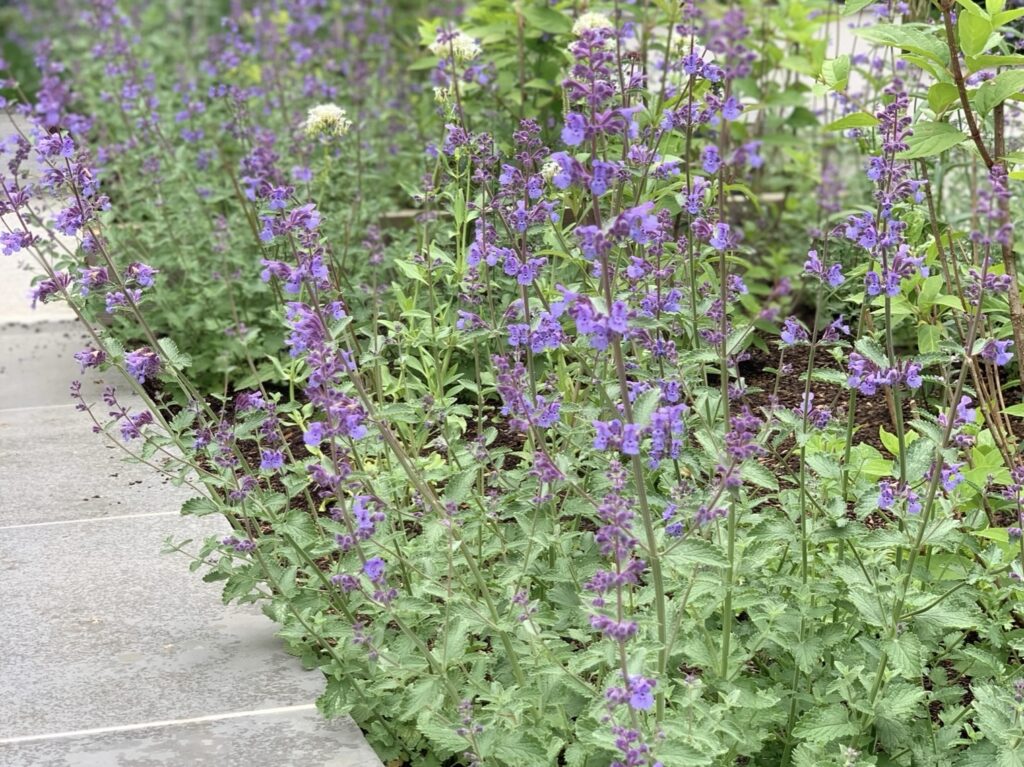
With flowers comes beauty and colour. Our very top choice would be Nepeta but really any nectar-rich plants are ideal. You can read in more detail about our favourite small plants for pollinators here.
When planning your planting, it’s worth considering successional flowering. Not only will this mean you can enjoy the beauty of your garden is in flower for a longer period of time, but food will be provided for longer too. This will keep the pollinators in your garden and with them birds.
Choosing plants that produce seed heads too will provide winter interest as well as food for bird in the Autumn and Winter. Verbena bonariensis produces seeds which are enjoyed by finches, and when in flower it is beloved by butterflies especially. Plants with hollow stems will provide good hibernating habitats for insects over winter too, buddleia for example are good for this. This brings us on to point 4 below…
It’s really important that insects not only have food provided, but places to live too. This will mean they aren’t just passing through, which will mean birds regularly visit your garden too. Insects don’t ask for much! Leaf piles, stick piles and old wood provide lots of nooks and crannies to live in. Half burring a log so that it starts to rot down will create a perfect habitat for stag beetle larvae that live underground feeding off of rotting wood for 3-7 years!
Creating a bug hotel is a great idea, and not only makes for a designated place within the garden for leaves to be stacked up, but is a great way to get children interested in insects and gardening too. You can make a bug hotel in lots of different ways but be sure to provide lots of different sized areas for different insects to make their homes in. You can create different layers or compartments and use fallen leaves or stacks of bark or twigs near the bottom to create spaces that can be crawled into for hibernation.
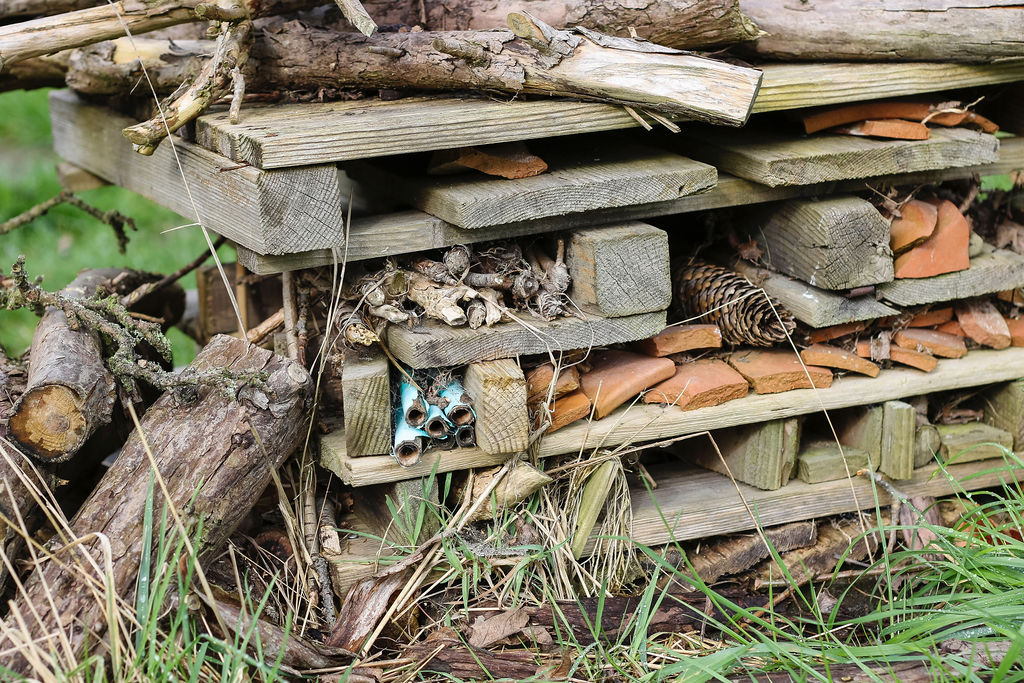
You can also buy kits from which to make bug hotels, or you can make them from scratch using materials you have available – for example, logs, offcuts of wood, stacks of roof tiles, layers of broken plant pots, twigs and sticks that have fallen from trees and bamboo canes all make for great habitats for wildlife.
You can also build specific bee houses. These are for solitary bees who nest in hollows as well as some who lay their eggs in tubes and seal them with leaves. Again, you can buy kits for these with lots of different sized holes to provide habitats for different species, or make your own. It’s important that the insides of the tubes are smooth so as not to damage the bee or the larvae.
These sorts of projects are wonderful ways to get children involved in the garden and perhaps a fun Easter holiday activity? Read more about creating habitats for beetles here.
As well as adding trees, shrubs and/or hedging you can help birds to build their nests by leaving twigs, long grass, leaves and even pet hair in the garden from which they can build their nests.
You can also install bird boxes. Different birds like different styles of boxes so if you have certain birds in your garden that you want to provide for, or certain ones you’d like to encourage, have a check of what sort of box they prefer. For example, robins like open fronted boxes, while a blue tit prefers a box with a small hole.
The site of the box needs to be safe, with natural cover and a clear flight path to the entrance. It should be north east facing so that it won’t overheat inside and tilted slightly forward to that rainwater runs clear of the entrance. It needs to be in a spot that predators such as domestic cats can’t easily reach.
It is said that the single best way to encourage wildlife to your garden is to add water. This acts as a place for wildlife to drink, eggs to be laid, food to be caught. It will encourage frogs who are hugely beneficial for keeping slug populations under control. Again, this can be a great project to help inspire children to get out into the garden more and engage with wildlife too. You can add a bird bath, a shallow dish of water filled with pebbles or go full on with a wildlife pond dug into the ground. Read in more detail about why you should add a wildlife pond to your garden here.
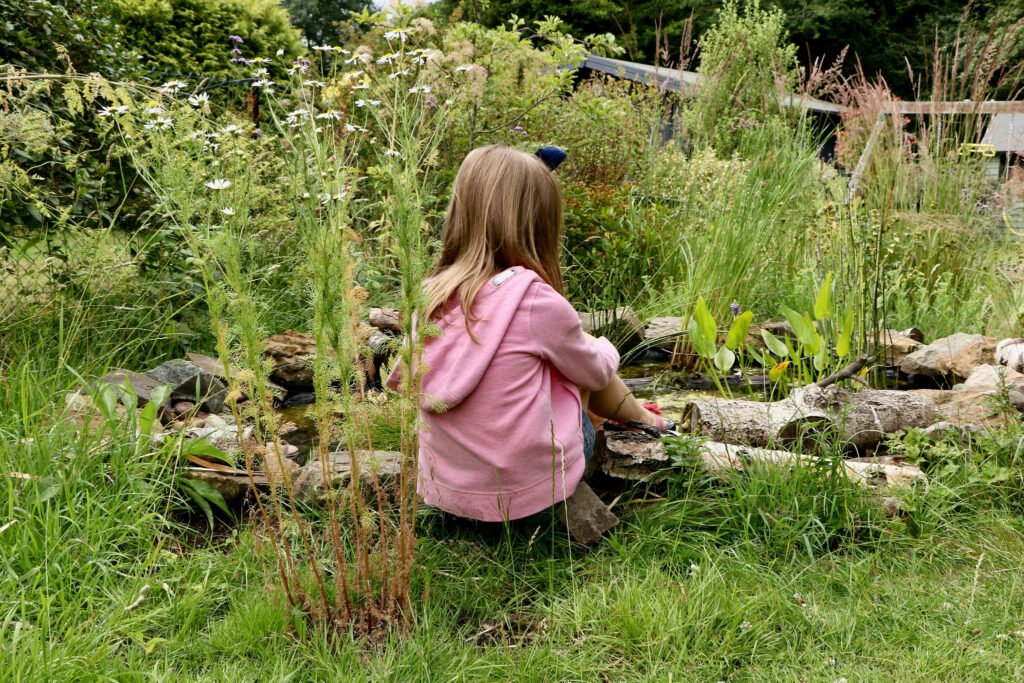
We hope you have found some inspiration here for how to encourage more wildlife into your garden. Lastly, it would be remiss not to say one of the most important things for wildlife – and that is to never, ever use chemical pesticides. They are harmful to not only the intended target, but to water systems, other plants and creatures, the soil, pollinators and to humans. There is no need to use them in our gardens. Establishing a balanced ecosystem in your garden will do much more for keeping pests and weeds at bay, as will careful, organic garden care.
You can read more of our wildlife tips here – and do drop us an email if you have any questions or would like some help making your garden as wildlife friendly as possible!
Roses are a firm favourite for many people, undoubtedly beautiful and often unrivalled in scent. With so many species to choose from, there truly is a rose (or two!) for everyone.
As we head into November, it is an excellent time to add roses to your garden. This is because it’s bare root season. This means that from now until the new year, you will be able to buy roses unpotted, with no soil but just bare roots – as the name suggests! This is both more economical and more sustainable as there’s no soil or pot. You just need to soak the rose roots for a few hours and then plant them, following the supplier’s guidance on planting depth and method.
Here are some of our favourites to help inspire you, and maybe narrow down your search list! We have specifically chosen multiple roses that have benefits for pollinators. Many of the roses with double flowers – those with lots of layers of tightly packed petals – can’t be used by pollinators as they just cannot reach their stamen through all of the petals. So, as beautiful as they are, we are leaving that type of rose off our list in favour of recommending those roses that are good for people and pollinators!
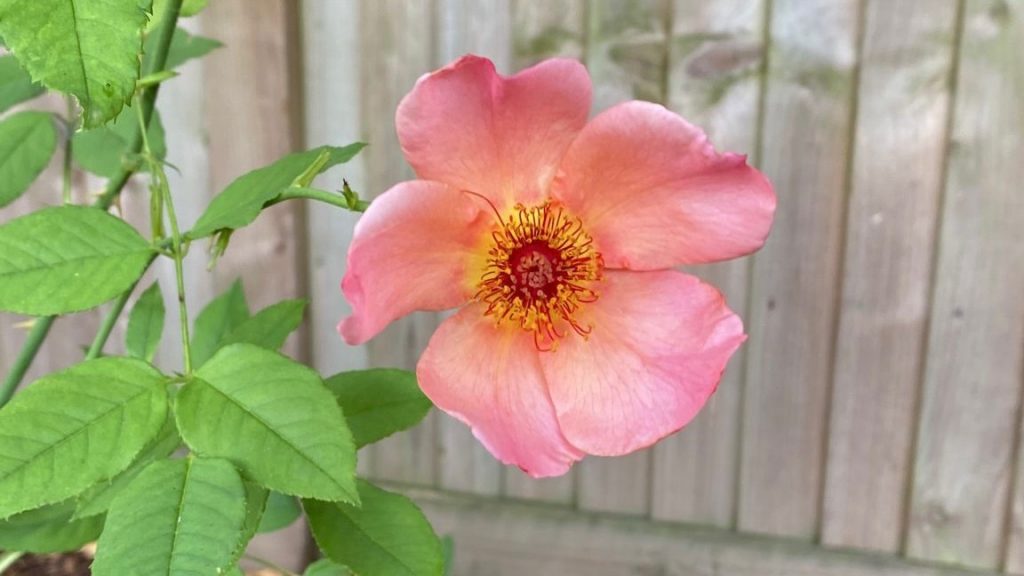
This is a real champion of a repeat-flowering rose with beautiful coral-pink flowers in the summer and orange hips through winter. It is one of the largest roses reaching a shrub size of 6 foot high by 5 foot wide (1.8m by 1.5m), with large, truly single, open flowers too giving great access for pollinators! It grows in full sun and partial shade and has a delicate musk fragrance. We would use this rose towards the back of the border, in a mixed border or in a wilder planted area.
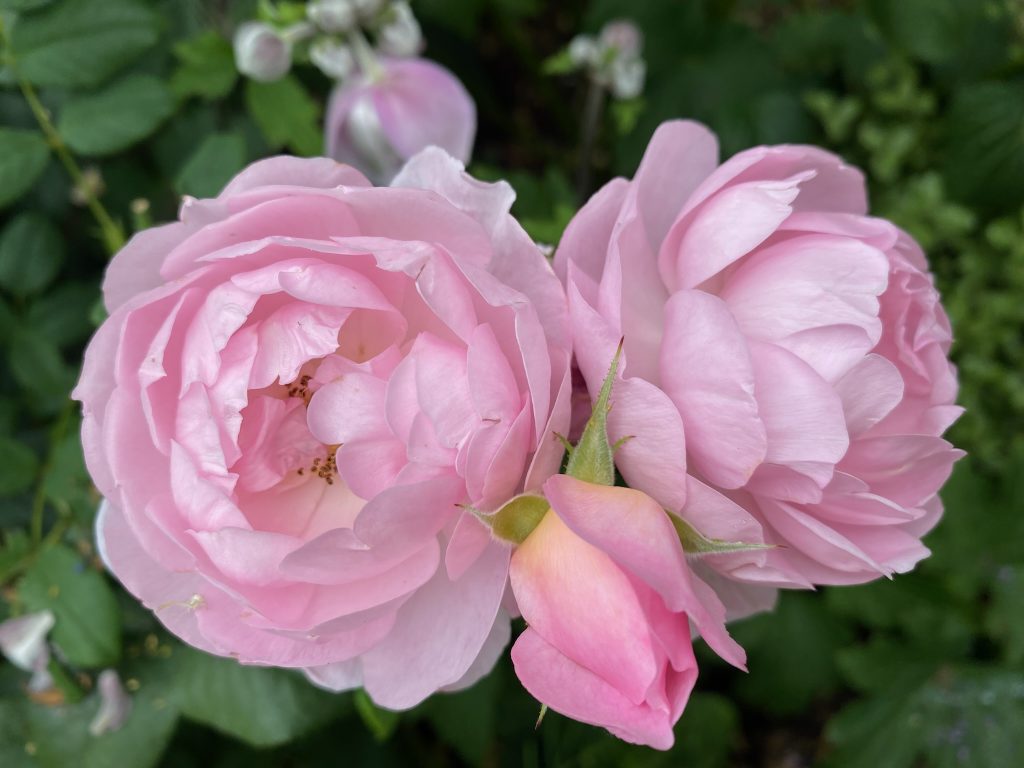
This light pink rose has a truly beautiful scent that will percolate through a garden when the sun is shining. It is a medium sized, repeat-flowering shrub rose, reaching a size of 4 foot by 4 foot (1.2m by 1.2m). It has medium sized blooms with ruffly petals opening to reveal a yellowy centre. It grows in both full sun and partial shade so is versatile too. We would plant this rose in the middle of a mixed border though it would also be happy in a good sized pot.
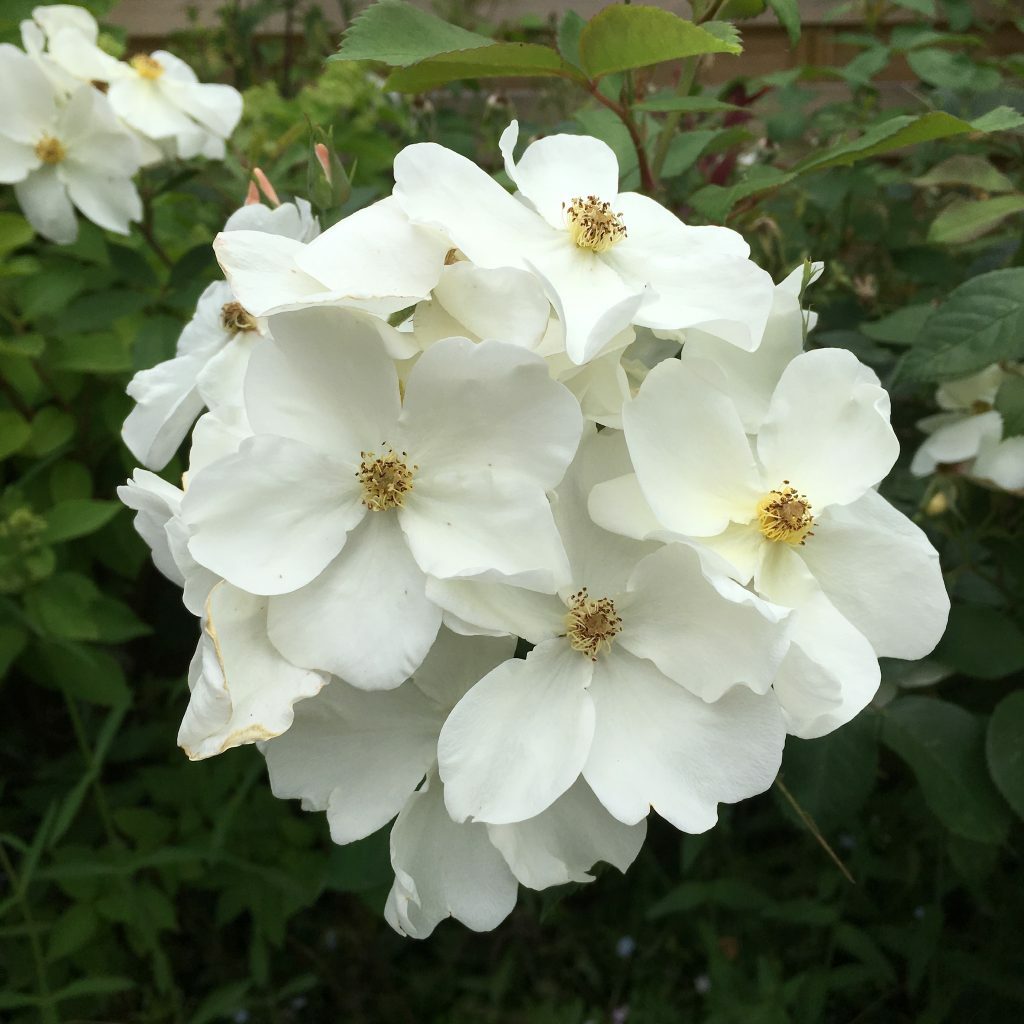
This rose flowers with masses of delicate, small white flowers in cloud-like heads. It is a medium shrub reaching at least 4 foot by 4 foot (1.2m by 1.2m) and has almost no thorns making it a particularly attractive option to plant near walkways or seating areas. It also grows well in full sun or partial shade and flowers almost continuously from early summer to autumn. It works well in white garden schemes, but also has an apricot bud for an elegant hint of colour. We would plant a succession of this rose in a border along a pathway, or through the middle of a mixed border.
Tottering by gently has a very beautiful, delicate pale yellow single flower. Again, it is a medium shrub rose reaching around 4 foot by 4 foot (1.2m by 1.2m) and has a light musk fragrance. We love using the pale lemon flowers to compliment lilac and light purple planting schemes and add some contrasting colour and brighter pops throughout the border. It grows well in full sun and partial shade, and has the added bonus of producing rose hips too.
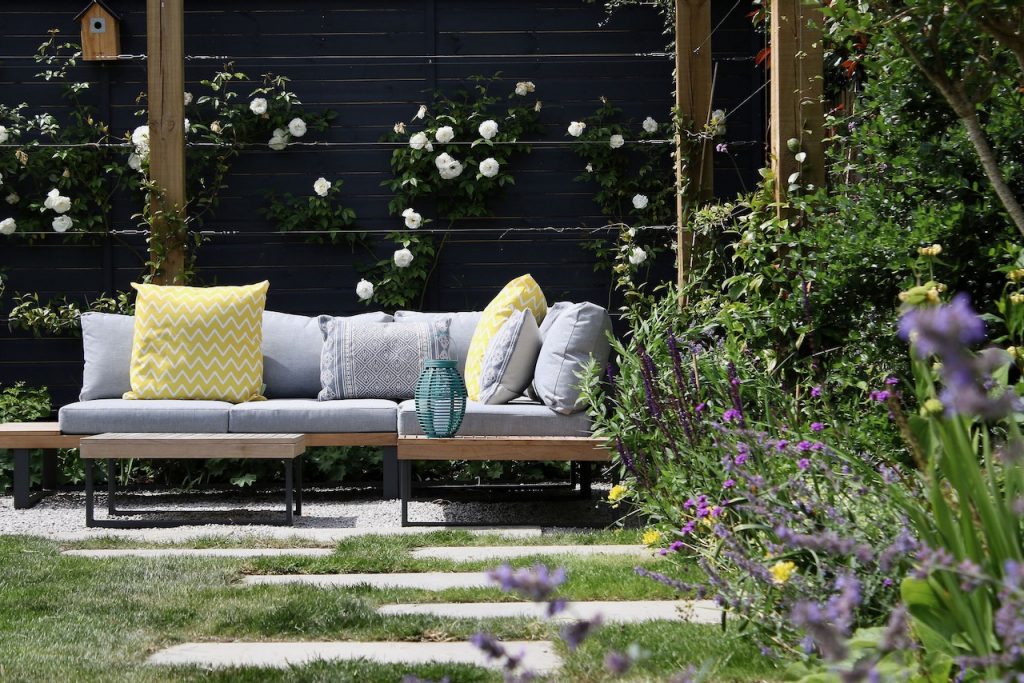
We love this rose as a climber. It has a pure white flower with multiple petals that flowers in clusters giving a full and impactful appearance. It is a fast grower, reaching around 15 foot (4.6m) and can be trained relatively easily to grow on walls, fences, around obelisks or over arches and pergolas. We have planted four against the side of a large shed in this garden pictured. It has a light fragrance so we like to plant this near seating areas.
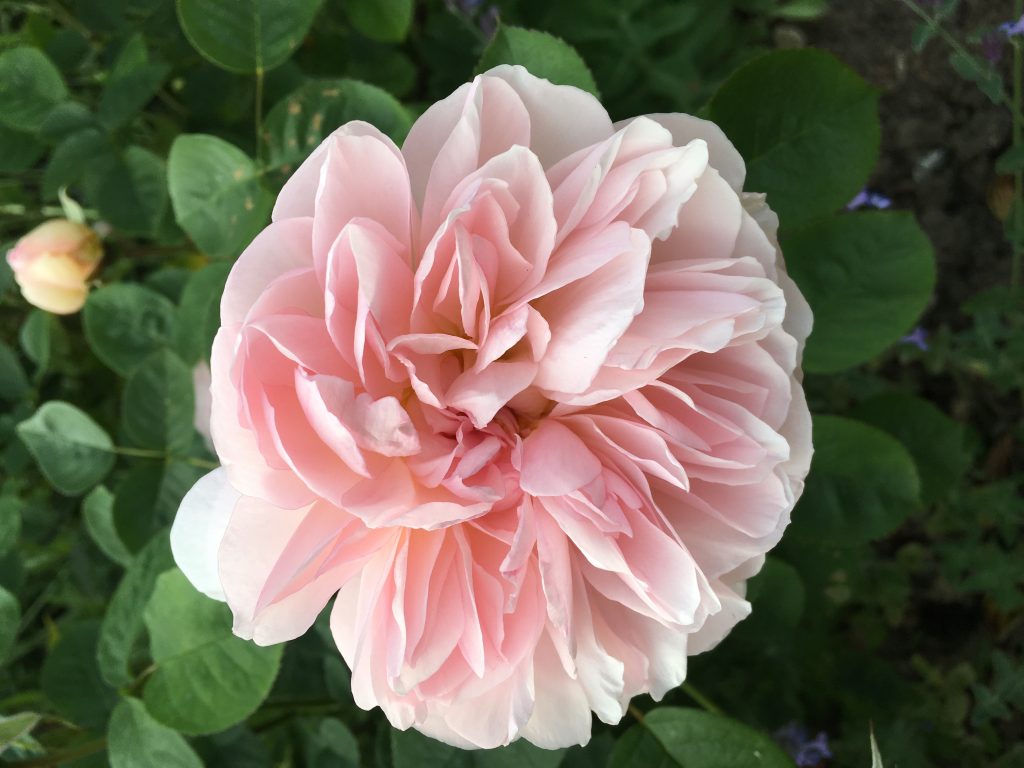
This light pink shrub rose has multi-layered flowers which are shallow and cup-like meaning pollinators can still benefit from them. It is best planted in full sun. Reaching at least 4 foot by 4.5 foot (1.2m by 1.4m), it is a slightly wider shrub rose than average, with large flower heads too. It has a strong fragrance and works well as a cut flower. We enjoy using this rose in mixed borders and in gardens where subtle additions of colour are appreciated as the leaves start off with a gentle tinge of red.
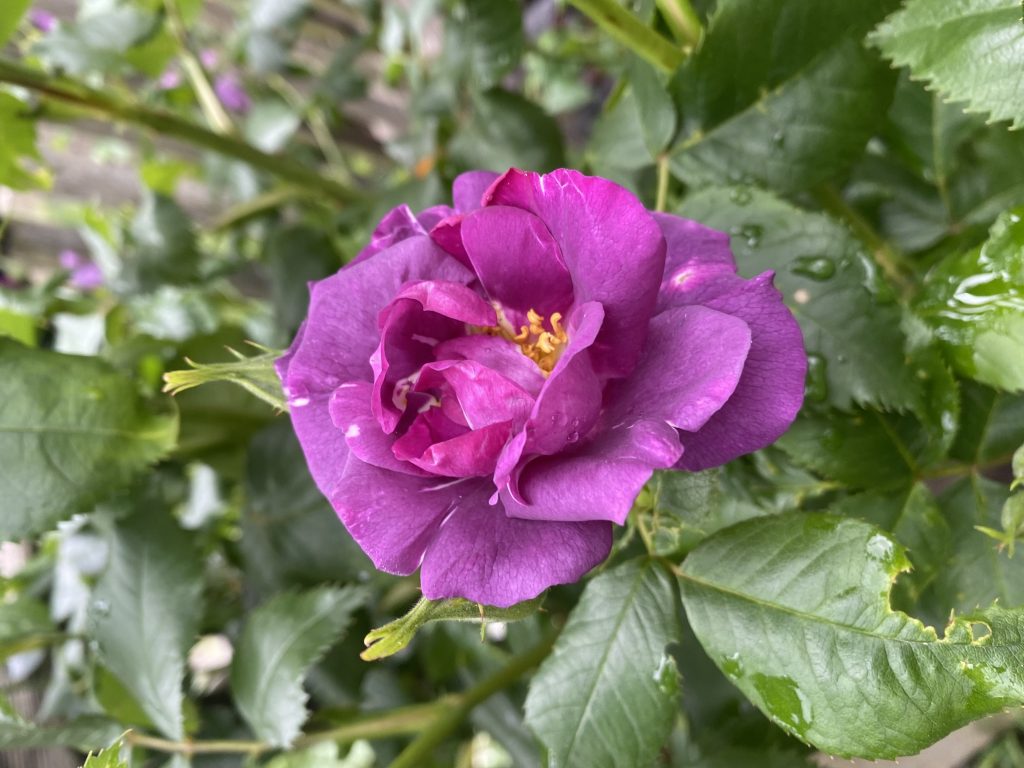
This dark purple rose has a beautiful, sweet fragrance and works well in gardens with lots of greens or with darker colour schemes. The flowers fade with time to a more powdery mauve colour. It flowers with multiple, medium sized flowers and can be quite a tall and narrow shrub rose reaching 4.5 foot by 3 foot (1.4m by 0.9m). It grows best in full sun and will flower prolifically from early summer when deadheaded regularly.
So there you have it! Seven of our favourite roses. We hope this has helped narrow down some choices for you that are beautiful additions to the garden for both us and our pollinators.
Autumn is a great time of year to look for inspiration for additions to your own garden, and to plant as the ground is still warm. Do make sure you water anything newly planted in well, even if we have rain soon after planting.
Here are five of our favourite groups of plants that really stand out in the autumn months, and many into winter too :
Ornamental grasses are excellent ways of adding interest to your garden throughout autumn and winter. They provide gentle movement and texture to borders, they look beautiful in the autumn sunshine and when it starts to get frosty too. They’re a great addition to any garden as they will hold their structure through to the spring, when most of them need to be cut down ahead of the new growth – look out for our advice on this early next year!
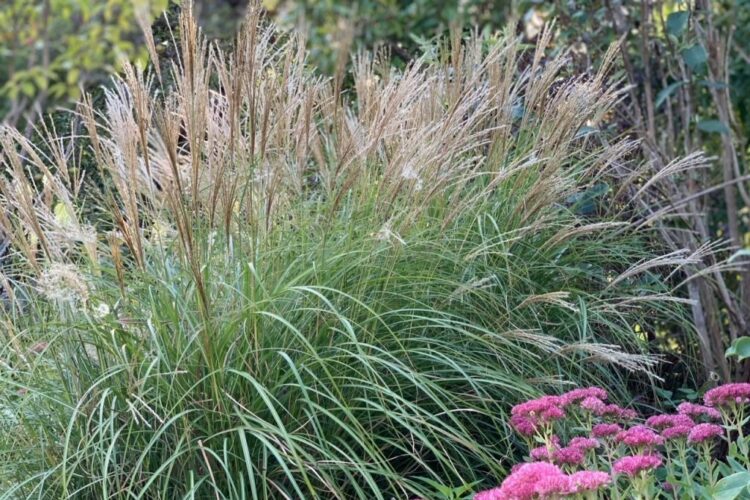
For beauty and movement all through Autumn and Winter, Miscanthus really is your best friend! It’s beautiful fronds of flowers waft about gorgeously in the breeze, and most varieties hold onto their colour for a long time. This is Miscanthus sinensis ‘Yakushima Dwarf’ which has a more compact nature than others but is still a fairly chunky grass. There are several other equally lovely varieties including Miscanthus sinensis ‘Gracillimus’, and Miscanthus sinensus ‘Morning Light’.
We love calamagrostis varieties for their compact, tall, upright growth and straw-coloured flowers, miscanthus sinensis varieties for their beautiful pink tinged flowers that silver with age, and all the pennisetums for their gorgeous, fluffy and oh so tactile flowers which look wonderful softening the edges of borders.
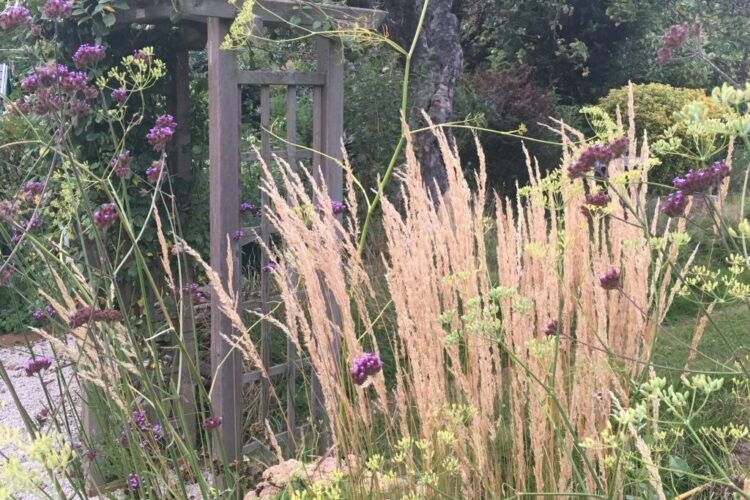
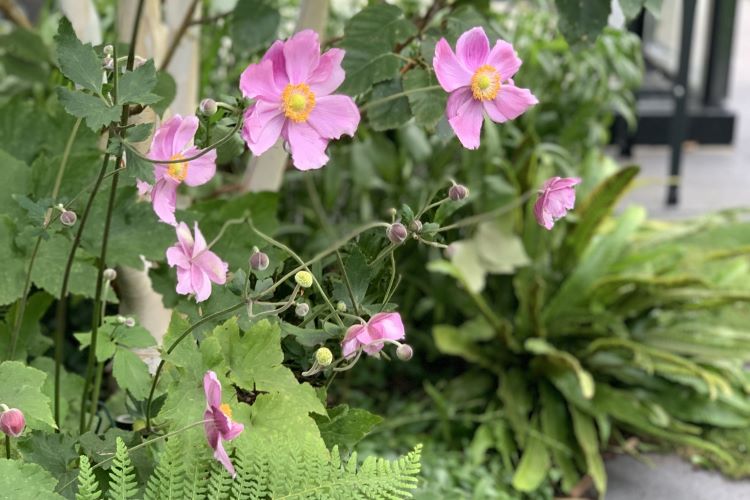
There’s still much colour to be enjoyed at this time of year from later flowering perennials such as Sedum, Salvias, Asters, Japanese Anemones, Verbenas and more. Happily many of these are also excellent late nectar sources for pollinators too.
There are several different varieties of each of these to choose from and they are readily available to buy at garden centres and online now. If possible, try to choose a garden centre that’s using recyclable pots and peat-free compost. Some of our favourite varieties of these late flowering perennials include:

This is a stalwart of the Autumn garden – the flower heads begin as a lovely soft green in the summer, start turning to greeny-pink and then open to pink in late summer/early Autumn. Their colours keeps developing until reaching this reddish-pink hue later in the Autumn. They hold their shape all winter with fantastic structural seedheads, are super easy to propagate and are bullet-proof on heavy clay – what’s not to love?!
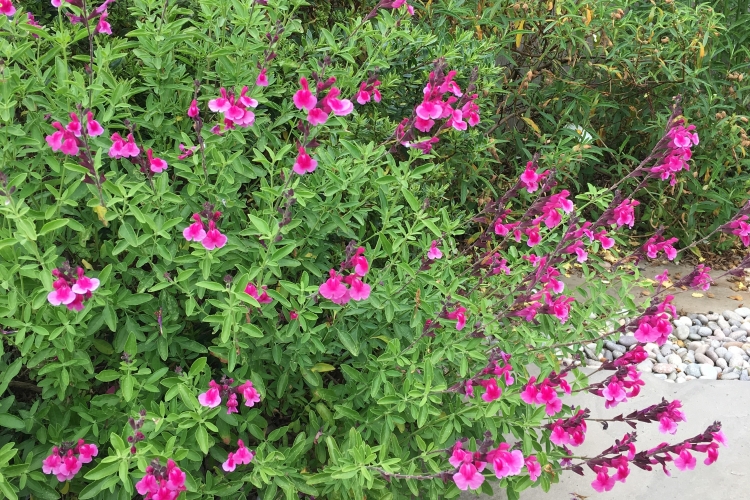
Providing colour and nectar for pollinators from mid-summer to the first frosts, shrubby Salvias are an absolute must for every garden. There are so many colours and varieties to choose from – here are just a couple of our favourites, we also love the varieties ‘Blue Note’, ‘Nachtvlinder’ and ‘Delice Aquamarine’.
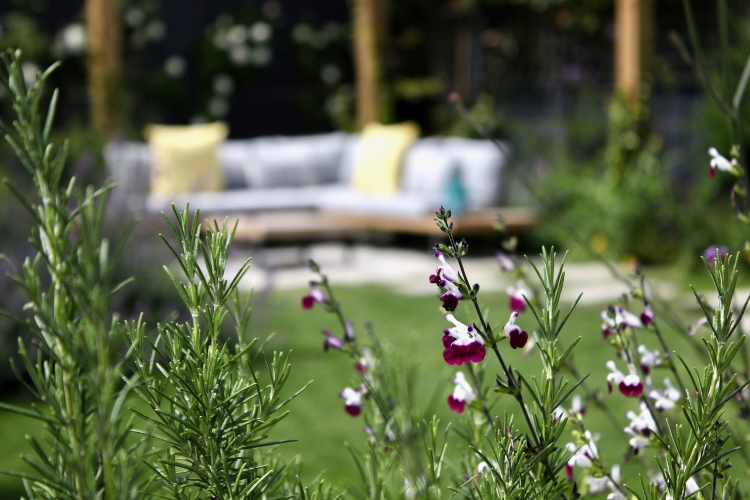
Known for their long period and flowering and for attracting various pollinators, there are now numerous Verbenas available So as well as the ubiquitous, and still very worth having, Verbena bonariensis, why not try some of the lesser known varieties? We love Verbena bampton with it’s dark stems and more delicate flowers. All Verbenas can be left standing over winter for vertical interest in the garden, cutting them back right to the base as the new growth emerges in the Spring.

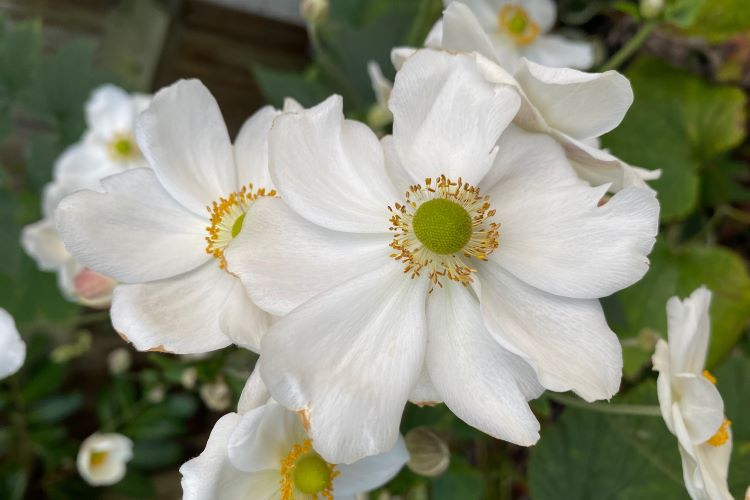
Another stalwart of the Autumn garden, providing lovely foliage for much of the year and flowering prolifically from late summer into early winter. Growing well in full sun and partial shade, they can be a great option for adding continuity and repetition throughout the garden. Here are two of our favourites. We also love the more compact ‘Swan’ series.
Some roses will keep flowering right up to early Winter or even to Christmas, but many also produce beautiful hips. These are the fruits of the rose and contain their seeds. As the flowers fade the hips swell and turn beautiful shades of orange or red. Not only are they beautiful to look at and provide a lovely pop of colour in the garden which persists as flowers are getting scarcer, but they are also an excellent food source for birds over Autumn and Winter.
When selecting a rose, some websites (including David Austin) will allow you to search for ones that produce hips. One of our favourites is Rosa Morning Mist which has a really striking coral-pink flower and goes on to produce large orange hips.
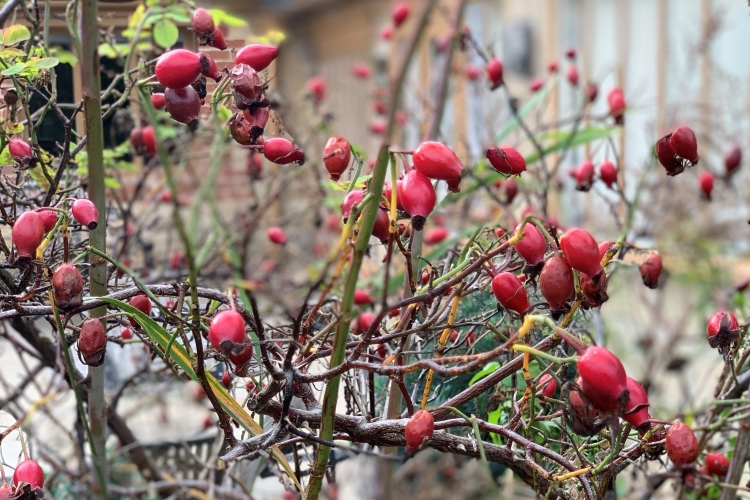
If you are not sure if your roses produce hips, you can stop deadheading them to allow the flowers to go over and give the hips a chance to form. Many of the shrub roses may be quite underwhelming but if you have any Rosa Rugosa or large bushy roses they may well produce beautifully coloured hips. It’s certainly worth seeing! Rosa Rugosa varieties are renowned for their stunning display of hips – they need some space but it’s well worth considering adding some to your garden if you can.
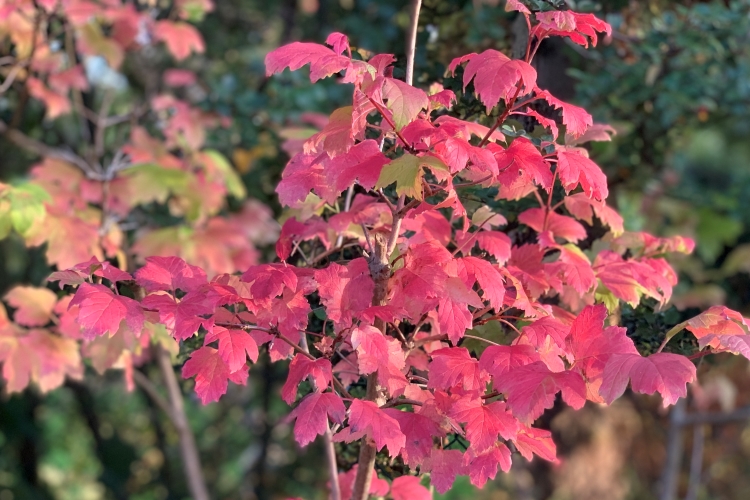
It’s not all about the flowers! Many deciduous tree and shrub species will be ablaze with colour during the Autumn. Trees such as Amelanchier, Acers, Liquidambar and flowering Prunus/cherry varieties can put on a riot of colour. These are also all great options for small-medium sized gardens, except Liquidambar which usually reaches a very large size at full maturity – however there are some smaller and fastigiate/upright varieties which are smaller, so if you have a larger garden they are definitely worth looking at for an amazing Autumnal feature.
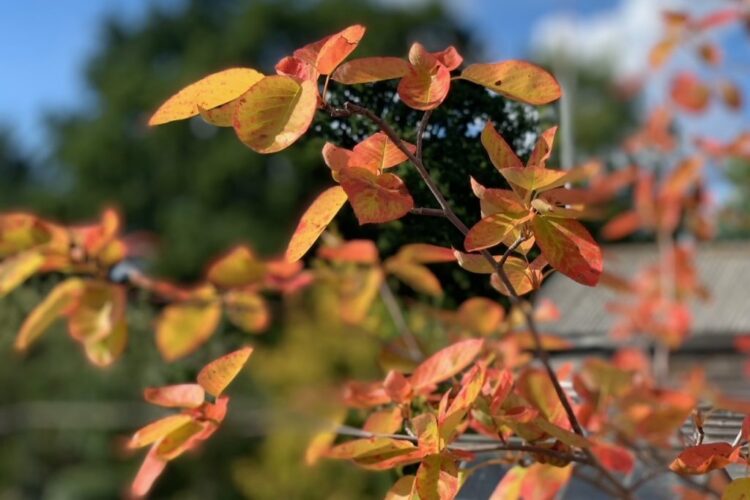
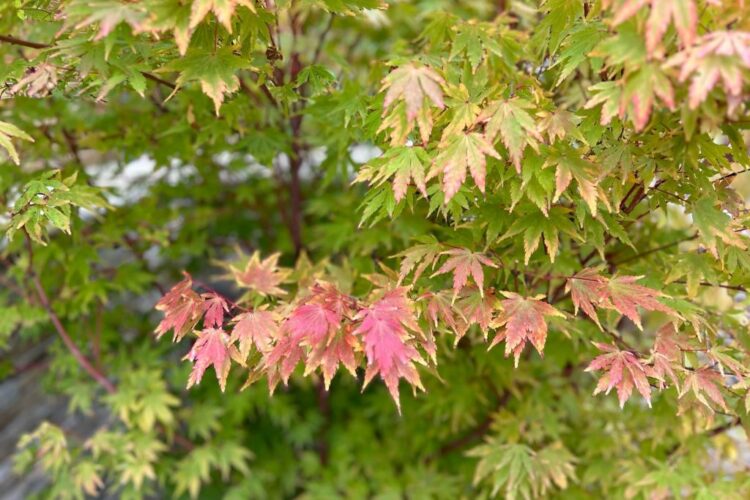

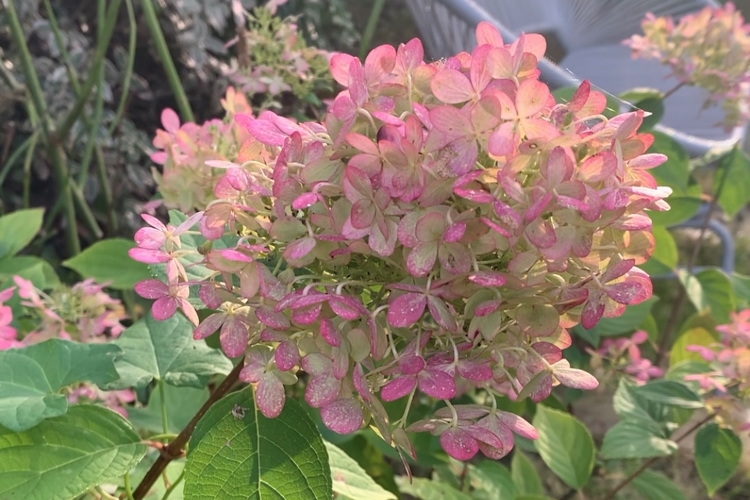
As well as trees there are some really spectacular deciduous shrubs to choose from, which will have worked hard earlier in the year to give you blooms and interest, and now as they get ready to rest for the Winter they continue to delight – Hydrangeas and Viburnum Opulus are two very worth considering, and perhaps the best shrub for Autumn colour is Euonymous Alatus (sadly I don’t have a photo!).
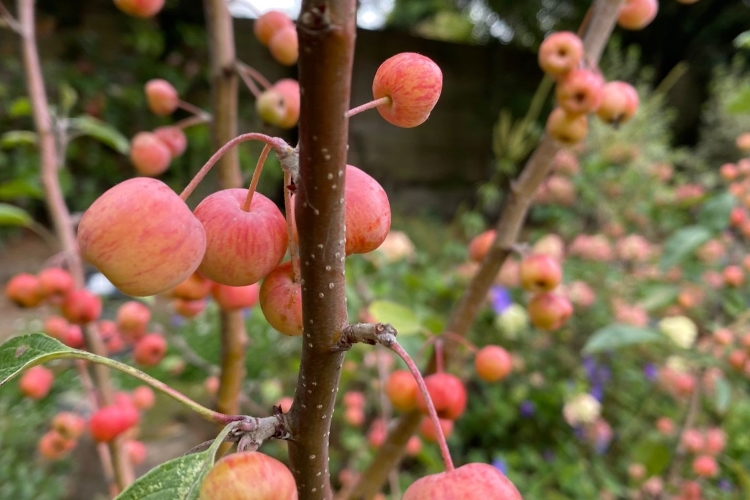
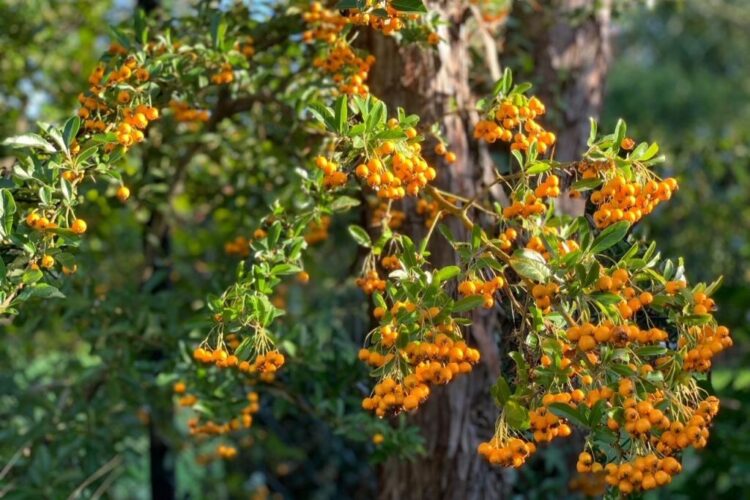
Many trees and shrubs produce berries in the autumn. These are essential food sources for many birds and they look beautiful too. We love Hawthorn, Sorbus, Cotoneaster, Crab Apple and Pyracantha – which are all beneficial for wildlife in spring and autumn. There are many varieties of each to choose from. Hawthorn has beautiful vibrant red berries and you can choose from numerous Sorbus with different coloured berries ranging from red to orange to pink. Cotoneaster produces rich red berries set against dark green leaves, often evergreen or semi-evergreen.
As gardeners, we live a lot of our time in the moment, enjoying the seasons and caring for the plants in our gardens now. But we also spend a lot of time planning for and preparing for future seasons. It may be late summer but one of the things to start thinking about now is spring! It’s time to think about ordering spring flowering bulbs for your garden, ready for planting from September to November. Here we have put together a list of some of our favourite bulbs and combinations of bulbs. However small your garden, there is always room for bulbs, whether in a pot or woven through your planting beds.
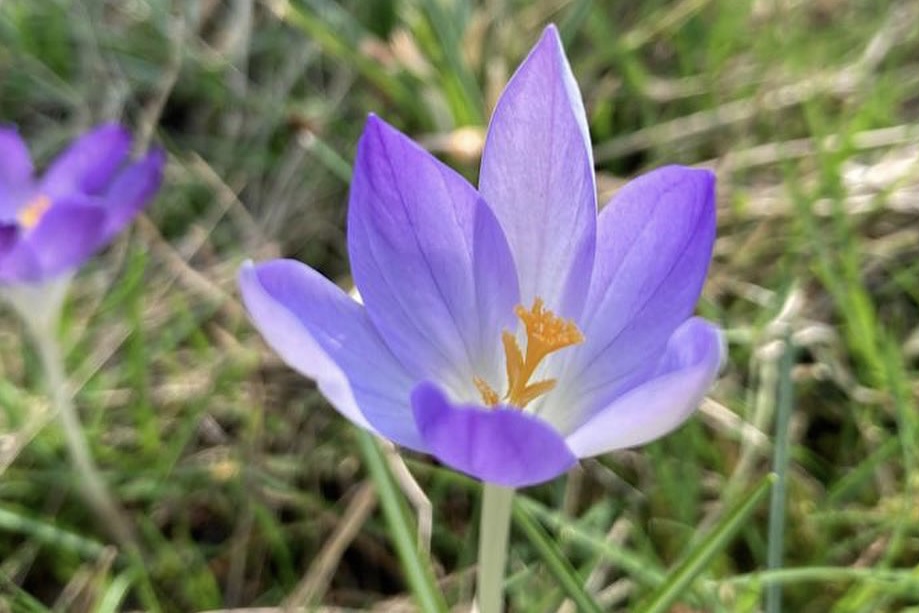
Amongst the first autumn planting bulbs to flower are crocus. Usually flowering at the end of winter or early spring, they are a really important early source of nectar for pollinating insects including early emerging bees. They look beautiful planted at the front of borders, en-masse in lawns and under trees. We like a mixture of purple, yellow and white and you can often buy good value mixtures from suppliers.
Flowering between March and May, Fritillaria meleagris, otherwise known as snake’s head fritillary, are a beautiful addition to the fronts of borders or meadow lawns. Coming in purple and white, their nodding heads are something a little bit different and we absolutely love them!
Commonly known as daffodils, there are thousands of varieties of narcissus to choose from ranging in colour from bright yellow to white to peach. They are a real sign of spring and can bring joy for several months. Many have a beautiful fragrance too and some naturalise really well, meaning you will get more and more flowers as the years go by.
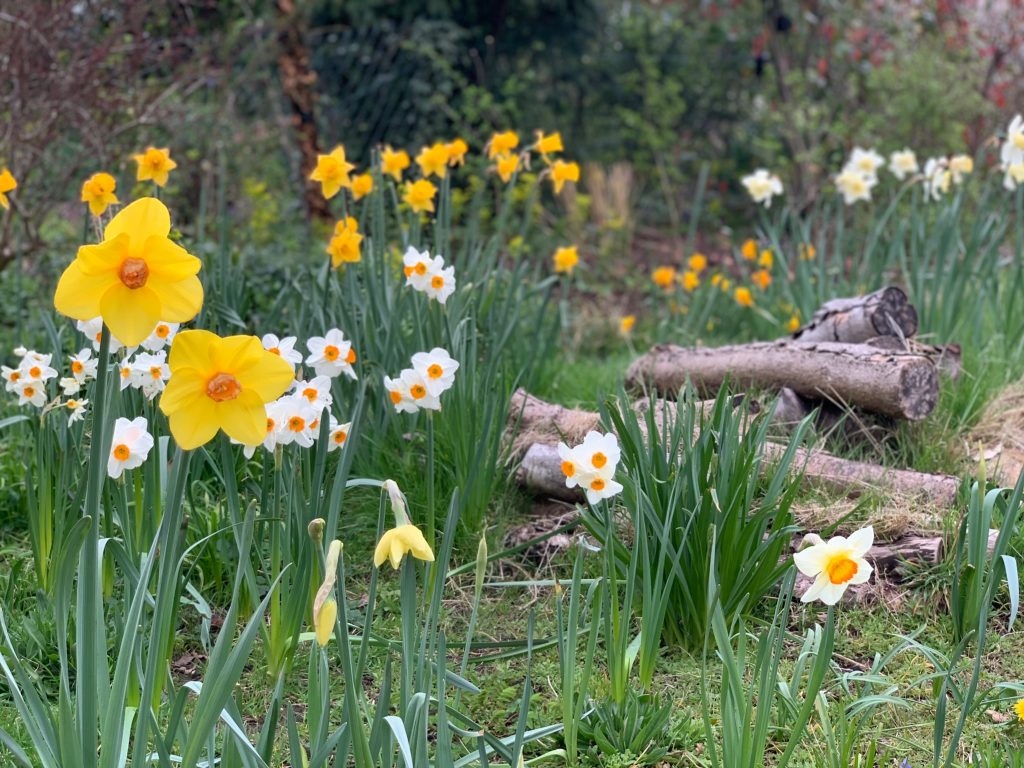
We advise planting several different varieties for successional colour and spring joy. Some websites allow you to search by month of flowering as well as colour/height, which is a great tool to help you plan for daffs from February to April (and even May). We recommend Peter Nyssen for this, not only for the easy to use site but also because they don’t treat any of their bulbs with neonicotinoids and package bulbs in a biodegradable plastic replacement.
Some of our favourite daffs to include in borders, meadows and pots include Sailboat, Jetfire, Geranium and the beautiful pure white Thalia.
Tulips are so much more than the small headed wraps you can buy in supermarkets. They respond to the sun, opening and closing their petals as the day goes by, and are available in a huge range of colour, size and shape. While they are not all reliably perennial, so may not come back every year, they are a brilliant addition of colour to the garden and in our minds it is well worth the effort of adding more each year. Any that do return are a welcome bonus!
Some of our favourite combinations are:
Tulip orange marmalade and tulip spring green – we love these planted alongside Narcissus geranium as the orange centres of the daffodils pair really well with the vibrant orange tulips:

Tulip akebono and tulip spring green – we love these planted alongside and amongst forget-me-not – the combination of yellow, white and blue is always a calming spring winner. Most tulips look gorgeous flowering above forget-me-not, so whatever colour you have, adding some forget-me-not as well is a great idea!
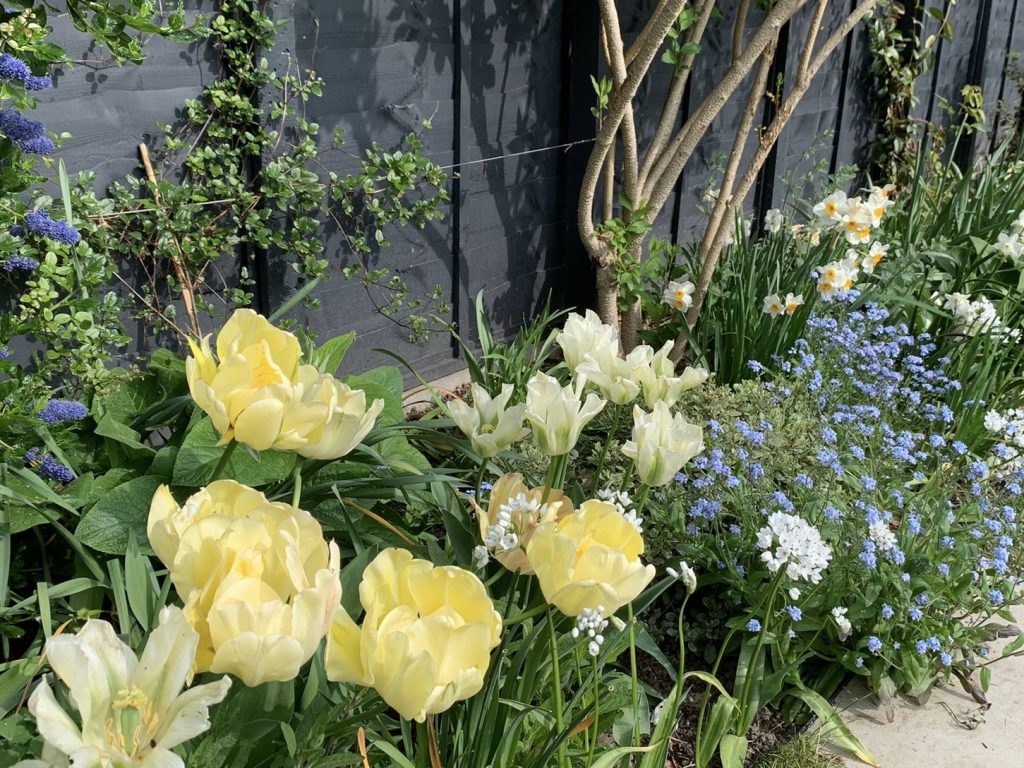
Tulip ballerina and tulip antraciet:
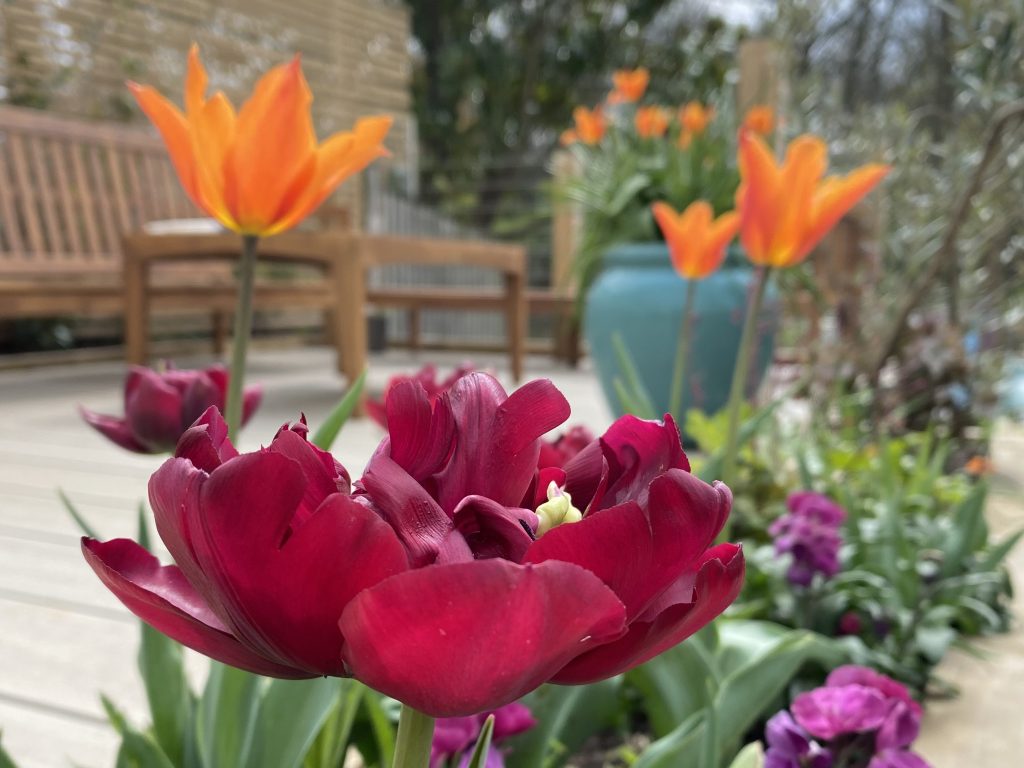
Tulip Virichic, tulip Greenland and tulip Formosa:

We love alliums, as do bees and other pollinators. They take over from the tulips and add colour at a different height. We like to weave alliums through borders, so that they pop up amongst perennials, rather than have them crowded in groups.
Some varieties are perennial and will naturalise while others are not that reliable so it’s a good idea to opt for good value ones in the expectation of adding more each year.
Purple sensation is a very popular choice, and for good reason. It’s beautiful, a classic allium shade of purple, is one of the first of the alliums to flower and it dries brilliantly for use indoors in vases.
Other varieties that we like include aflatunense which has a slightly softer purple colour than purple sensation, atropurpureum which has a deep burgundy colour and allium nigrum which is white and a more domed shape that naturalises well.
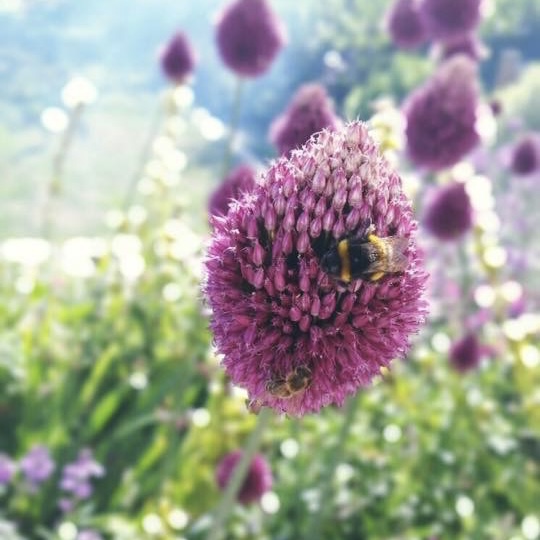
For a later flowering choice (usually in July), we like allium sphaerocephalon otherwise known as drumstick allium. It turns from green to burgundy over the summer and is a very good choice as it is reliably perennial, very reasonably priced and naturalises well.
Allium Sphaerocephalon is loved by bees and is one of the best value bulbs
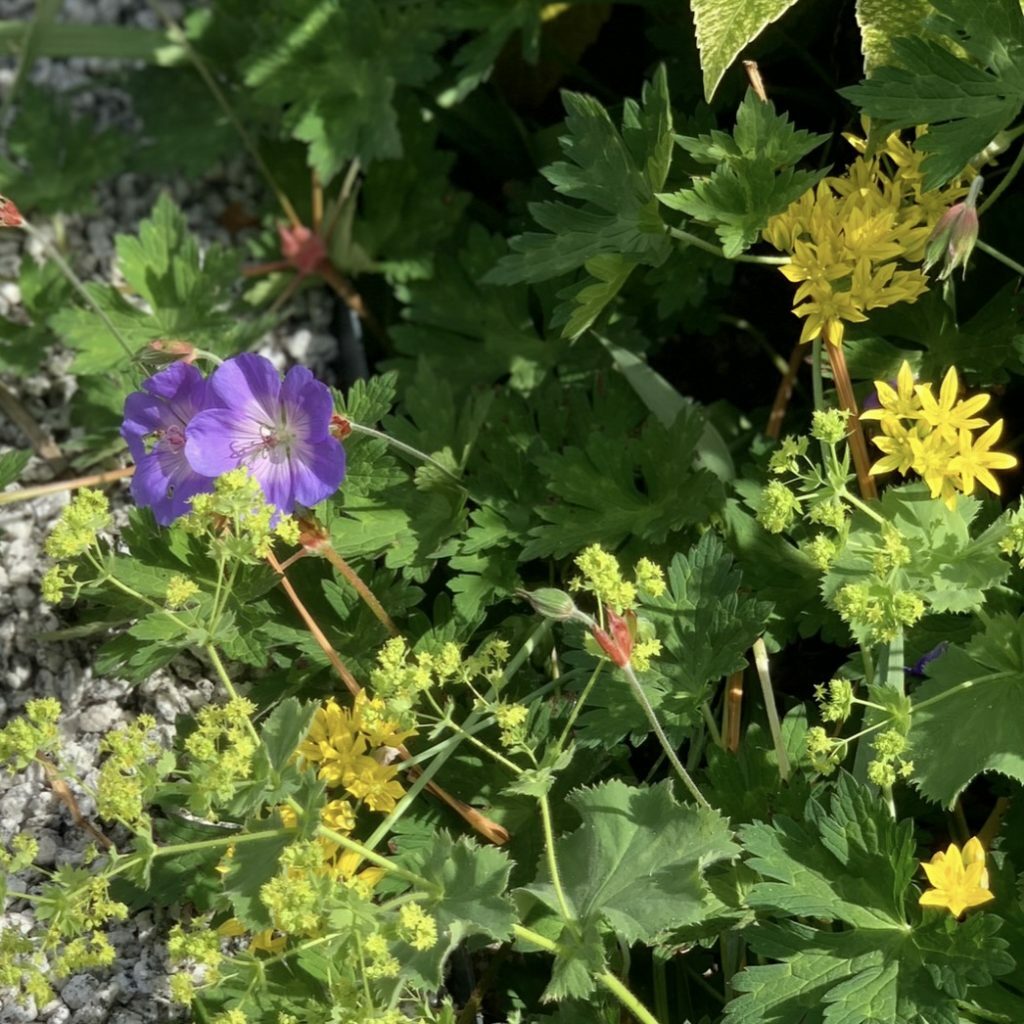
We also love to use shorter varieties of allium that look great at the front of borders. Our favourites are Alliums Cowanii (a delicate white), Roseum (a soft lilac/pink) and Moly Jeannine (a vibrant yellow which works beautifully with purple geraniums).
If you are planting up planters or pots, a bulb lasagne is a great idea. This entails layers of bulbs being planted that will flower successively. When planting bulbs in containers we recommend using a large plastic plant pot inside your decorative pot, so that when the bulbs have gone over, you can remove the pot containing them and move out of sight so that they can die back but not take up a prime position on your patio whilst doing so.
With a bulb lasagne, we suggest planting a layer of tulips first, then narcissus and then crocuses. This will provide a beautiful display from late winter/early spring to the end of spring. You can plant the top with something like winter flowering cyclamen or violas if the pot is in view over the winter.
We hope this has given some great ideas to add more colour to your garden for next spring. If you don’t fancy choosing and planting bulbs yourself why not get in touch to discuss whether this is something we could help you with!
Inspired by our love for wildlife friendly gardens and No Mow May we thought we’d write this month about how to create a wilder, meadow-style lawn in your garden.
So often gardens have a big expanse of lawn that is under utilised and have very little value for wildlife. Have you considered creating a wilder area of lawn – either the whole of it if you find you don’t use it much, or a section of it which can have a path mown through it? Meadow-style areas can be a really beautiful addition to your garden, not to mention excellent for wildlife. As we start using our gardens more and more as the weather improves, it’s a good time to start thinking about how you use, or rather want to use, your garden and planning changes for your lawn so you’re ready to hit the ground running when it’s time.
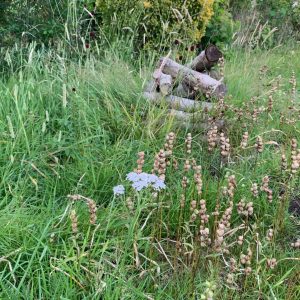
First off, and depending on the time of year, we suggest following No Mow May and leaving the lawn to grow throughout the month of May and seeing what comes up. You may just have grass to start with, especially if your lawn has been chemically treated in the past. But more likely than not you will start to see a selection of wildflowers pretty quickly – the problem can then become that the grass will out-compete these other species. So, come late Autumn you should cut the lawn very short, rake or scarify it and sow Rhianthus minor seeds, better known as Yellow Rattle. Yellow Rattle is semi-parasitic to grass so it will weaken its vigour which prepares the area for other wildflowers to grow well (more on the adding wildflowers later in this post). Without Yellow Rattle the grasses will always end up taking over so it is an essential part of developing your standard lawn into a wilder, more species rich one.
Before you sow your Yellow Rattle, you can also plant bulbs through the lawn. Scatter these on the ground so you get a natural look and layout. Our favourites to include are crocus, a succession of narcissus/daffodils to flower from February/March to April, fritillaria and camassia which will give you a flowering time of around February to end of May. We also love Leucojum – also know as ‘Summer snowflake’ – which despite their name actually flower in the Spring, and are a bit like a large snowdrop (more on snowdrops below!).
Crocus, which will flower first, are so cheerful and an important source of early nectar for pollinators. They are low growing, only around 10cm, but as they emerge at a time when the grass is still short they should be very visible. More is more with crocus (well with all bulbs in fact!), and we recommend starting with as many as you can, ideally a few hundred crocus as they are small and look really effective en-masse. Fortunately they are a pretty cost effective bulb!
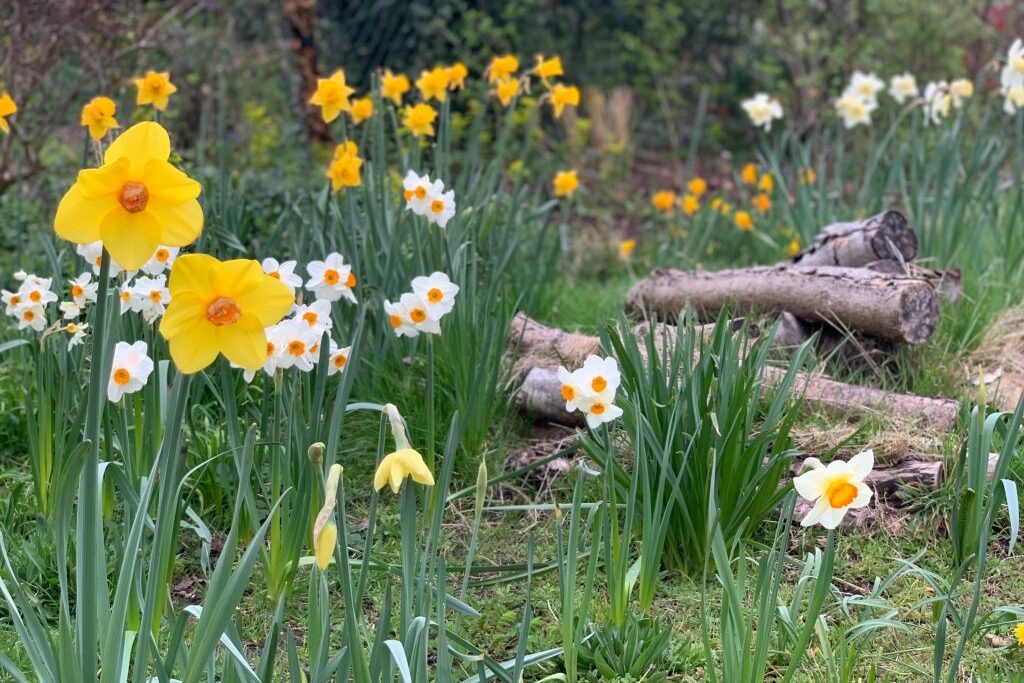
A range of narcissus/daffodils and fritillaria will provide more nectar as well as colour. Narcissus pseudonarcissus is a native daffodil so a great one to include, although can take a while to establish – once happy it will spread. We like to add other Daffodils too for extra interest and to elongate the flowering time of the area. One of our favourites is Narcissus Geranium which smells beautiful and naturalises well.
Fritillaria meleagris (Snake’s head fritillary) are a really delicate addition pollinated by bees. They come in purple and white and their nodding heads are truly beautiful.
Last of the bulbs to plant in your meadow in the Autumn are camassias. These come in blue and white and in varying heights and they flower in May, providing nectar for several types of bee, hoverflies and some beetles so are a very wildlife friendly addition. We absolutely love them – one of our favourite bulbs!
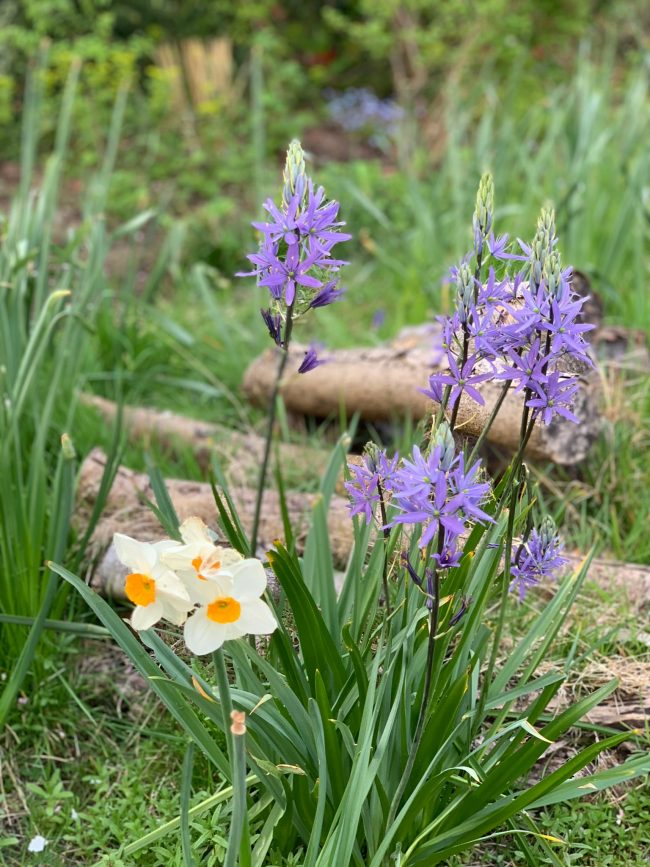
It is perfectly possible to add tulips and/or alliums to the meadow lawns too. These too should be planted in the autumn. Many tulips are not perennial and so won’t return year on year. Even those labelled as perennial can be a little unreliable. If you’d like to try alliums, short varieties such as Allium amplectens Graceful Beauty, Allium Cowanii or Allium Roseum would be a lovely choice.
This may seem like a lot of bulbs to add – and as we said, more is more. So it might be an idea to start with one or two species, such as Daffodils and/or Crocus, and then add more bulbs in subsequent years.
This is all we recommend for the first year – getting the rattle sown and some bulbs added. Don’t mow the grass over the winter or spring. If you really wanted to you could mow after the bulbs have totally died back in late spring but we prefer to just pull the bulb foliage out by hand once it has gone completely brown and comes away very easily. Then just let the grass grow all spring and summer and see what emerges – you may be pleasantly surprised! Don’t worry if you don’t have much in that first year, especially if you have had the lawn treated in the past. If the rattle is doing it’s job and there are some slightly bare patches of grass, then wildflowers (aka weeds!) will gradually find those patches and start to emerge. It may take a few years so be patient – remembering that plants which naturally sow and establish themselves will almost certainly be happier than ones you choose to plant!
Once your rattle has established and is happily self sowing every year (perhaps with a little help from you, shaking the seedheads around in areas where you have less rattle) and you have seen what has emerged naturally, you can start to think about adding some more wildflowers. Perhaps repeat what has already emerged as these species successfully germinated in your garden conditions. Other great additions are Oxeye Daisy, Ragged Robin, Red or White Campion, Achillea……there are many to choose from and there are also several excellent, organic suppliers of wildflower seeds and plugs.
You can sow perennial wildflower seeds in Autumn (a year or two after you begin your meadow project) either as individual species or a perennial wildflower seed mix. Note this is very different to the many annual wildflower mixes available, which will flower one year and only come back the following year if they self sow or you re-sow them. It is perfectly possible to have an annual meadow area however it takes more work every year, whereas a perennial wildflower meadow should get better year on year with minimal intervention (but perhaps a little more work to start with!).
So, if you can, we suggest opting for perennial wildflowers, either buying seed of individual species to sow into trays, or a seed mix to sow directly. Another option is to buy perennial wildflower plugs. As mentioned above, it really isn’t a good idea to sow seeds directly into the lawn in the first year because until the Yellow Rattle establishes and weakens the vigour of the grass, they can easily get out competed. If you are really keen to get sowing, you could sow them in seed trays and grow them on until the rattle has taken hold – however this means keeping them alive for at least a year!
The wildflowers that will work well in your lawn will vary depending on your soil type – most of the wildflower websites allow you to filter to see which are good for different types of soil, e.g. clay, sandy etc. The majority do need to be sown in Autumn to have a period of cold before they germinate.
As mentioned, you can buy seed mixes as well as individual seed varieties. We recommend going for individual varieties if you are sowing into seed trays. If you are going to sow directly into the grass once the rattle has established, you could try a seed mix, but generally the plants will establish better when grown on into plugs before planting out. You should sow directly or into trays in the Autumn.
You can also sow the seed mixes onto bare soil (and this is often assumed on the seed instructions) so if you are just creating a wildflower area in a border, rather than changing a grassy lawn to a wild lawn, you can go ahead and sow directly. Or, you may decide to remove your existing lawn, prepare the soil and sow – however you will still need Yellow Rattle as any grass roots left in the soil will soon colonise, or nearby grassy areas will spread and sow.
An alternative to sowing your own seeds is to buy plug plants or small plants in the Spring. These in theory should establish more quickly and reliably. Please note they will need to be carefully looked after though and watered regularly once planted. When you are planting plugs, manually remove some of the grass from the immediate surrounding area to help them to establish. It is even possible to buy 9cm or 1-2 litre pots of some wildflower varieties and plant these out in a grass area. This uses more established plants so if you are looking for a quicker impact it could be a good option. Again we really recommend letting the yellow rattle become established first.
Finally, in the Spring you can add in Bluebells (make sure you go for our native variety) and Snowdrops which are best planted “in the green” i.e. not as a bare bulb but as a bulb with foliage attached which will be lifted and shipped to you just after flowering. These make for a lovely addition to a wilder lawn and are again a very pollinator friendly choice. They can take a few years to establish, but once they have done so they will naturalise and spread gradually.
If you are after a quicker way to an instant wildflower meadow, you can buy wildflower turf. For this option you would need to remove your existing turf using a turf cutter in Autumn, leave it for 4 weeks and remove any regrowth. Plant your chosen bulbs and then immediately lay a wildflower turf over the top of them. Be sure to pick one which is not grown on a plastic netting (try Harrowden Turf for meadow turfs which are a mix of grasses and wildflowers or Lindum turf if you’re just after a wildflower mix). These usually have a tried and tested mix of species which should work well together for many years to come – check they are suitable for your soil and site conditions first. This can have a really fast impact, but is a much more costly outlay to begin with.
Annuals and perennials are usually the first things to spring to mind when thinking about planting for pollinators… bright flowers in summer aflush with bees. But whilst these sorts of flowers are most certainly adored by pollinators, trees and shrubs actually provide 60% of nectar sugar for pollinators in our gardens. So, when choosing trees or shrubs, it really is worth considering whether they will benefit pollinators too. Trees and shrubs will also encourage birds to your garden – they provide shelter for nesting and perching as well as food from their fruits and the insects that will visit them too.
Here’s a list of some of our favourites…

A native small, rounded tree with beautiful large white blossoms with tinges of pink in the Spring and yellowy green or sometimes red tinted fruits in the autumn. Pollinators love the flowers and birds and small mammals the fruits. There are numerous different varieties which vary in size. Malus Evereste is one of our favourites. Be sure to pick a variety with single flowers, not double, so the pollinators can enjoy the nectar.
A stalwart of the British hedgerow but equally popular as a standard tree, Hawthorns are loved for their berries by birds and for their nectar rich blossoms by insects. There are two native to the UK, Crataegus monogyna and Crataegus laevigata, both of which work well as trees in small urban gardens. They like full sun to part shade and require little to no pruning, unless you are growing them as a hedge. Look out for Crataegus monogyna compacta, a dwarf variety which is also said to be thornless.
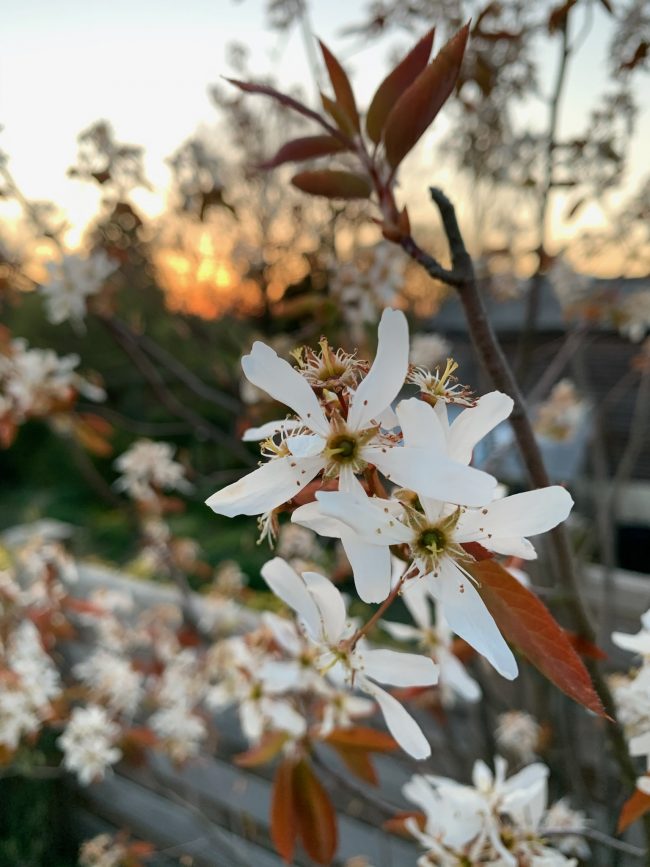
Amelanchiers are beautiful trees or shrubs with delicate white flowers in Spring and incredible Autumn colour. They are an excellent and increasingly popular choice for small gardens for exactly this reason. On top of this, their blossoms are great for bees and the berries will attract birds, especially robins and blackbirds.
There are several varieties to choose from but all have stunning blossoms and autumn colour. Amelanchier Canadensis Rainbow Pillar is a great choice if you are limited on space, it grows to approximately 4m high and 2.5 wide in 20 years so has a narrow shape but all the benefits. As ever, check each variety’s specific needs but generally Amelanchiers do best in full sun but are happy in part shade. You will certainly get the best Autumn colour by planting in a sunny spot.
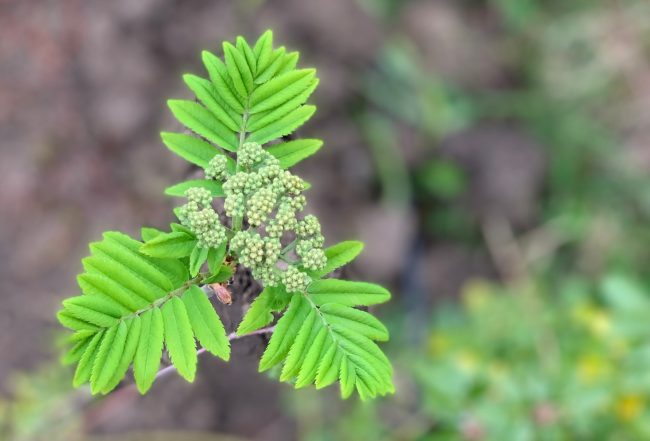
Attractive to bees, butterflies, other beneficial insects and birds, Sorbus aucuparia – otherwise known as Mountain Ash or Rowan – is a great choice as a wildlife friendly tree. With blossoms in spring and berries in the autumn it provides much food for wildlife as well as seasonal interest for us. It has an upright habit and likes full sun to partial shade, and gives lovely leaf colour in Autumn. There are many varieties with different colour blossom and berries, just be sure to check the expected eventual size.
Shrubs can sometimes be a little undervalued but often provide the structure in a planting bed, evergreen colour, pretty blossom and a beautiful foil against which perennials and annuals can be set. We love the following not only for their appearance but for the fact that they are pollinator magnets too!

Mahonia provide a pop of yellow at a time when colour in the garden can be lacking, and they have the most beautiful scent. Flowering time varies from variety to variety but is generally sometime between November and March. Adored by bees, these early sources of nectar come in many varieties from low ground cover plants to large focal shrubs for architectural interest in a border. They are evergreen and have a deep green leaf with serrated edges and produce a blue/black berry in the autumn. One of our favourite smaller varieties is Mahonia eurybracteata ‘Soft Caress’ which has slender leaves and is happily grown in a container too. Plant it in part shade and it will reward you with it’s pretty foliage and sweet scented blooms.
Commonly known as sweetbox, Sarcococca is an evergreen shrub which produces tiny but highly fragranced white flowers in winter, followed by glossy black berries. Requiring full or partial shade, Sarcococca offers a great choice for sometimes trickier sites and when planted along a pathway or near an entrance, the scent can be enjoyed even when we are spending less time outside in winter. What’s more, honeybees especially enjoy the nectar in the winter when there is little else to forage from.
A multi stemmed deciduous shrub, Heptacodium miconioides is a fantastic specimen plant for full sun or partial shade. It can reach up to 6m tall and has creamy-white flowers in the late Summer that are fragranced and followed by pinkish-red calyxes. The leaves are rather exotic looking and the bark is decorative too and peels off in yellowish flakes. If you raise its canopy, Heptacodium can be made to look like a small tree too making it rather versatile in a planting bed.

Ceanothus are also known as Californian lilac and most commonly are evergreen with a profusion of blue flowers in April and May. They prefer a sunny sheltered site and their flowers are loved by bees and butterflies. After flowering, many varieties produce berries which are loved by birds. There are many varieties to choose from and many can be both free-standing shrubs or wall-trained. You can also look out for evergreen white and deciduous pale pink varieties.
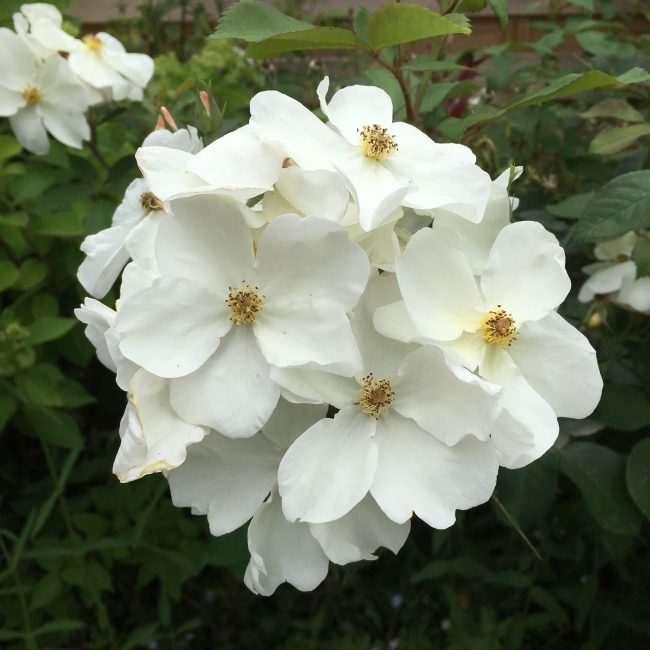
An English Garden classic, roses are not only beautiful but can be a great source of nectar for pollinators if you choose the right varieties. You need to choose an open flower where the insects can access the nectar. Some of our favourites include Kew Gardens, Tottering-By-Gently and Scepter’d Isle and many of the Rosa Rugosa varieties. Roses that produce hips are also beneficial for wildlife with lots of birds including thrushes and blackbirds feeding on them over winter. Two of our favourites for hips are Tottering-By-Gently and most of the Rugosa varieties. If you spot aphids on your roses don’t worry too much! Whilst you don’t want them to overrun the plant, they are an important food source for birds and insects and will encourage them to your garden. If the birds are not getting them simple remove the aphids by hand.
This is another shrub where there are many varieties to choose from, coming in various sizes and growth habits, from ground cover, to large shrubs and small trees. Some are evergreen whilst others are deciduous. Most commonly the plants have white blossoms and red berries. We love Cotoneaster frigidus ‘Cornubia’ which has evergreen elongated leaves, pretty blossom loved by bees and gorgeous red berries in the winter. It is quite fast growing but responds well to pruning and can form a beautiful multistem or single stem shrub/small tree depending on how you train it.
Euonymus europaeus is a deciduous shrub that has yellow flowers in Spring and green leaves that turn yellow or red in autumn. What really sets this shrub aside though are its fruits… striking pink lobed fruits crack open to reveal orange seeds in autumn. They are just beautiful! Happiest in full sun or partial shade, Euonymus europaeus is best planted where it can be viewed from the house in autumn to really enjoy the autumn leaves and fruits. Birds love its seeds.
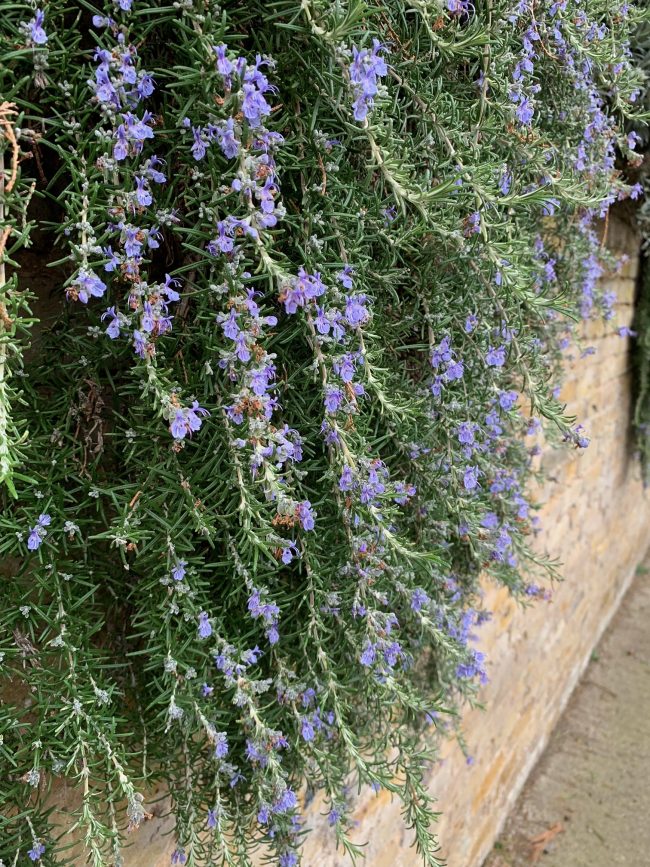
Rosemary is a versatile evergreen herb. It grows well in pots and provides a lovely scent when the sun shines on it. As well as using it in cooking, the small delicate lilac flowers are a good source of food for bees. It works well as an evergreen shrub in mixed borders, as well as in a herb garden. It requires full sun but little else to thrive, doing well on poor, dry soil. If you have heavy soil you can plant it in raised beds or pots as long as they have good drainage. There are various varieties to choose from ranging in sizes and habits, as well as the trailing/creeping variety Rosemarinus Prostratus which looks beautiful trailing over plant pot edges, a wall or as ground cover in Mediterranean or gravel gardens.
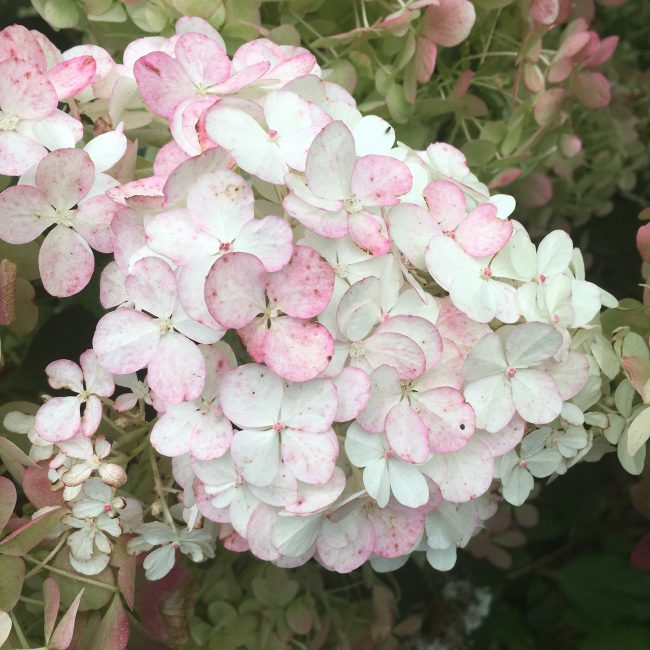
Lastly, we’re including some hydrangeas. This listing comes with a big caveat… not all hydrangeas are equal when it comes to benefitting pollinators. Hydrangeas are never going to be the very best plants for pollinators, but they are really beautiful and so if you are after a hydrangea, it is certainly worth considering whether you could choose one that pollinators will like too. Varieties such as Hydrangea paniculata “Confetti” which has green buds which open to white and mature to a pinker tone, and “Big Ben” whose flowers start out white, fade into green and then deep pink are good choices. Please note not all Hydrangea paniculata are visited by bees.
We hope this list has provided some inspiration for trees or shrubs to add to your garden. We always consider wildlife when designing new gardens and planting plans. If you would like to see what we can do for you, please get in touch.
Here at Gardens by Anna Butterfield we always design our gardens with wildlife in mind. This isn’t to say that they are all “wildlife gardens” as such, because that often conjures up images of messy, wild looking landscapes with a jumble of materials and plants – this is not what we do! Instead, we try to include habitats whenever possible (more on that in a later blog). And we ensure that many of the plants chosen will provide beauty and interest for our clients as well as food or shelter for wildlife. There’s no reason why the garden can’t be beneficial for both us and wildlife… What’s lovelier than enjoying the beauty of a plant that you know is doing something good for our struggling pollinators too?
We are all too aware that pollinators are in decline, and that they are absolutely essential for the production of many of the crops we rely on for food as well as the plants and flowers we enjoy seeing in our gardens. We can do a lot to help stem their decline and to support pollinators in all of our gardens, no matter how big or small.
A recent RHS study showed that 35.5% of nectar sugar in a garden is supplied by herbaceous plants (and 60% from trees and shrubs – which we’ll cover in a further blog). So, you can see the importance of including nectar-rich plants in the garden, and adding some small ones is an easy way to do this!
When thinking about planting for pollinating insects such as bees, hoverfly, butterflies, moths and beetles, it’s important to include variety. This is because different insects feed on different plants and because different plants will flower at different times: including a mix ensures food sources, as well as colour and interest in your garden, for a longer period of time.
With this in mind, now we are at the start of Spring, it’s a great time to plant new additions in your garden that will flower this summer. Added colour and beauty as well as food for the insects – win win win! We’ve compiled a list of ten of our favourite small plants for pollinators. They’re all beautiful but importantly they are all excellent food sources for pollinators too.

Nepeta (commonly known as catmint) is one of the very best perennials for pollinators. There are numerous species to choose from varying from the larger “Six Hills Giant” which can reach nearly a metre in height, to the 30cm “Kit Kat”. There’s one for every garden and we often use them in varying sizes for different positions within one border or garden.
Purple/lavender blue flowers that bloom from around May to September sit atop a fragrant grey/green foliage. The flowers are absolutely loved by bees, especially honeybees and short-tongued bumble bees. As an added bonus, you can make calming teas from the flowers and foliage (fresh or dried) of some species. Do be sure to check before trying!
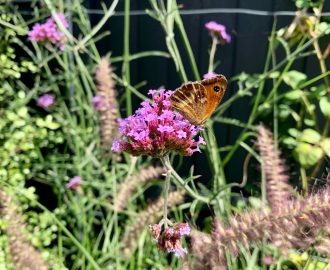
This is a real favourite here at Gardens By Anna Butterfield and with many other gardeners and designers – with good reason! Verbena bonariensis has tall, slim, relatively bare upright stems with clusters of purple flowers at the top. It has a lovely, airy feel and looks wonderful planted on mass or dotted throughout the garden in clusters. It reaches heights of around 1.8m and often flowers from June-November.
After flowering, the seed heads should be left to self-seed and over winter they also provide food for small birds such as finches. It’s a delight to watch them balancing precariously on the long, bendy stems – sometimes I am sure they use them as a playground! As with most other perennials, this should be cut back to the ground in spring as new growth emerges – see more advice here. It’s a wonderful addition to any garden!
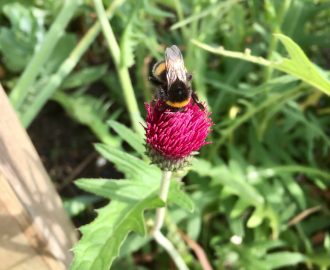
This ornamental thistle flowers from June to August. It has a beautiful deep purple thistle flower and some varieties can grow up to 1.5m tall. It works well amongst grasses and other naturalistic looking perennials, and will attract bees, butterflies, moths, other beneficial insects and birds to your garden. The flower heads can be left over winter to provide some structural interest in the garden as well as food for birds.
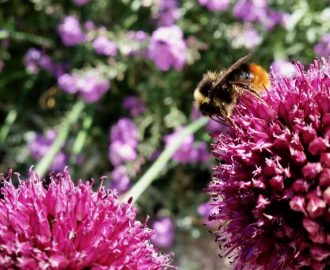
All alliums are loved by pollinators and they make striking additions to your borders. Tall leafless stems with a sphere of tiny flowers at the top that look wonderful planted as a group or woven through perennials. Most commonly they are shades of purple, but there are also white and blue varieties, as well as some small yellow, white and pale pink ones that work beautifully at the front of a border. They are usually, and most cost effectively, planted as bulbs between September and November but you might be able to get hold of some potted bulbs now. Each species has a slightly different flowering time but two of our favourites are Allium hollandicum ‘Purple Sensation’ which flowers in June, and Allium Sphaerocephalon which flowers in July. With many of the species, the flower heads can be left after flowering for winter interest in the garden or they look lovely when cut and popped in a vase indoors.
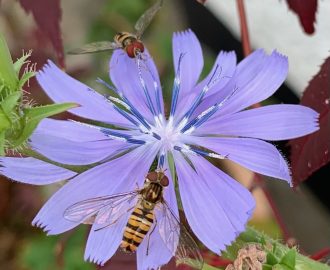
Chicory is part of the daisy family and has beautiful, delicate blue flowers that grow close to the stems. It looks gorgeous planted in borders amongst other grasses and perennials but can hold its own in a gravel garden too. It can reach up to 1.5m in height and the flowers open in sunlight and close when it’s wet. It is pollinated by several bee species so is a great addition to attract different bees to your garden.
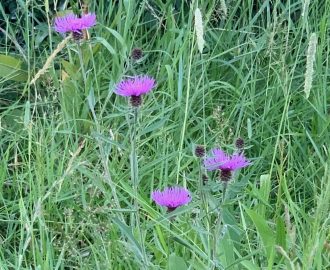
Otherwise known as Greater Knapweed, this native perennial wildflower reaches 75cm in height on a long, leafless stem. It has wonderful purple flowers which are loved by many bees and butterflies. It will readily self-seed so is ideal for meadow or wildlife areas and flowers from July to September. It’s often available to buy as plug plants from wildflower meadow suppliers.
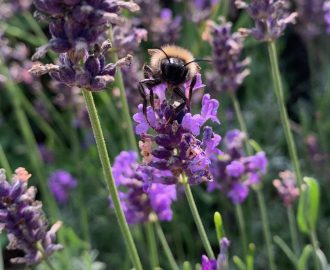
Our classic English Lavender is beloved by bees and will be covered in them during the flowering season. With different species growing to different heights and having different sprawling habits, if you have a sunny garden, chances are there’s one for you! Lavender needs a sunny spot and free-draining soil is essential. It will do well in poor, low nutrient and stony soil too. If you are on heavy clay, try it in a raised bed or container with a mix of soil, peat-free compost and horticultural grit.
The varieties we are all most familiar with have purple/blue flowers, but there are pale pink and white choices too, although they are sometimes harder to get hold of. It’s important to keep lavender pruned so that it doesn’t become too leggy and woody, but this is a very sweet-smelling job! Lavender should be pruned every year after flowering around October time, or in early Spring. Be sure not to cut too far into the woody stems. The cuttings can be enjoyed as dried flowers in the house, or used for soaps, baking or lavender bags. Its scent is said to aid sleep and even help with pain relief after childbirth.

If you’re looking for a small evergreen shrub that not only adds structure and year-round greenery to your garden but gorgeous pollinator-friendly flowers too, a hebe is a fantastic choice. There are about 90 species to choose from that range in size and flower colour (whites, pinks and purples). Bees and butterflies will be attracted to the flowers which have a long season with many species flowering through summer and autumn.
Some favourites of ours are Mette which has a compact (around 50cm) and relatively round form and bright pink flowers; Rakaiensis (a little larger to around 90-120cm) with beautiful white flowers; Blue Gem which can grow to around 1.3m with purple flowers; Margret, another small rounded variety (also growing to about 50cm) with lilac flowers; and Hebe Parviflora which has slightly limey-green leaves, white flowers and can be shaped/clipped to very architectural forms.
Hebes can suffer from frost damage in extended periods of frost and snow (mine really did last year) but they respond very well to hard pruning so this shouldn’t put you off.
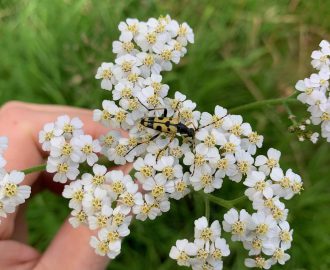
A British native wildflower, commonly known as Yarrow, this is just as at home in an area of long grass or meadow as in a mixed border. If you leave areas of your lawn unmown, you may well spot it popping up there! The native form is usually white/pale pink, but cultivated forms of Achillea are also available in a wide range of colours including pinks, purples, yellows and oranges. Most reach around 75cm so suit the middle of a border very well. You can usually get hold of the native Achillea Millefolium as plug plants from wildflower meadow suppliers.
They have flat flowerheads made up from lots and lots of tiny flowers, which are perfect for butterflies, hoverflies, bees, other beneficial insects as the open flat shape of the flower head make it very easy for them to access the nectar. They also produce seeds which attract birds, and they make a lovely cut flower to dry in the vase and enjoy all year round.
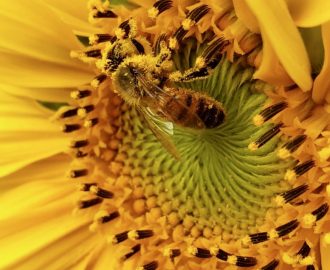
Last but not least on our list are sunflowers. They are easy to grow from seed, and add a happy splash of colour and often height to the garden from around July/August to October, depending on the species. Once they have finished flowering, the flower heads can be left for the birds to eat the seeds from. Bees especially adore sunflowers. What’s more, you don’t only have the big bright yellow faces to choose from. You can find burnt oranges, pale yellows, browns, dusky pinks and two-toned varieties as well. Seeds are available from garden centres as well as online and should be sown in early Spring undercover or directly in April/early May. We recommend choosing organic seeds whenever possible and always using peat free compost. Sowing seeds is a lovely activity to do with children and sunflowers are a great choice as they grow to be such a striking flower.
So, there you have it! Ten fantastic choices for your garden that are beautiful as well as great for pollinators. By planting some (or all!) of these you will be sure to welcome more bees, butterflies, hoverflies and many more beneficial insects to your garden.
Always check what conditions plants need before buying for your garden, and try to buy from a peat-free supplier if possible – this can be hard as many growers still use peat, but several of the wildflower meadow suppliers grow peat-free and some ship without plastic packaging too – search for peat-free growers and ask questions about packaging before you buy.
Happy planting!


Gardens by Anna Butterfield offer professional garden and planting design across London and the South East.
Our expert, organic garden care service is available across South East London as well as parts of Kent and Surrey.