The Association of Professional Landscapers (APL) is a trade body who aim to promote the highest level of standards within the industry. It is affiliated to the Horticultural Trades Association. Their membership is made up of regularly vetted and highly skilled landscaping contractors and professional gardeners, alongside other designer members like us.

The letters MAPL simply stand for Member of the APL – this acronym is specifically reserved for designer members. Two comprehensive projects must be submitted for adjudication before membership is granted – this includes everything from the client brief and concept design right through to all of the detailed plans and specifications. In addition to this, designers must present before and after photos of the projects, and provide a number of references including from clients, landscapers and suppliers.
If you were having a house or extension built, you would look for a professionally accredited architect to undertake the design process for you. An architect will make the very best use of your space, give you guidance on a realistic budget and make sure that suitable materials are specified. The end result will be far better than you could have achieved without them.
A new garden or wider landscaping project is an exciting opportunity to make the very best of the outside space you have, and as professional garden designers we bring all the same skills and benefits to your project. From small, level gardens to larger plots and those with complex levels changes – we have the proven skills to transform your space and make sure it does everything you need it to and more.
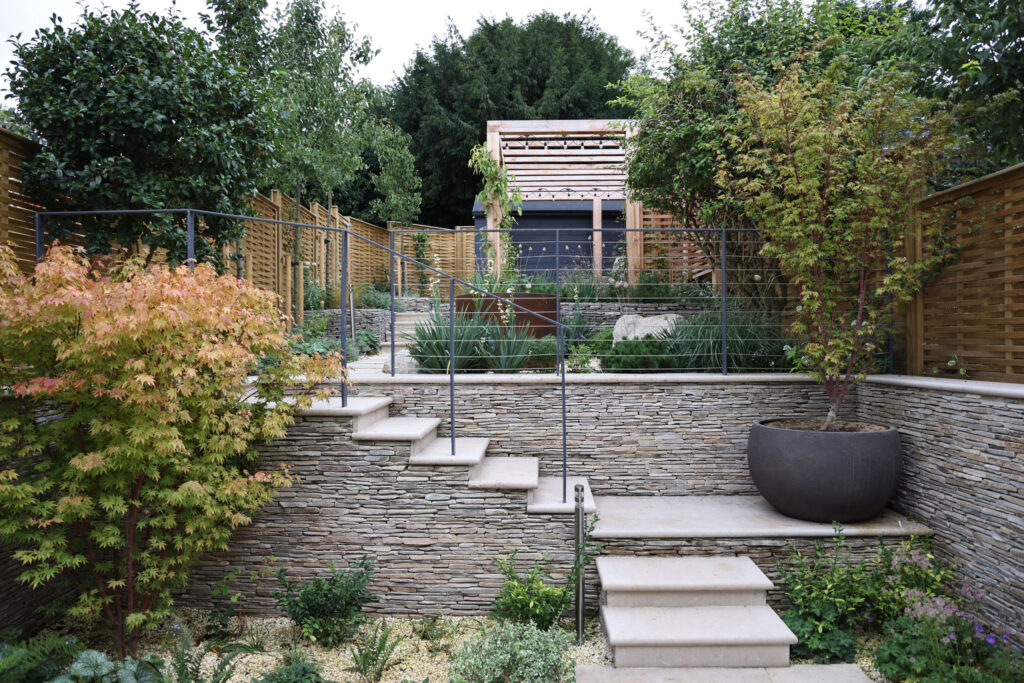
Becoming an accredited APL Designer not only demonstrates that we have the creativity, knowledge and skills to transform sites of all shapes and sizes, but also that we are competent at producing a pack of drawings and technical documentation to ensure that a landscaper can successfully build your new garden.
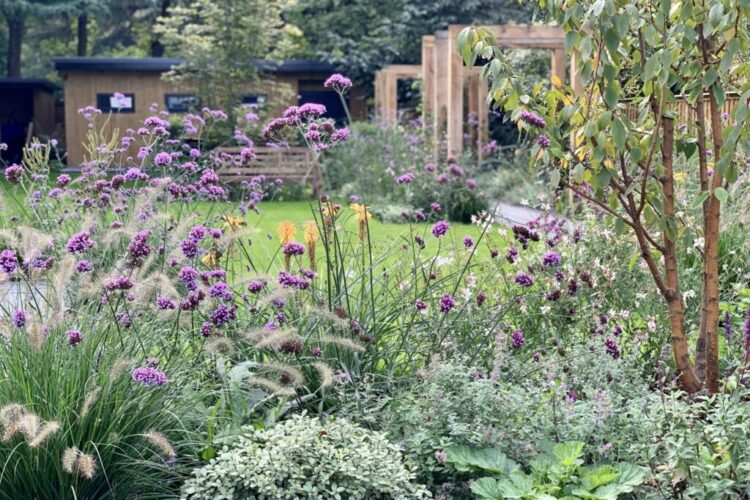
We will get to know you and ask lots of questions to find out exactly what you want and need from the space. We also look at imagery with you to ensure that we establish the style of garden which most appeals to you.
Our professional accreditation demonstrates that we are creative and highly skilled – we have an excellent understanding of good design and technical detailing, and our horticultural knowledge means that we are best placed to know which plants will survive in your garden.
Before we get into some alternative options for shady spots, let’s give a moment to ferns. They can be a divisive plant and some people are really not keen on them, but we love them! Ferns add beautiful texture and come in a huge variety of sizes and shapes. They look wonderful planted in groups with shade loving perennials in drifts between them.
Evergreen varieties offer year round structure and greenery, whilst deciduous varieties such as Dryopteris erythrosora give you beautiful autumn colour. One of favourite evergreen ferns is Polystichum polyblepherum which has a lovely upright habit and beautiful fresh green fronds. When something smaller is needed we love using Polystichum tsussimense, also known as Korean rock fern, Aspelnium scolopendrium or Blechnum spicant – or a mixture of all of them to create evergreen interest with differing textures and shades of green. They look wonderful with perennials such as Astrantia and Polygonatum planted in between them.

If you’re looking for more of a statement in your shaded space, Dicksonia antarctica (aka tree ferns) are a really striking choice. They add height and drama and can be great fun, especially for children, when the new fronds are unfurling as they are quite fascinating. They also work really well in large containers too, so if you have a shaded patio or courtyard they can be a great addition.
They do need special care in the winter, when they should be carefully wrapped up to protect them from the frost. We think they’re well worth it though, look at this garden we designed in Bromley a few years ago were the tree ferns create a wonderful impact!
There are also many beautiful herbaceous perennials which will thrive in the shade and part shade including Astrantia, Geraniums, Thalictrum, Brunnera and many more. Lots of them provide flowers and interest for many months, and can really light up a darker border with their foliage or blooms. So let there be no more gloom and doom about shady, dark borders – here is a selection of our favourite shade loving flowering beauties for you!
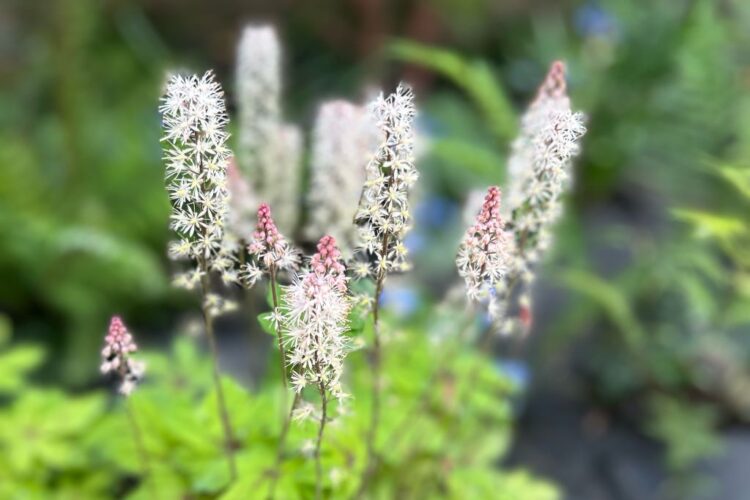
One of our very favourite perennials for shade is Tiarella ‘Spring Symphony’. It has delicate, upright spires of light pink to white flowers, and flowers from late Spring to early Summer. Its leaves are beautiful all summer too, with lovely dark purple markings against the green foliage – making it really interesting from Spring right through to late Autumn/early Winter when the foliage will die back.
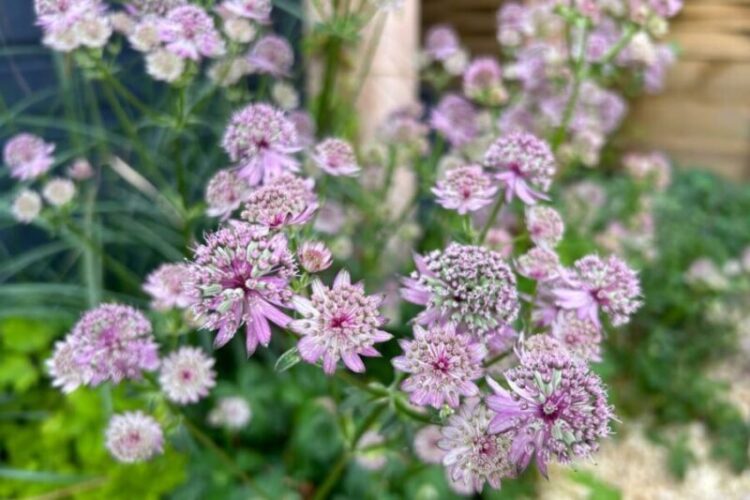
With many varieties to choose from, most enjoying partially shaded areas, Astrantia are a really wonderful choice for shadier borders. They look just gorgeous mingling en-masse in between ferns and are also great for pollinators. A favourite of ours is Astrantia major ‘Star of Beauty’. As with many Astrantia, they begin white and fade to a dusky pinky/purple. They are also happy in full sun so are a great choice for repeating in different parts of the garden. Astrantia maxima works well in full shade and has a delicate pink flowers reaching around 60cm high.
An ever popular perennial for shade is Brunnera macrophylla ‘Jack Frost’ but personally our favourite variety is Brunnera macrophylla ‘Alexander’s Great’ with large variegated foliage in silvery tones which really lights up a dark corner of the garden. It’s delicate blue flowers are forget-me-not like in size and colour. They flower in the spring (and sometimes again later in the summer) and look wonderful planted along the front of a border, or as underplanting.
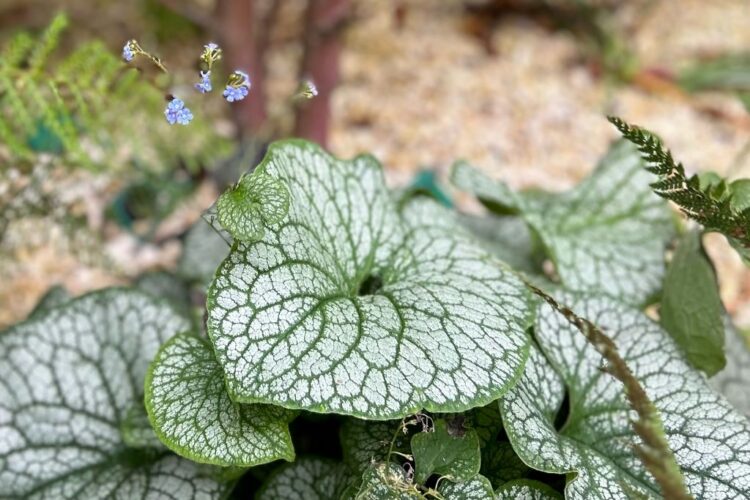
Whilst paler leaves and flowers can really light up a darker part of the garden, you may also want to add a splash of colour to a shaded area – and there are numerous options.
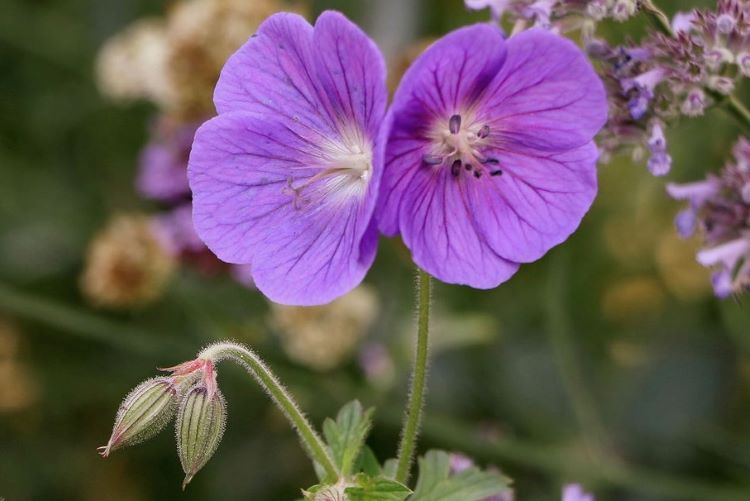
Most Geraniums will work well in either part of full shade, and all are loved by bees and other pollinators. Many of the classic blue-purple varieties such as Geranium ‘Johnson’s Blue’ will be very happy in part-shade and bring some very welcome colour for months, with their main show being in early summer and a second flowering again later in the year if you cut them back. Geranium nodosum is a great option for dry shade, and will contribute lovely dots of magenta pink through your planting bed from around May to September. It is great for underplanting shrubs or adding groundcover in a tricky spot. Geranium phaeum is another fantastic option for growing in part to full shade.
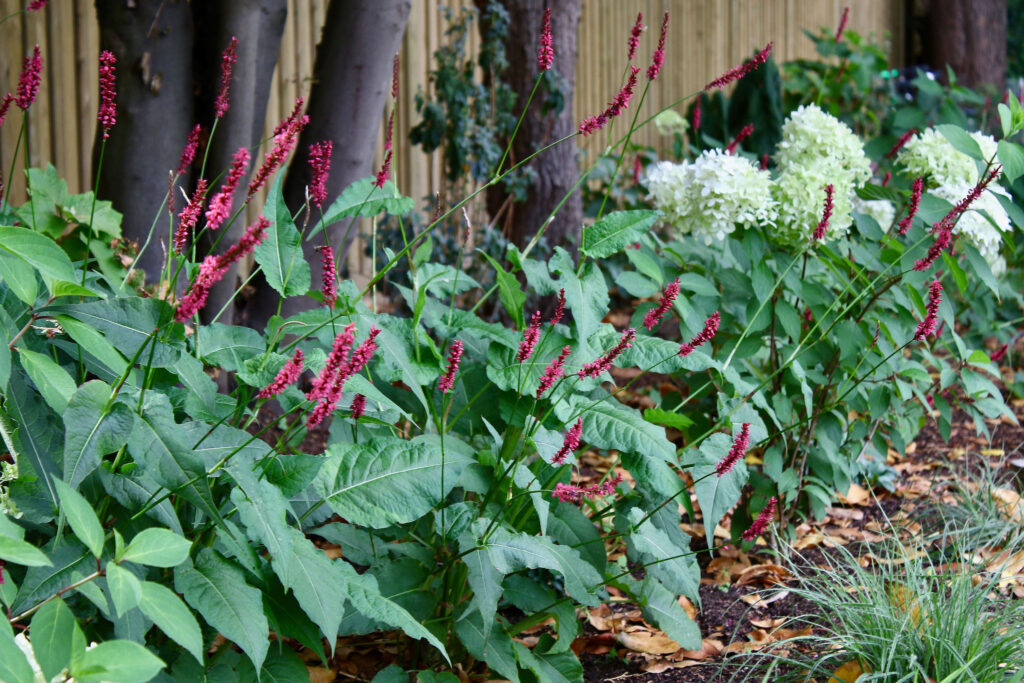
For any spots in partial shade and perhaps on the damp side we love Persicaria, with a particular favourite being Persicaria amplexicaulis ‘Firetail’. Again, this is a plant loved by pollinators and it looks very effective when planted en mass towards the middle or front of a border, mixed with different forms such as Hydrangeas, as you can see here in one of our Beckenham garden designs. Whilst it likes damp conditions it will also tolerate drier soil if it doesn’t receive too much sun.
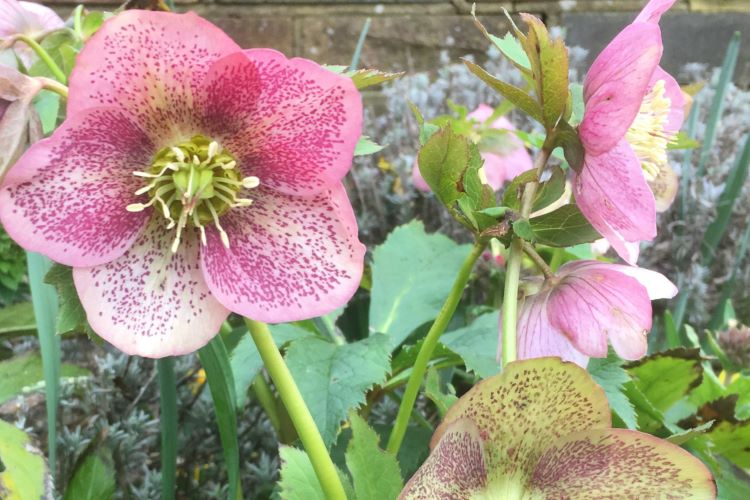
These early flowering beauties thrive in shade and come in beautiful fresh whites, tinted creams, rich pinks and deep clarets. They are a gorgeous plant that flower very early in the year providing much needed nectar for early pollinators. They flower in late winter/early spring and then provide evergreen foliage for the rest of the year. No garden should be without!
Lastly, roses! Not all roses will thrive in shaded areas, but there are a number that do. Our favourites include Rose Kew Gardens and Rosa The Lark Ascending, both of which are also pollinator friendly. Rambling Rector and Wedding Day are rambling roses that do well in shaded spots and can be used to over north facing walls or fences, as can The Generous Gardener. This is a beautiful pale pink climbing rose that repeat flowers (unlike the ramblers) and has a lovely scent as well.
One of our favourite evergreen shrubs to use for structure in full shade is Sarcococca. It has beautiful dark green leaves and the scent of the flowers in winter is sublime. If you can, plant it in places you will walk past in winter, for example front gardens/near an entrance, and you will be able to enjoy the scent every time you pass.
Camellias also work well in shade. Do note that they need ericaceous compost or acidic soil to really thrive. When choosing a camelia, try to go for one with an open flower as this will provide for pollinators, as well as being beautiful to look at.
To add some evergreen structure towards the middle or front of a border, Luzula nivea is a great choice. It reaches around 40cm with flat, linear evergreen leaves, it’s almost like an ornamental grass in structure. Its delicate white flowers in the summer grow to around 60cm and make a soft, airy addition to the border.
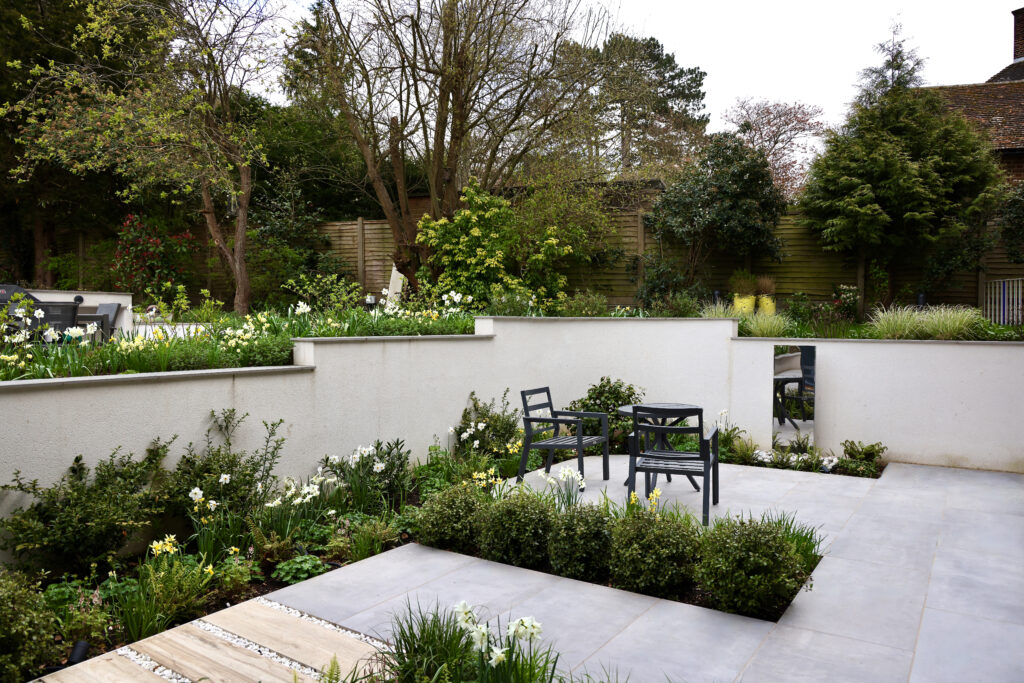
We have already mentioned Dicksonia antartica above which is also a fabulous choice for adding both height and structure to your garden. Another tree that works well in light shade is an acer. There are many types to choose from ranging in size and colour. We have recently planted a beautiful specimen in our multilevel garden design in Bromley – an Acer plamatum ‘Sango Kaku’. It has beautiful foliage which changes colour over the seasons, reddish stems and looks wonderful against the paddlestone walling as you can see here:

Another beauty of a shaded border is that woodland plants will grow there. This means you can add Bluebells and Snowdrops which are both gorgeous bulbs and will naturalise over time too. These are best planted in the green (meaning just as they have flowered and have green growth still, rather than are bare bulbs) and so look to order them around February. Be sure to go for our native Bluebells!
Shade is also the perfect place for Convallaria majalis, more commonly known as Lily of the Valley. It has beautiful bell shaped white flowers and its smell is unrivalled. It’s a really delicate, pretty addition to the front of shady borders or below trees and shrubs.
As ever with gardening, we have half of our heart in the now, enjoying the last of the summer blooms. The other half is planning ahead for seasons to come. Believe it or not, now is the time to be thinking about spring in the garden. We have entered bulb planting time. From now until December, spending time planting bulbs in your garden will result in beautiful flowers come Spring.
There are so many different spring flowers to choose from that it can be hard to know where to start. We love to use a mix to ensure there’s almost always something to enjoy, and from as early as February too. There’s a bulb for almost every spot, whether you have a shady plot, a sun trap, clay soil or only lawn. Read on below for our favourite bulbs to use over the months. There’s something for every type of garden too.
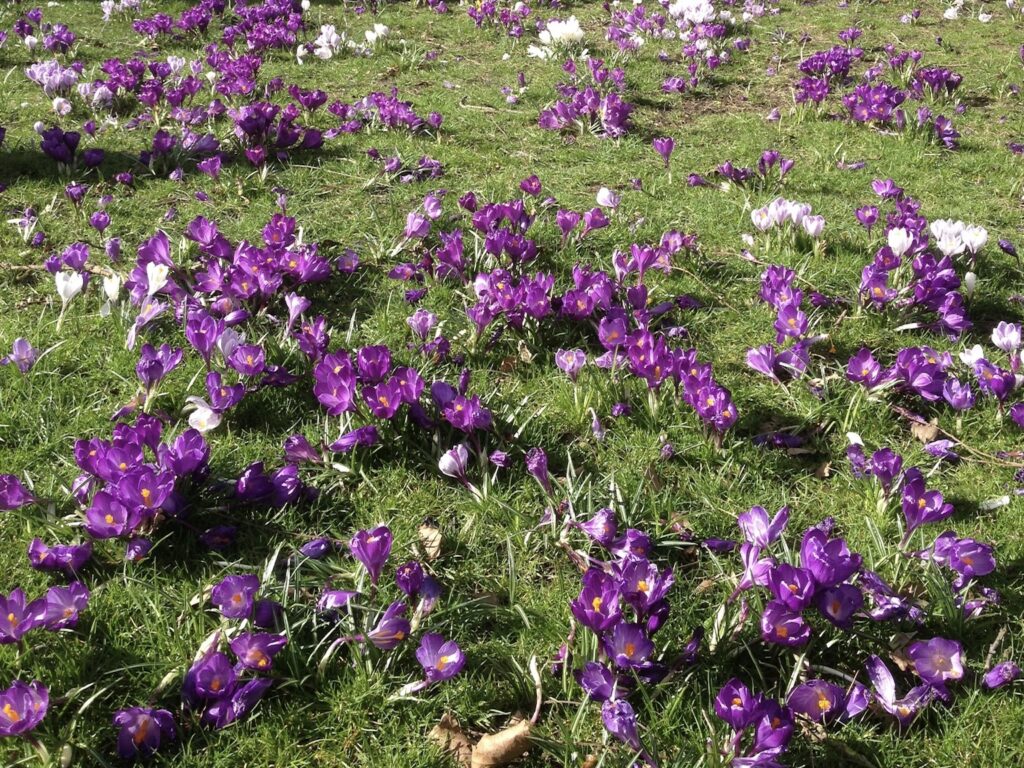
Amongst the first bulbs to flower are crocus, iris reticulata and snowdrops. These are three dainty choices that will brighten the end of winter for you.
Crocus are one of our favourites and an important early nectar source for pollinating insects. They look beautiful planted in lawns and along the front of borders. We also love them in pots that can be brought close to the house to be enjoyed from the warmth of indoors. Crocus do well in full sun and you will be able to see their flowers opening and closing as the light levels change. Iris reticulata have the same requirements and look wonderful mixed in amongst crocus, or on their own.
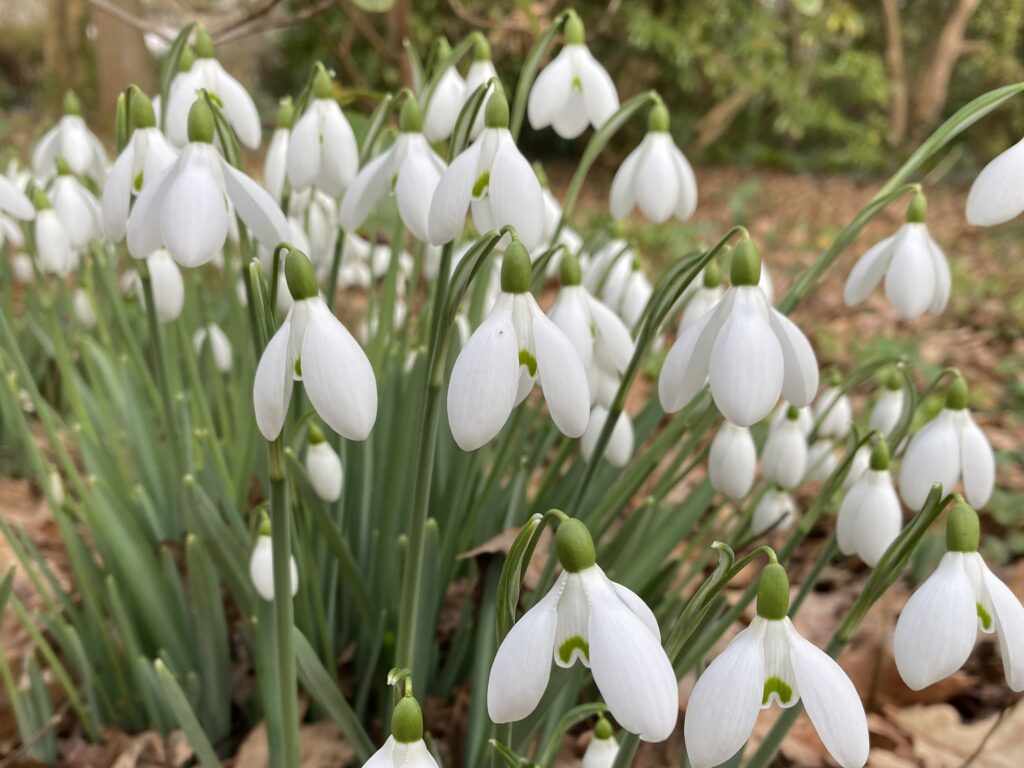
Snowdrops (Galanthus) are the perfect choice for early flowers but in a full or partially shaded spot. Their understated beauty is unrivalled, and they too can be a good source of nectar for pollinators. Though snowdrops are most successfully planted “in the green” (when they have above ground growth), you can also buy them as bulbs to plant in Autumn. They grow at the edges of woodlands in the wild, and so mimicking this in your garden if you have lots of mature trees if another lovely way to plant them.
There are so many narcissi to choose from ranging in shape, size, colour and flowering time. We love to plant these in clusters of 7-10 bulbs through the front to middle of borders, in lawns and meadow areas. Most varieties do best in sun but will tolerate part shade too, and tend to be happy on all soils including heavy clay, where they won’t rot away over winter like many other bulbs.
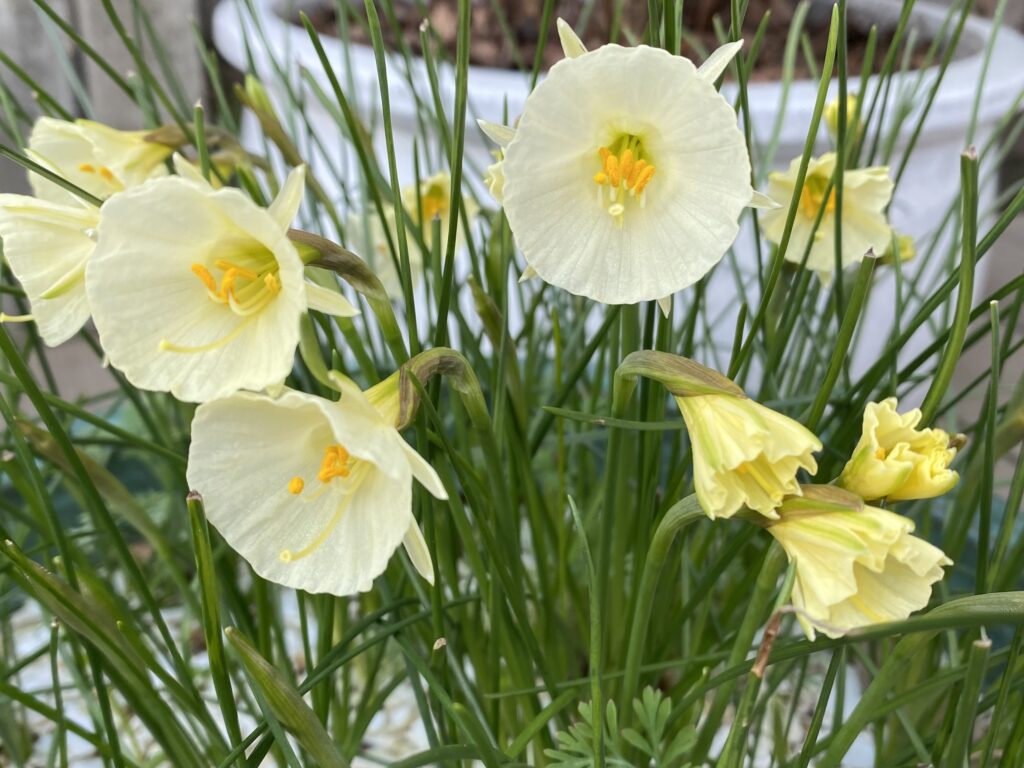
A striking choice for early March flowers is Narcissus Bulbucodium. They’re not your usual daffodil but look beautiful at the front of borders or in pots.
For a more traditional shape we love Narcissus Jetfire with its slightly reflexed cheerful yellow petals and bright orange trumpet. A late March favourite is Narcissus Falconet which has a wonderful fragrance.
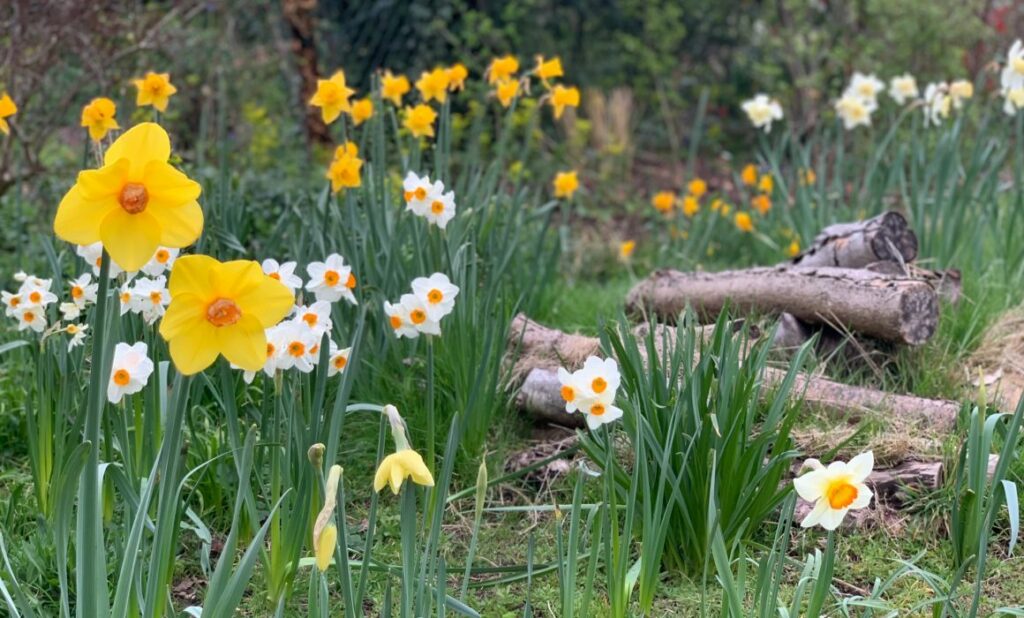
For April flowers, our favourite is Narcissus Geranium, with its white petals and rich orange centre. It has multiple flowers per stalk and the most dreamy scent – great for snipping a few to take indoors! We plant them in small groups in borders and lawns – you can see them below (orange trumpets) in this mini meadow, planted alongside Ellen, Dutch Master and a few surprise varieties which cropped up after a mass bulb planting!
In late April you get the wonderful time when narcissi and tulips are flowering together. It can be an effective design choice to mix these in borders so that you get a mix of colours, shapes and textures at the same time. Here you can see a mix of yellow and white narcissus (Tamara, Martinette, Minnow and Tresamble), planted with white (Exotic Emperor), purple (Synaeda Blue) and pink (Salmon Prince) tulips to create a colourful statement.

A mixture like this does a great job of adding colour and interest to the borders when everything has had it’s spring cut back and the new growth of perennials and grasses is just starting to emerge. The tulips will then continue flowering on through May, being joined by early flowering perennials such as Geums and Nepeta. Think about what plants you have which will be in flower in May and plant complimentary coloured tulips to really enhance your view.
Tulips need sunshine to grow well and won’t thrive in shaded or even partially shaded gardens. Wet and heavy soils, such as clay, also don’t suit tulips well and while they may flower the first year, it is unlikely they will survive over winter – you might get a few stragglers the following year! Even on lighter soils, tulips often don’t flower as well the second year. They are best treated as annuals, which means replanting the same varieties every year and that way you keep the same colours each year and any that do come up from previous years are a bonus!
Tulips need to be planted later than other bulbs as they need to go into cooler ground. It’s really important to wait until November to plant them, although last year November was so mild that we were planting them right at the end and into December. This is because the ground is cooler which helps prevent tulip fire disease and other fungal diseases that can affect tulips.
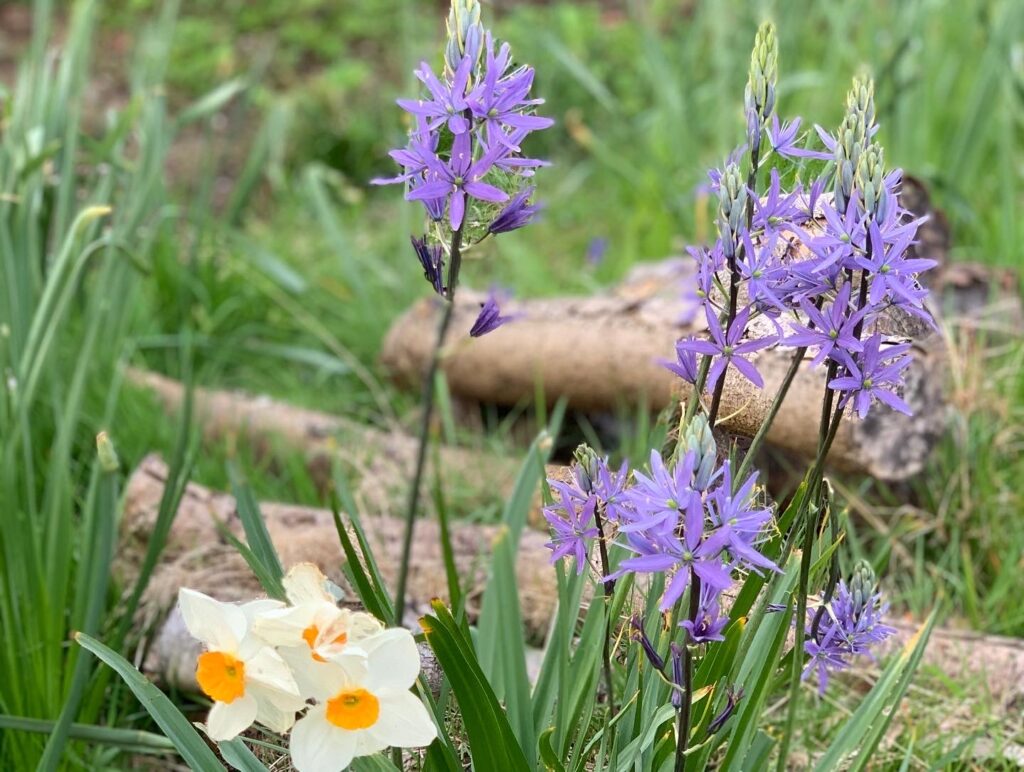
Camassia are one of our absolute favourite flowers. In white and blue tones, they are an elegant choice for a garden that add both height and colour. Flowering around May, there are varieties that work in full sun and partial shade. We love them in meadows and borders alike. Planted in swathes or en masse, they are very pretty and an underused choice in our opinion! Two of our favourite varieties are Leichtlinii Caerulea (pictured below) and Leichtlinii Alba (white).
Late May, June and July bring the alliums. A wonderful option to add height and sculptural qualities to your planting design. There’s even a variety which will tolerate partial shade!
We like to plant allium in drifts (rather than clusters) through the border. Weaving them through your other plants is very effective and means that their foliage, which can become rather unsightly, can be tucked up amongst other plants to hide it away. Like tulips, alliums won’t last long in wet or very heavy soils and so should be treated as an annual.
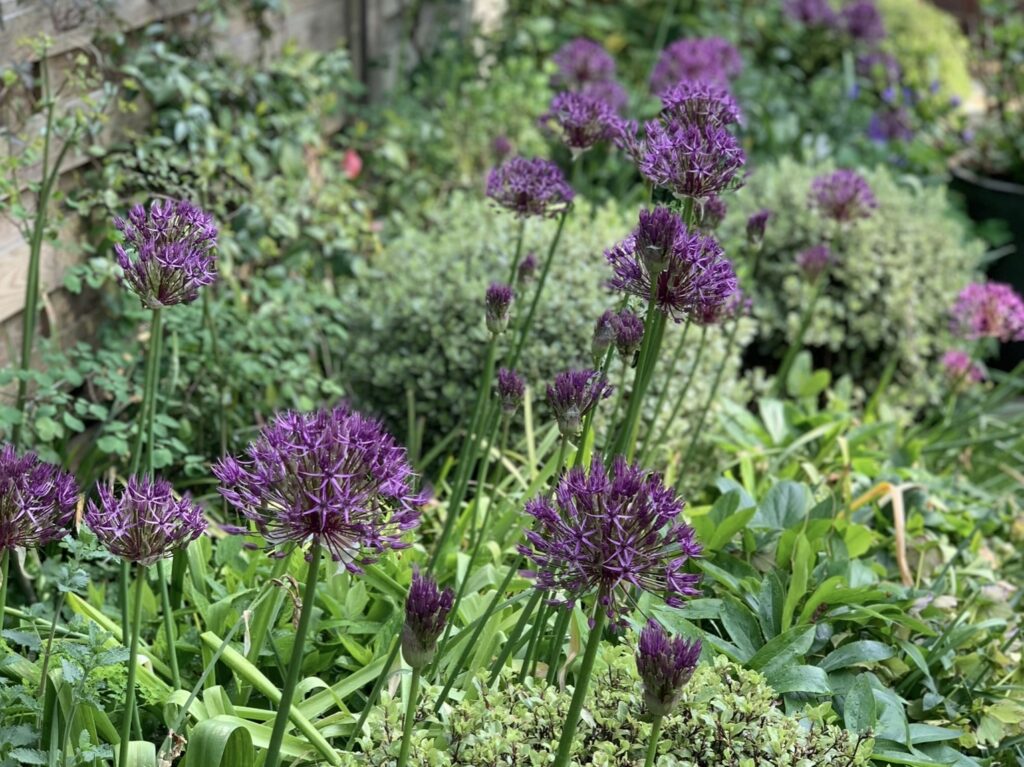
Most Alliums work best in full sun. Here you can see Allium sphaerocephalon in one of our Beckenham garden design projects. It’s a magnet for bees and changes colour as it opens. It’s also excellent value for money.

For a more looking allium, we often use Purple Sensation, which dries beautifully for use in vases as well.
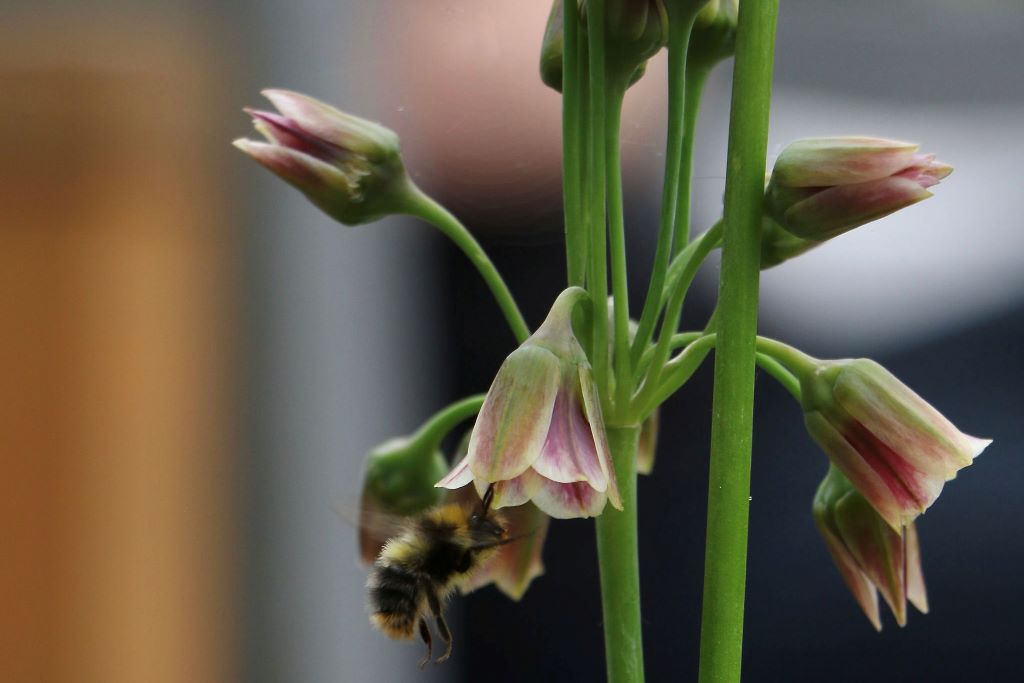
We also love Allium Nectaroscordum Siculum. Not only for its beauty, but also because it works in partially shaded borders as well as in full sun. Because it tolerates both positions, it can be used to create continuity between borders of different aspects within the same garden which is especially lovely.
As you can see, there are so many bulbs to choose from for flowers from February to July. They are well worth taking some time to research and start planting from the end of September (hold off until November for tulips). You will thank yourself next year when you are enjoying beautiful flowers springing up from the earth. For more on specific varieties, read our article “Spring Bulb Inspiration” here.
Often with new build properties, the gardens are left as a completely blank canvas and can sometimes feel like an afterthought. Tiny patios immediately outside the house, an expanse of lawn, and not much else. While this means you can put your own stamp on them, it can sometimes be very hard to know where to start. How can you inject some personality into the garden, and create a space you want to spend time in?
When designing gardens, often the existing plants and statement features are the place the start… perhaps there’s a beautiful, mature tree halfway down the garden, or an ornamental water feature to work around. Features such as these can inform the new design; guiding what style of planting to go for, which views to frame and where to divide the garden into sections. But in a garden without any features, where should you start? Well, that’s where we come in! Using our expertise as garden designers, we can make suggestions and share ideas about what will work in the space to suit your needs and lifestyle.
It’s important not just to identify whether you want to sunbathe in the garden or not, you really need to look at your lifestyle and use of the space, and think about how you envisage it developing over the years. The design of your garden then needs to enable that. Having your garden designed is an investment, and so it’s very important to us that we design a space for you that will work not only for the next few years, but well into the future too.
One of our biggest bugbears with new build gardens is the patio. They are so often a stingy strip of paving across the back of the house, irrelevant of where the light is in the garden. We believe the seating areas in the garden should be places to really enjoy being in, and the best spot is rarely the narrow belt right next to the house. You want to feel a sense of spaciousness and have the option to get a different perspective on your garden.
Below you can see pictured one of our garden designs in Oxted. This end of plot new build was blessed with two existing apple trees but not much else. Our clients had already (sensibly!) extended the patio by the house, however wanted to make use of the whole garden. We are big fans of multiple areas in a garden so that you can have sunny and shady spots to use at different times of day, as well as spaces to entertain in, relax in and feel ensconced in. We created two extra seating spots alongside adding lots of beautiful plants. The smaller of the two new seating areas is surrounded by trees and a perfect place for a morning coffee in the sunshine.

The larger is a great space for entertaining away from the house. Using a curved pathway, we have made a journey through the garden to the new seating spots, so that the beautiful planting can be enjoyed, and the busyness of day-to-day life slowed for a short while as you meander through the space.
The same theory can be applied to smaller gardens too. Just because the overall size is smaller, doesn’t mean you shouldn’t have multiple places to use in the garden, if possible.
For one of our Sevenoaks garden design clients, we upgraded the developer’s choice of paving to create a beautiful patio area with enough space for both cooking and dining, as well as creating a second seating area with a bespoke, locally crafted bench with fire pit. This offers a choice of seating places for the family who all enjoy using the garden, with the fire pit seating being somewhere to retire to after a meal on the other patio.
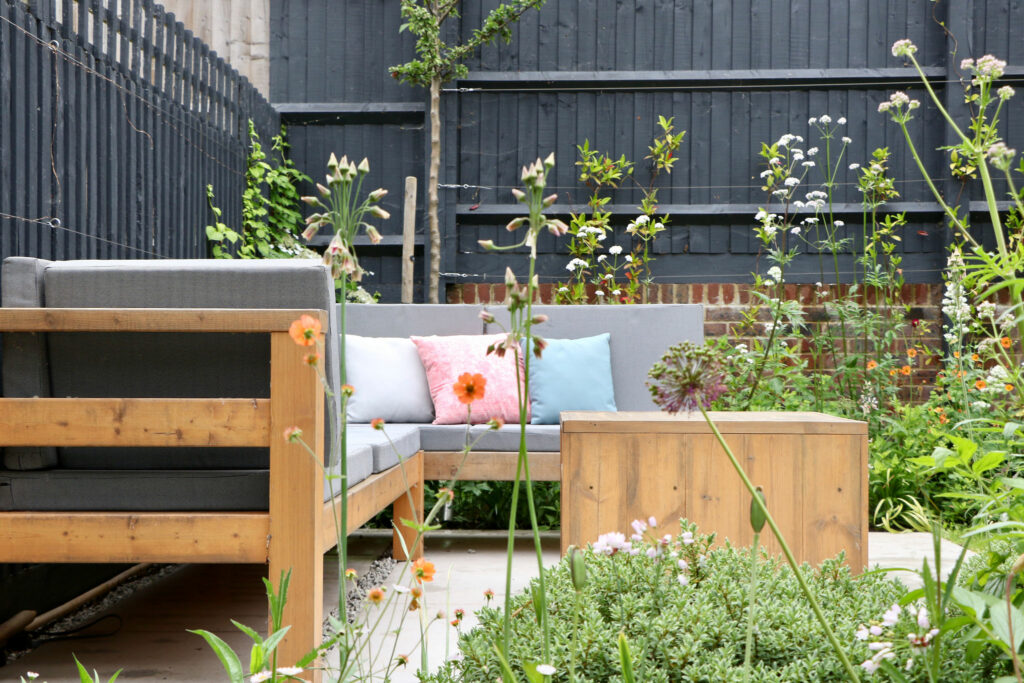
Another design choice that is very effective in blank canvas gardens is to add height. Without mature trees and shrubs, a garden can feel quite open, and you can feel on show when you’re in it. Adding height, be that through trees or structures, not only adds privacy and interest, but it also gives an overall feeling of enclosure and submersion in your garden. Structures can be softened with considered planting, and more mature trees can be chosen to give instant height.
In one of our Sevenoaks garden designs, we have used a row of trees to break up a rather imposing fence at the back of the garden. It is especially tall due to a level change in the land and so softening and disguising it with the trees combined with climbers on the fence makes it far less domineering and creates a cosy feel to the garden. As the trees mature, they will cover more of the fence and building behind.
We have added in a row of beautiful trees along the boundary of our Oxted garden design that will help disguise the other houses, which can also be a common feature of new build houses. We chose trees which offered year-round interest, with beautiful blossom, lush green foliage and beautiful autumn colour. As they mature, the will fill out to provide a screen above the fence line to help disguise the surrounding houses.
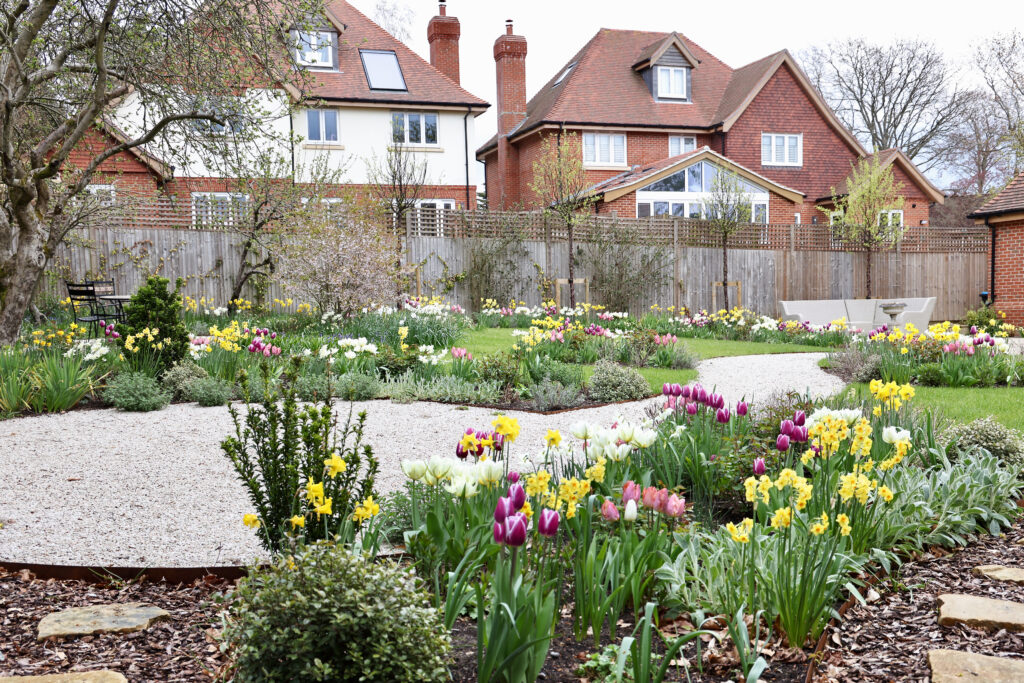
Adding height within the garden stops your eyes from searching for somewhere to rest when looking around. It draws the attention in to the garden, making it a much more relaxing and private-feeling space to spend time in.
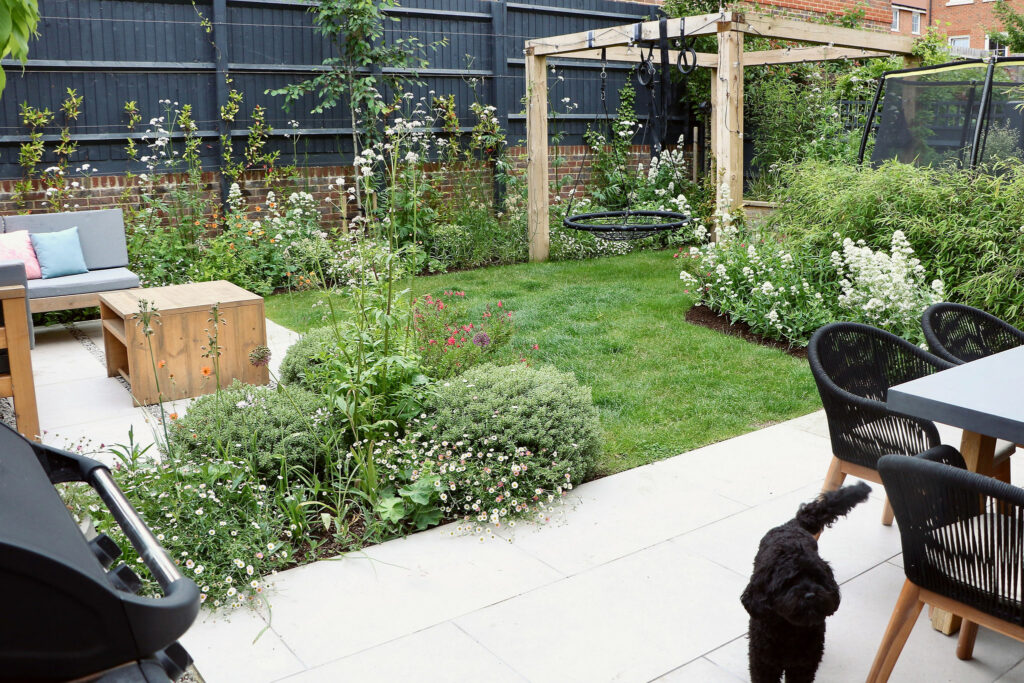
Our Sevenoaks garden design clients wanted a space to work out in their garden too. In a relatively small plot that we had already added two seating areas and a trampoline to, we needed to be smart about how we incorporated this. We designed a multi-purpose pergola that not only holds a punch bag and other gym equipment, but also adds height to the garden. From a design perspective, this was an important addition for the garden. It instantly makes it feel more mature and inviting by adding height and therefore the feeling of being enveloped in the garden, and it helps with not being too overlooked by neighbouring houses as well. It is a highly practical space that meets our client’s needs as well as adding interest and privacy to the garden. Being able to use this space as a workout area is great, and we also fitted a swinging seat so that it can double up as a place to relax as well.
We hope you have found this a useful insight into some of the design considerations we make when working on new build gardens. If you would like to transform your new build garden design, we’d love to hear from you. You can get in touch here.

We are delighted to share our latest garden design in Bromley to get underway. The build for this multi-level garden has recently started, following on from some complex detailing works. Here we share with you some of our design decisions that will really make the most of the level changes in this garden and show how they can often be a great asset.
When we first saw the garden it had a very small patio outside of the back doors and steep steps up to a sloping lawn area with narrow planting borders to both sides. The view from the house really lacked interest – your eye was either drawn straight to the garage building at the back of the garden, or to the bare retaining wall. Our client found that their dog got the most use of the garden, with them rarely venturing far from the chairs by the back door, except to walk to the garage. As well as totally dominating the view, the unused garage took up a huge proportion of the plot and the slope of the main part of the garden made it impossible to use that area for anything.
Upon meeting with our client, we discussed how they wanted to use their garden. Their original brief was to create a soft and naturalistic space with areas to both relax and socialise in, and to retain an area of lawn for their dog and for younger family members. During the consultation process, which included discussing and looking at lots of different garden styles together, our client loved imagery of gravel gardens with soft planting running through them.
Equipped with a full brief, we began the design process. We knew we needed to add lots of plants to the garden and to create individual areas for our client to want to spend time in. The garden is in full sun for most of the day so we needed to make the most of this, but also needed to provide a shaded seating area too.
As we worked through the design we found that, as expected, with the narrow width and the steep slope of the site, it was a major challenge to fit everything in. Our initial design proposed that the mid-level of the garden remained as lawn, and whilst it would have made for a perfectly nice garden it just didn’t quite fulfil the brief.
So we designed and presented a second option as well, with a smaller middle level that would become a gorgeous gravel area with soft planting and a water feature. Not only did this deliver a huge tick on the aesthetic side of the brief, it also enabled us to create two distinct, really good-sized areas for our client to relax in: one larger patio at the house level, and one seating area under a pergola at the top level. The levels will be joined together with the transition area (the gravel, soft planting and water feature) which also make for a beautiful view from the patio, pergola and also the house.

We really loved this second design option, and whilst it didn’t deliver a lawn area it did meet every other aspect of the brief and more. We were really pleased when our lovely client agreed with us!
As we developed this design we worked to make sure that the transition between the areas was gentle and beautiful. Due to the level changes we needed to include a railing or balustrade, but didn’t want this to be too imposing, especially from the back of the house looking up to the garden. So we designed a slim profile balustrade with wire ropes and a tactile timber handrail, which is as discreet as possible and crucially will be easy to see through to the garden beyond.
The steps themselves are going across the garden, rather than up it. This enabled a gentler gradient in a space efficient way, but also creates more of journey and the opportunity to take in different views of the planting as you move through the garden. It also means that you don’t look at a large set of steps from either of the seating areas (or the house) as they are partially hidden from view. We softened all hard landscaping and surrounded the seating area with planting, which will also help our client to feel enclosed and relaxed in each space.
We have made the patio outside of the house much more usable. It will be large enough for a stylish and comfortable garden sofa, as well as plenty of planting. The retaining wall has been pushed back to achieve this and clad with paddle stones. This will make for a really lovely view from the house, as well as providing little nooks and crannies for insects to use.

Lastly, we are using high quality woven fence panels for a much softer look. The fence will sit quite a bit higher than the patio near the house due to the upwards slope of the land. Woven fence panels offer a much softer option than a traditional fence and will also complement the naturalistic style of the gravel areas and planting.
We are so excited to see this build progress. There is lots of work to do before the plants can be added, but we will be using lots of soft planting including ornamental grasses and verbena, scented plants, new trees and climbers to soften the pergola and fence lines. We really look forward to sharing the finished garden with you later in the year.
If you would like help transforming your own garden and really maximising your use and enjoyment of it, as well as adding value to your property, we would be delighted to hear from you. We offer a full design service as well as planting designs too. You can get in touch with us here.
Autumn is a great time of year to look for inspiration for additions to your own garden, and to plant as the ground is still warm. Do make sure you water anything newly planted in well, even if we have rain soon after planting.
Here are five of our favourite groups of plants that really stand out in the autumn months, and many into winter too :
Ornamental grasses are excellent ways of adding interest to your garden throughout autumn and winter. They provide gentle movement and texture to borders, they look beautiful in the autumn sunshine and when it starts to get frosty too. They’re a great addition to any garden as they will hold their structure through to the spring, when most of them need to be cut down ahead of the new growth – look out for our advice on this early next year!
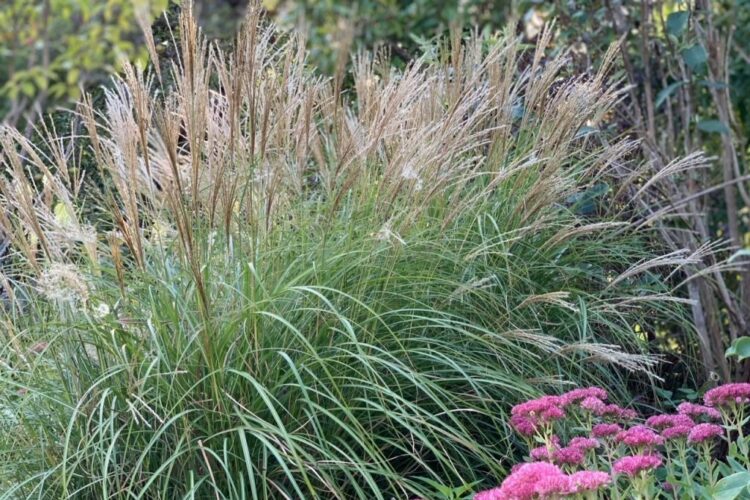
For beauty and movement all through Autumn and Winter, Miscanthus really is your best friend! It’s beautiful fronds of flowers waft about gorgeously in the breeze, and most varieties hold onto their colour for a long time. This is Miscanthus sinensis ‘Yakushima Dwarf’ which has a more compact nature than others but is still a fairly chunky grass. There are several other equally lovely varieties including Miscanthus sinensis ‘Gracillimus’, and Miscanthus sinensus ‘Morning Light’.
We love calamagrostis varieties for their compact, tall, upright growth and straw-coloured flowers, miscanthus sinensis varieties for their beautiful pink tinged flowers that silver with age, and all the pennisetums for their gorgeous, fluffy and oh so tactile flowers which look wonderful softening the edges of borders.
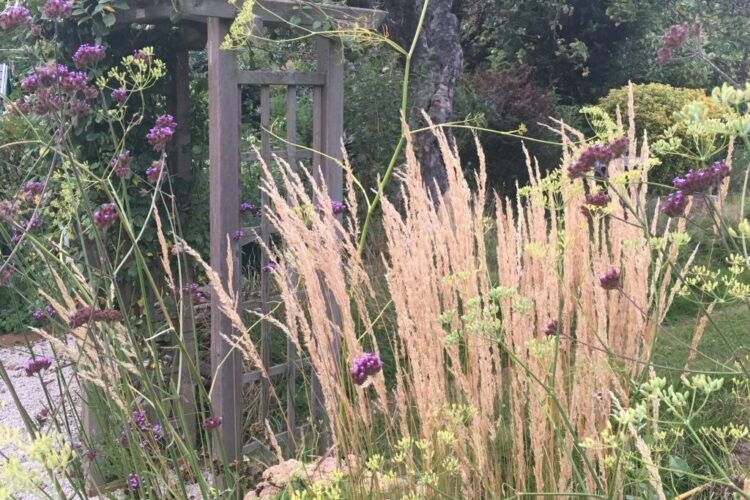
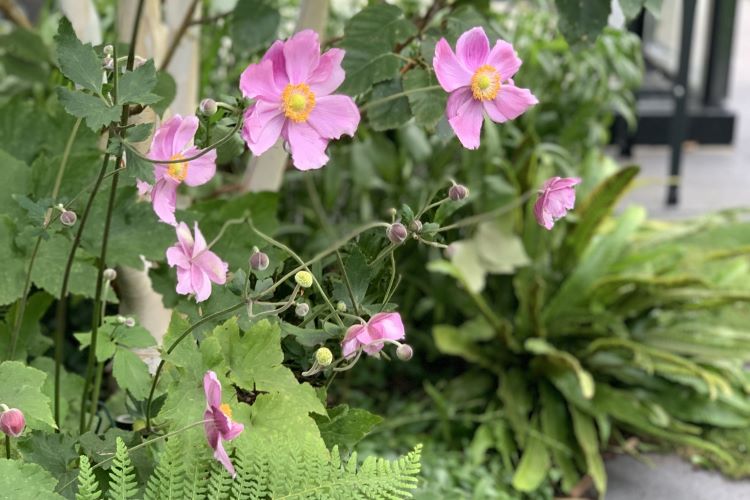
There’s still much colour to be enjoyed at this time of year from later flowering perennials such as Sedum, Salvias, Asters, Japanese Anemones, Verbenas and more. Happily many of these are also excellent late nectar sources for pollinators too.
There are several different varieties of each of these to choose from and they are readily available to buy at garden centres and online now. If possible, try to choose a garden centre that’s using recyclable pots and peat-free compost. Some of our favourite varieties of these late flowering perennials include:

This is a stalwart of the Autumn garden – the flower heads begin as a lovely soft green in the summer, start turning to greeny-pink and then open to pink in late summer/early Autumn. Their colours keeps developing until reaching this reddish-pink hue later in the Autumn. They hold their shape all winter with fantastic structural seedheads, are super easy to propagate and are bullet-proof on heavy clay – what’s not to love?!
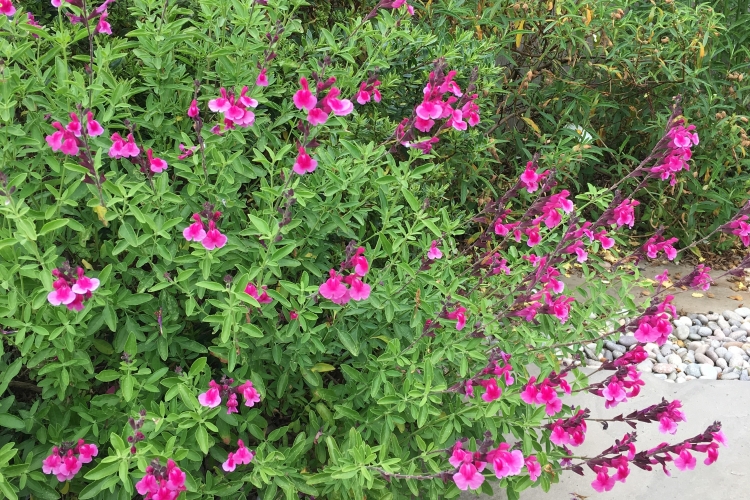
Providing colour and nectar for pollinators from mid-summer to the first frosts, shrubby Salvias are an absolute must for every garden. There are so many colours and varieties to choose from – here are just a couple of our favourites, we also love the varieties ‘Blue Note’, ‘Nachtvlinder’ and ‘Delice Aquamarine’.
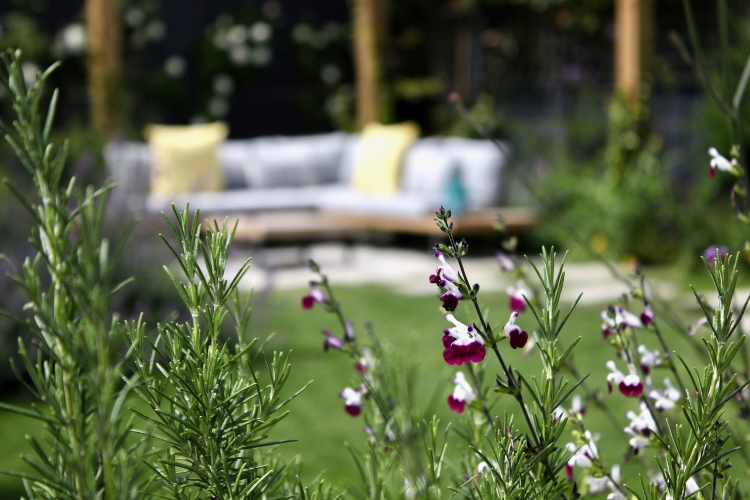
Known for their long period and flowering and for attracting various pollinators, there are now numerous Verbenas available So as well as the ubiquitous, and still very worth having, Verbena bonariensis, why not try some of the lesser known varieties? We love Verbena bampton with it’s dark stems and more delicate flowers. All Verbenas can be left standing over winter for vertical interest in the garden, cutting them back right to the base as the new growth emerges in the Spring.

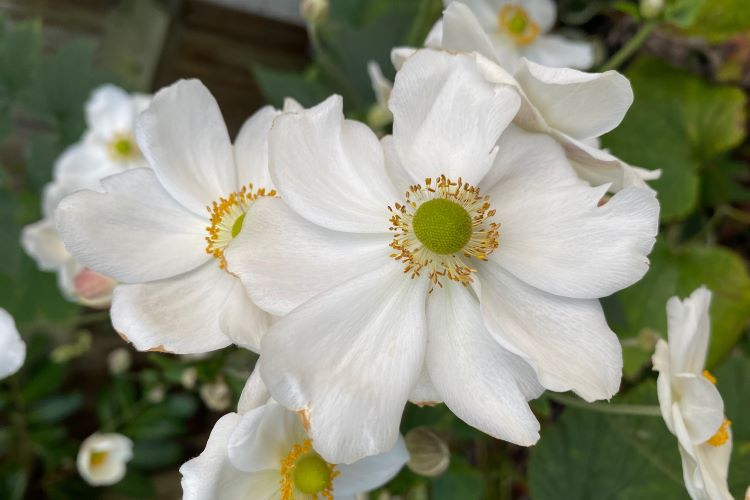
Another stalwart of the Autumn garden, providing lovely foliage for much of the year and flowering prolifically from late summer into early winter. Growing well in full sun and partial shade, they can be a great option for adding continuity and repetition throughout the garden. Here are two of our favourites. We also love the more compact ‘Swan’ series.
Some roses will keep flowering right up to early Winter or even to Christmas, but many also produce beautiful hips. These are the fruits of the rose and contain their seeds. As the flowers fade the hips swell and turn beautiful shades of orange or red. Not only are they beautiful to look at and provide a lovely pop of colour in the garden which persists as flowers are getting scarcer, but they are also an excellent food source for birds over Autumn and Winter.
When selecting a rose, some websites (including David Austin) will allow you to search for ones that produce hips. One of our favourites is Rosa Morning Mist which has a really striking coral-pink flower and goes on to produce large orange hips.
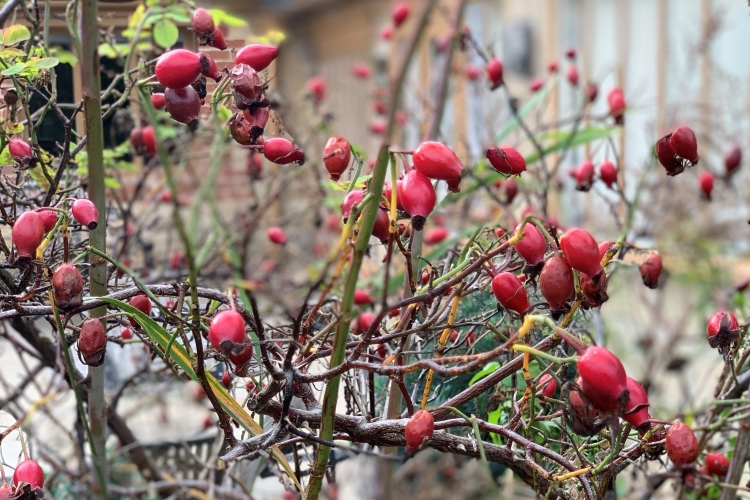
If you are not sure if your roses produce hips, you can stop deadheading them to allow the flowers to go over and give the hips a chance to form. Many of the shrub roses may be quite underwhelming but if you have any Rosa Rugosa or large bushy roses they may well produce beautifully coloured hips. It’s certainly worth seeing! Rosa Rugosa varieties are renowned for their stunning display of hips – they need some space but it’s well worth considering adding some to your garden if you can.
It’s not all about the flowers! Many deciduous tree and shrub species will be ablaze with colour during the Autumn. Trees such as Amelanchier, Acers, Liquidambar and flowering Prunus/cherry varieties can put on a riot of colour. These are also all great options for small-medium sized gardens, except Liquidambar which usually reaches a very large size at full maturity – however there are some smaller and fastigiate/upright varieties which are smaller, so if you have a larger garden they are definitely worth looking at for an amazing Autumnal feature.
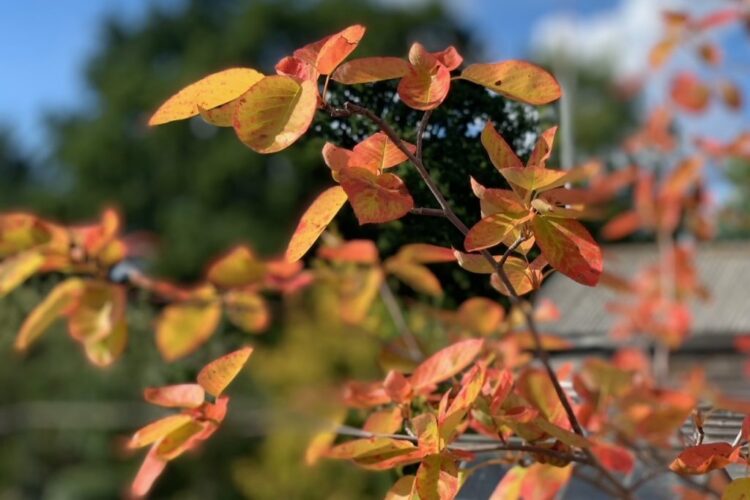
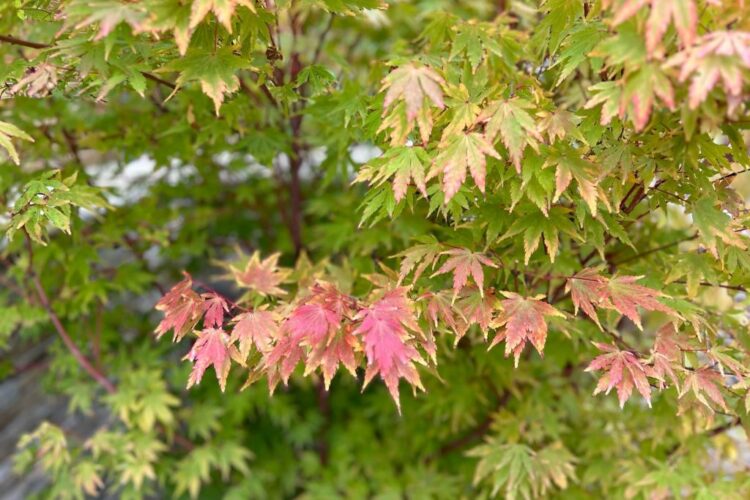

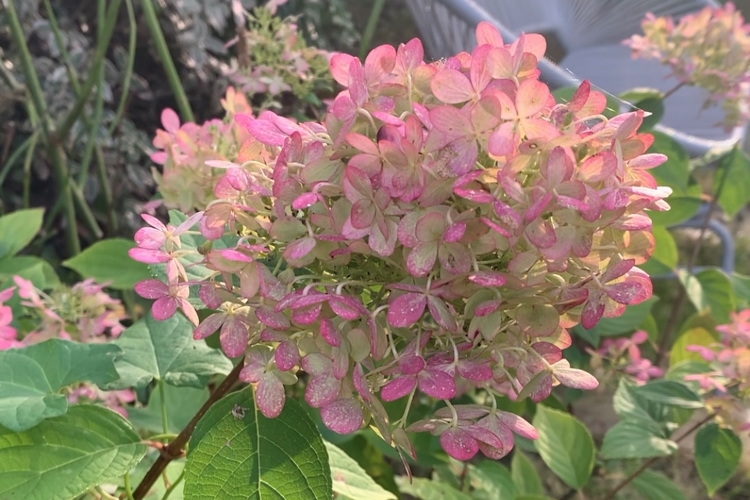
As well as trees there are some really spectacular deciduous shrubs to choose from, which will have worked hard earlier in the year to give you blooms and interest, and now as they get ready to rest for the Winter they continue to delight – Hydrangeas and Viburnum Opulus are two very worth considering, and perhaps the best shrub for Autumn colour is Euonymous Alatus (sadly I don’t have a photo!).

Many trees and shrubs produce berries in the autumn. These are essential food sources for many birds and they look beautiful too. We love Hawthorn, Sorbus, Cotoneaster, Crab Apple and Pyracantha – which are all beneficial for wildlife in spring and autumn. There are many varieties of each to choose from. Hawthorn has beautiful vibrant red berries and you can choose from numerous Sorbus with different coloured berries ranging from red to orange to pink. Cotoneaster produces rich red berries set against dark green leaves, often evergreen or semi-evergreen.
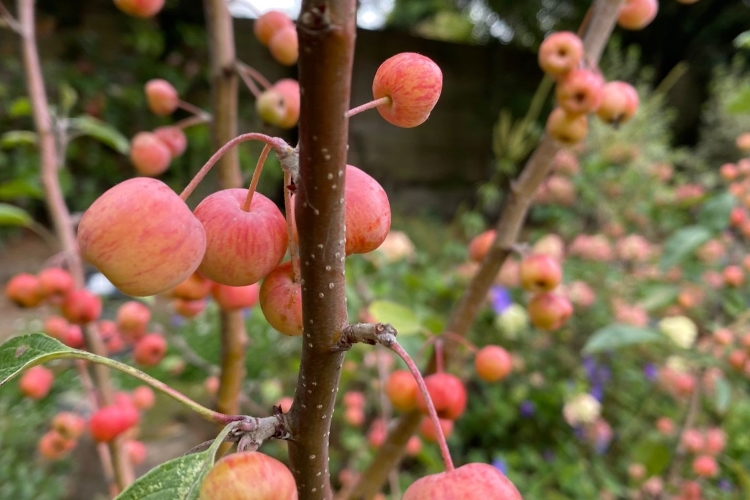
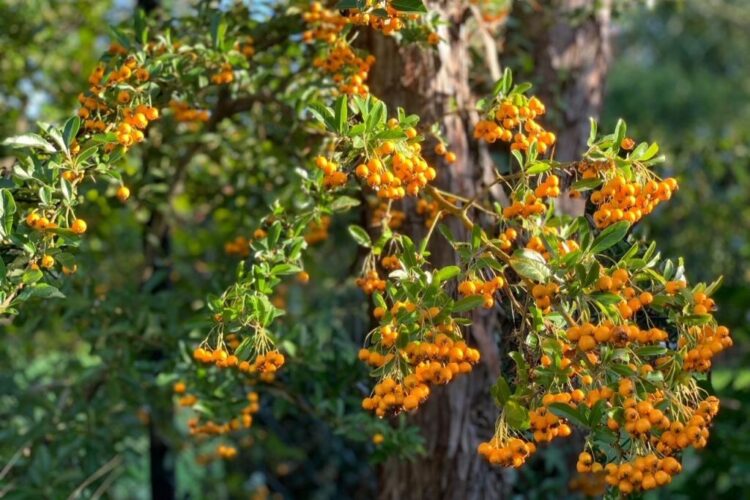
As gardeners, we live a lot of our time in the moment, enjoying the seasons and caring for the plants in our gardens now. But we also spend a lot of time planning for and preparing for future seasons. It may be late summer but one of the things to start thinking about now is spring! It’s time to think about ordering spring flowering bulbs for your garden, ready for planting from September to November. Here we have put together a list of some of our favourite bulbs and combinations of bulbs. However small your garden, there is always room for bulbs, whether in a pot or woven through your planting beds.
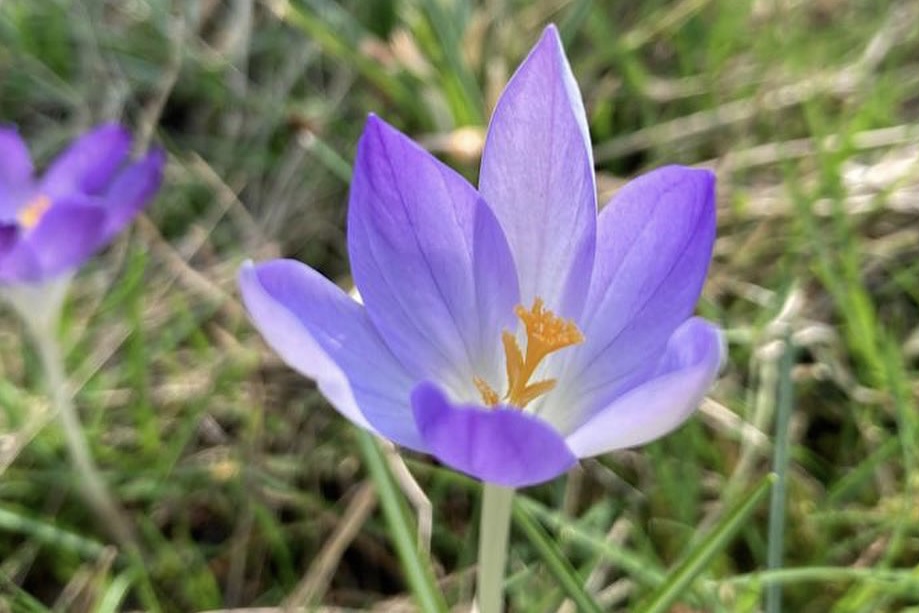
Amongst the first autumn planting bulbs to flower are crocus. Usually flowering at the end of winter or early spring, they are a really important early source of nectar for pollinating insects including early emerging bees. They look beautiful planted at the front of borders, en-masse in lawns and under trees. We like a mixture of purple, yellow and white and you can often buy good value mixtures from suppliers.
Flowering between March and May, Fritillaria meleagris, otherwise known as snake’s head fritillary, are a beautiful addition to the fronts of borders or meadow lawns. Coming in purple and white, their nodding heads are something a little bit different and we absolutely love them!
Commonly known as daffodils, there are thousands of varieties of narcissus to choose from ranging in colour from bright yellow to white to peach. They are a real sign of spring and can bring joy for several months. Many have a beautiful fragrance too and some naturalise really well, meaning you will get more and more flowers as the years go by.
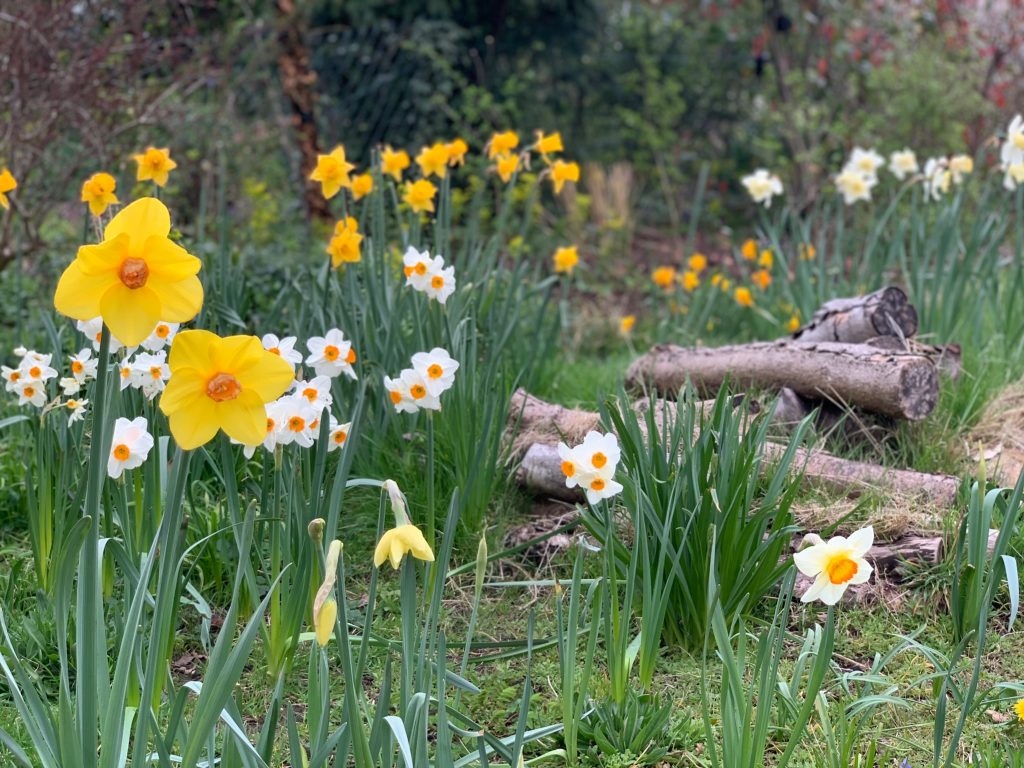
We advise planting several different varieties for successional colour and spring joy. Some websites allow you to search by month of flowering as well as colour/height, which is a great tool to help you plan for daffs from February to April (and even May). We recommend Peter Nyssen for this, not only for the easy to use site but also because they don’t treat any of their bulbs with neonicotinoids and package bulbs in a biodegradable plastic replacement.
Some of our favourite daffs to include in borders, meadows and pots include Sailboat, Jetfire, Geranium and the beautiful pure white Thalia.
Tulips are so much more than the small headed wraps you can buy in supermarkets. They respond to the sun, opening and closing their petals as the day goes by, and are available in a huge range of colour, size and shape. While they are not all reliably perennial, so may not come back every year, they are a brilliant addition of colour to the garden and in our minds it is well worth the effort of adding more each year. Any that do return are a welcome bonus!
Some of our favourite combinations are:
Tulip orange marmalade and tulip spring green – we love these planted alongside Narcissus geranium as the orange centres of the daffodils pair really well with the vibrant orange tulips:

Tulip akebono and tulip spring green – we love these planted alongside and amongst forget-me-not – the combination of yellow, white and blue is always a calming spring winner. Most tulips look gorgeous flowering above forget-me-not, so whatever colour you have, adding some forget-me-not as well is a great idea!
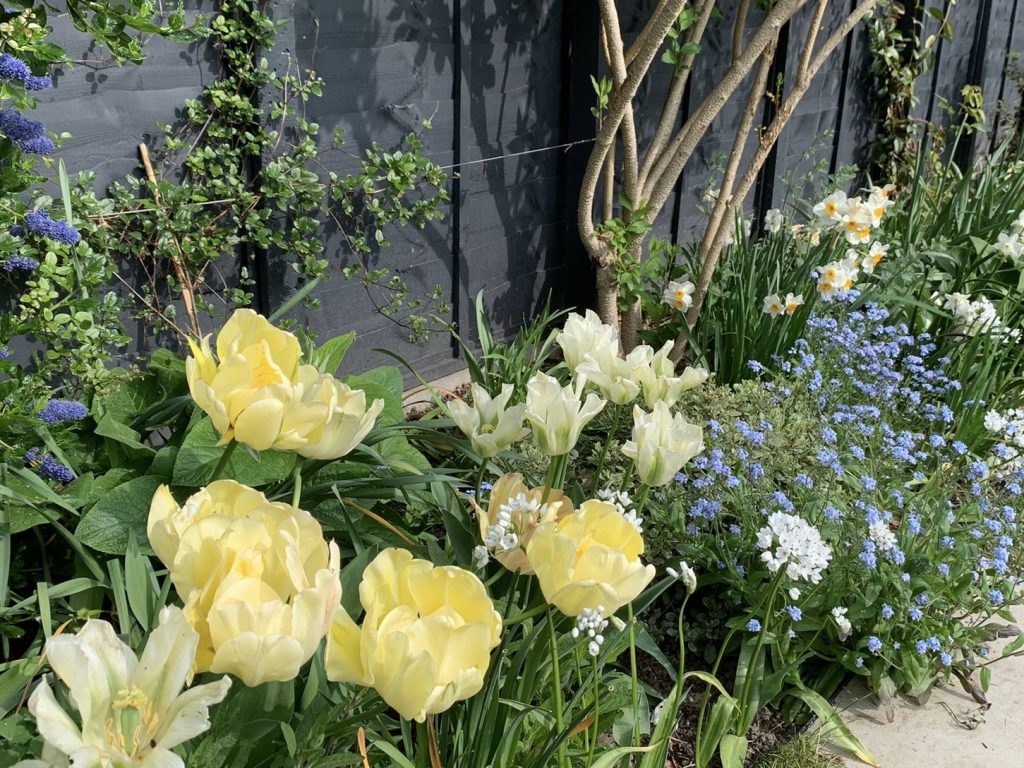
Tulip ballerina and tulip antraciet:
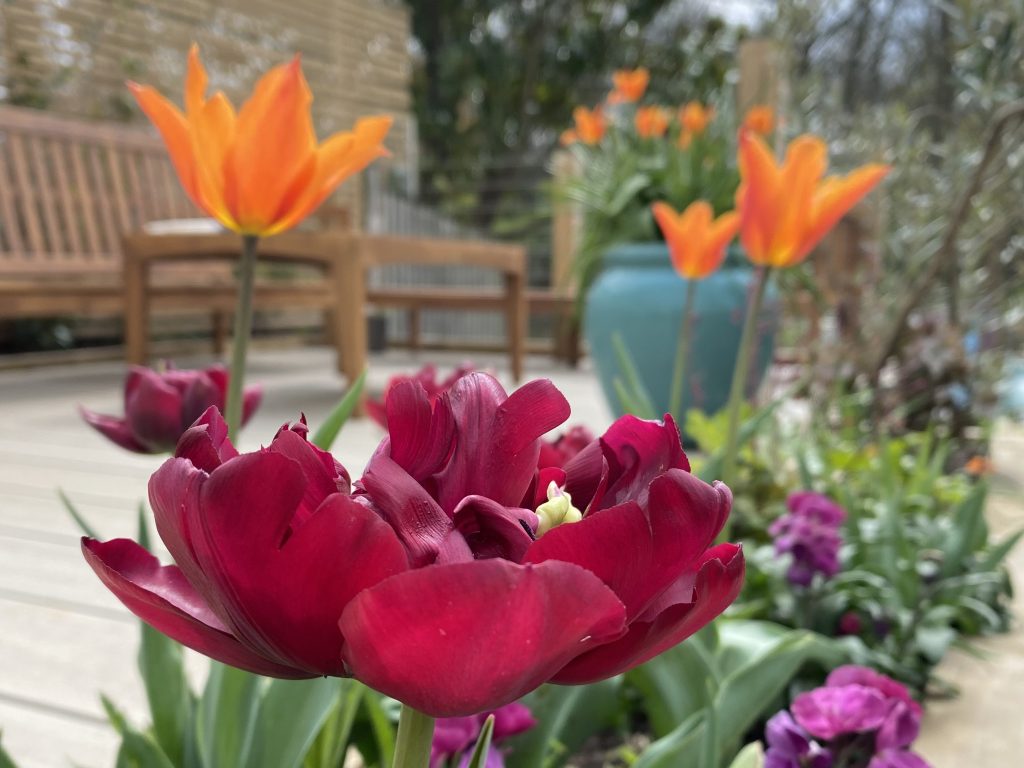
Tulip Virichic, tulip Greenland and tulip Formosa:

We love alliums, as do bees and other pollinators. They take over from the tulips and add colour at a different height. We like to weave alliums through borders, so that they pop up amongst perennials, rather than have them crowded in groups.
Some varieties are perennial and will naturalise while others are not that reliable so it’s a good idea to opt for good value ones in the expectation of adding more each year.
Purple sensation is a very popular choice, and for good reason. It’s beautiful, a classic allium shade of purple, is one of the first of the alliums to flower and it dries brilliantly for use indoors in vases.
Other varieties that we like include aflatunense which has a slightly softer purple colour than purple sensation, atropurpureum which has a deep burgundy colour and allium nigrum which is white and a more domed shape that naturalises well.
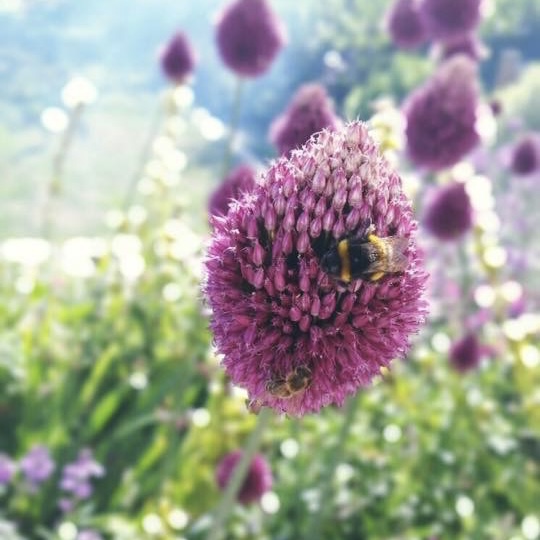
For a later flowering choice (usually in July), we like allium sphaerocephalon otherwise known as drumstick allium. It turns from green to burgundy over the summer and is a very good choice as it is reliably perennial, very reasonably priced and naturalises well.
Allium Sphaerocephalon is loved by bees and is one of the best value bulbs
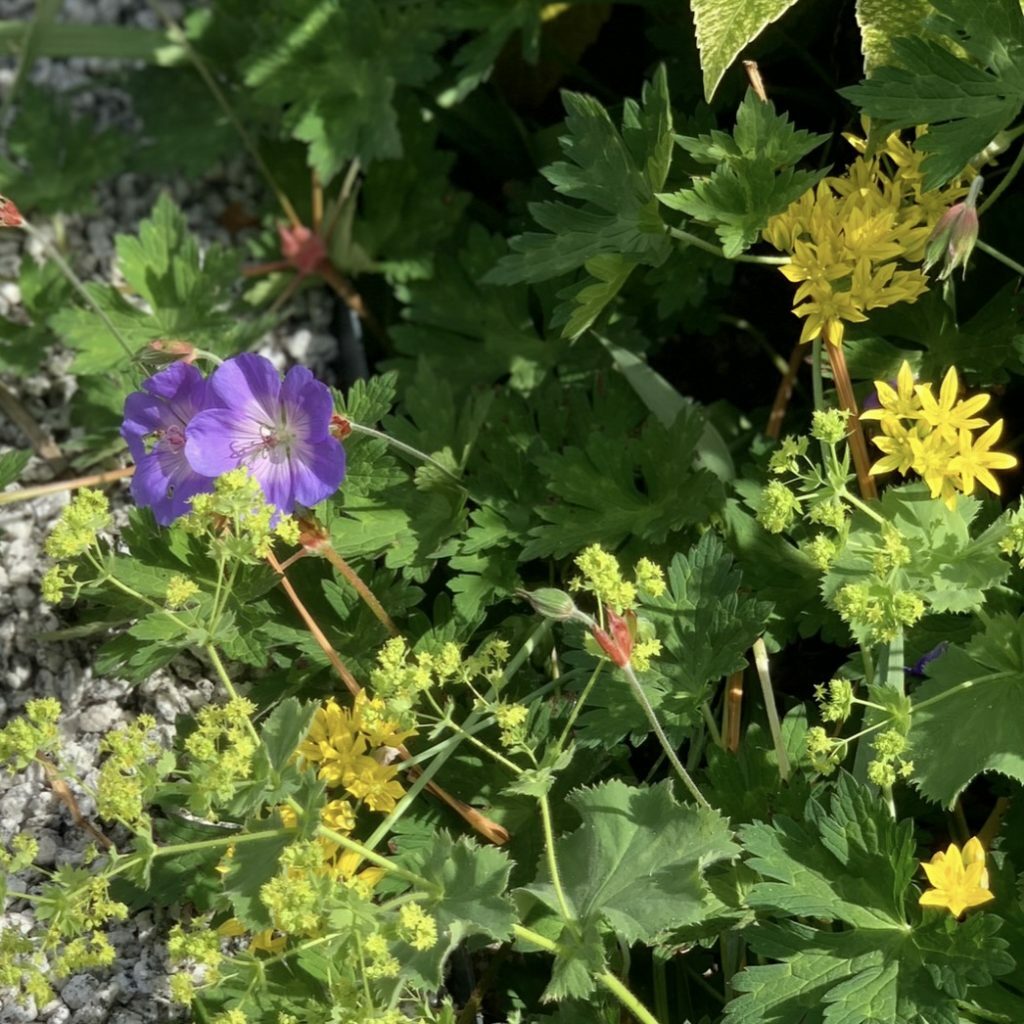
We also love to use shorter varieties of allium that look great at the front of borders. Our favourites are Alliums Cowanii (a delicate white), Roseum (a soft lilac/pink) and Moly Jeannine (a vibrant yellow which works beautifully with purple geraniums).
If you are planting up planters or pots, a bulb lasagne is a great idea. This entails layers of bulbs being planted that will flower successively. When planting bulbs in containers we recommend using a large plastic plant pot inside your decorative pot, so that when the bulbs have gone over, you can remove the pot containing them and move out of sight so that they can die back but not take up a prime position on your patio whilst doing so.
With a bulb lasagne, we suggest planting a layer of tulips first, then narcissus and then crocuses. This will provide a beautiful display from late winter/early spring to the end of spring. You can plant the top with something like winter flowering cyclamen or violas if the pot is in view over the winter.
We hope this has given some great ideas to add more colour to your garden for next spring. If you don’t fancy choosing and planting bulbs yourself why not get in touch to discuss whether this is something we could help you with!
We often speak about “lower impact” garden design, but what do we mean by this?
We certainly don’t mean that the garden leaves less of an impression (!) but rather that its creation has as low an impact on the environment as possible. Clearly there is a balance between having a usable, inviting space to suit our clients’ needs and the garden’s environmental impact. But we make design choices with the environment and ongoing benefits of the garden firmly in our mind. Above you can see a concept design that was designed to be low impact, and as you can see, none of the aesthetics or practical uses have had to be compromised. We have just made considered design choices.
Here are ten ways we make our gardens lower impact:
When designing paths and patios, we try to keep hard surfaces permeable. This allows rainwater to return to the earth. Clay pavers, decking and gravel are all great choices. If you prefer the aesthetic of a stone patio or path, you can use gravel or grass between the slabs.
We also use reclaimed materials wherever possible. Whether this be reclaimed bricks for a pathway, or reclaimed wood for raised planters or furniture. Recycling and reusing is important so if there are materials in the garden that can be used in the redesign, we will take this into consideration. It can help with costs too, although reusing paving is not always as cost effective as we would like as it involves chipping off the old mortar before it can be re-laid.
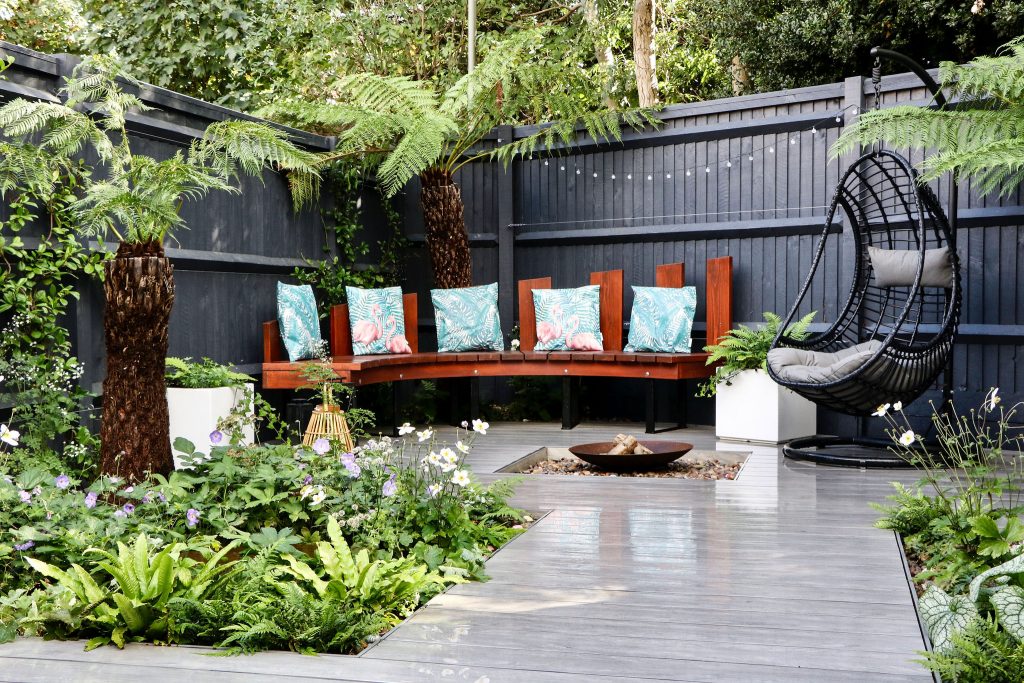
Concrete is sometimes necessary to secure pavers and large structures that need to be strong (i.e. pergolas that have a swing on for example). However, not all structures need to be fitted with concrete. We have successfully used ground screws on a number of projects now including bases for summer houses, benches, screening and pergolas, including this one:
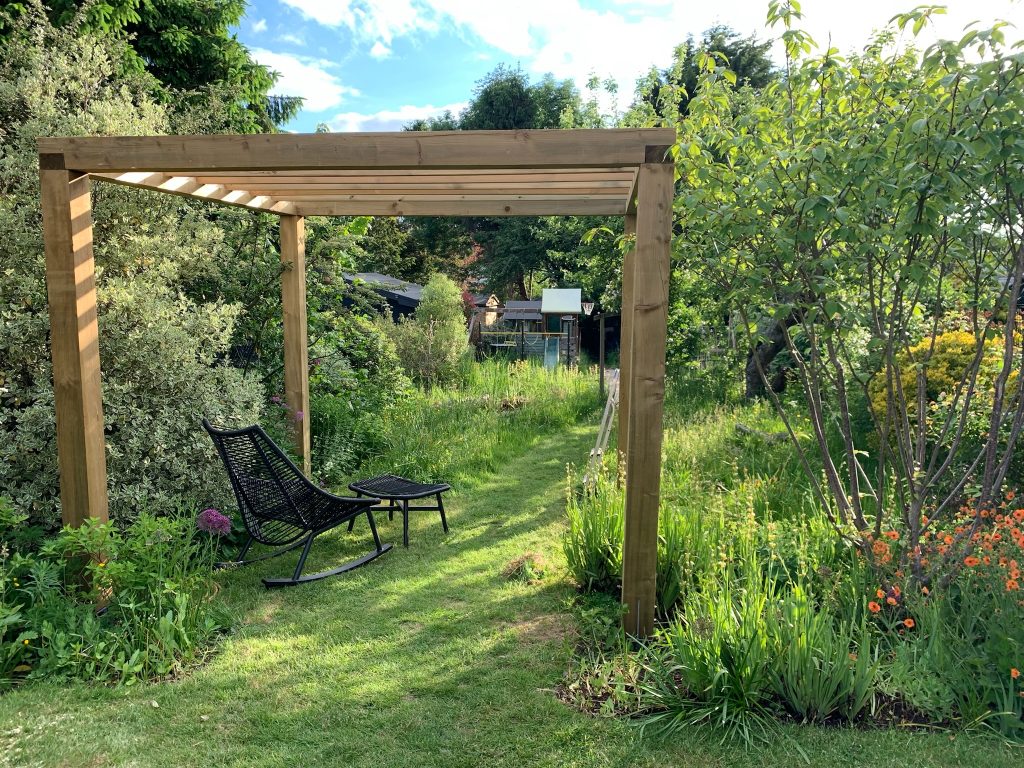
They don’t require the use of concrete or much digging as they screw into the ground, so this reduces disturbance of the soil and the creatures which live in it. Planting around them is also much easier as there is no concrete footing to contend with.

Another way of avoiding concrete use for retaining walls is to use gabions – wire cages filled with stone, rocks, or pebbles. These have the added bonus of being great habitats for insects to hide in, and even for plants to grow out from – think a sea cliff with plants growing out of rocks.
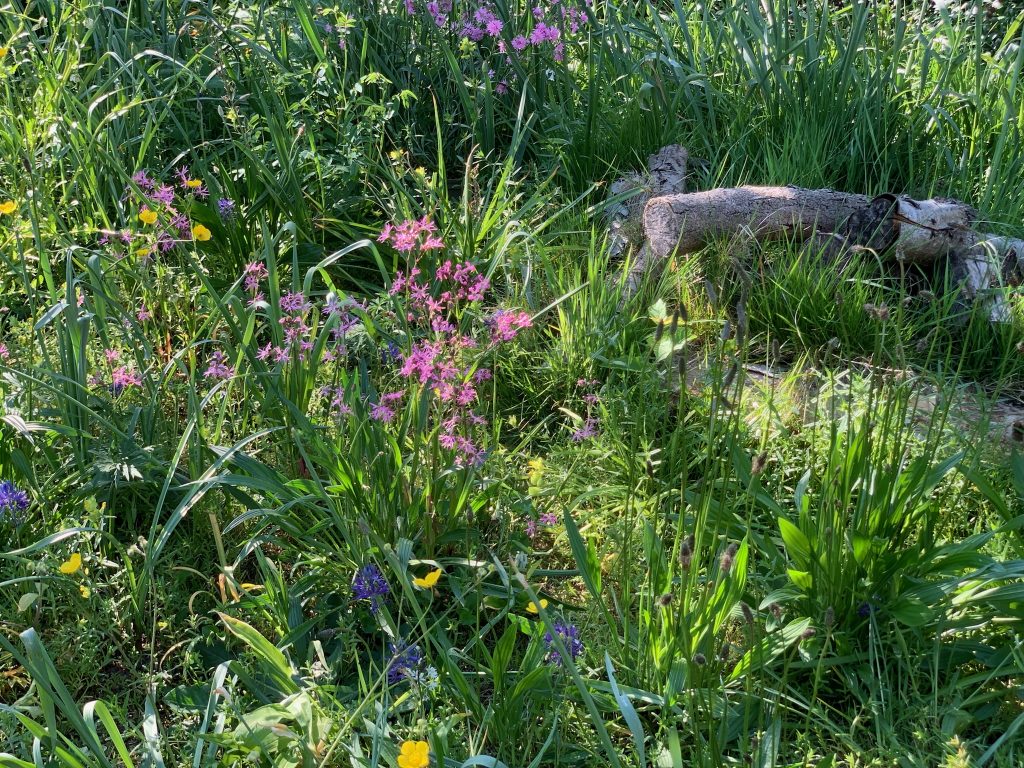
Including an intended area for wildflowers to grow not only creates a beautiful, whimsical, meadow feel to the space, but it is highly beneficial for pollinating insects. Allowing weeds – aka wildflowers – a spot in your garden will encourage insects which will in turn encourage birds too.
We also recommend having a section of meadow lawn/whole meadow lawn if you don’t want or need a traditional one! These are really beautiful additions to a garden and provide an ever changing, species rich blanket from Spring to Autumn. We have written a blog about creating a meadow lawn here.
A ratio of 20:80 hard:soft landscaping is a good aim, but really as much planting as you can fit in the better. This is obviously a decision to be made alongside the creation of usable seating/dining spaces. We like to include seats amongst flower beds, or suspend hammocks over planting to create restful spaces immersed in plants. In a smaller space this ratio might not be possible – but by adding vertical planting such as climbers on all fences and walls, up pergola posts and other structures, and considering a green wall system – we can really increase the planting volume and therefore the benefits for both the people and the wildlife using the garden.
If you have a tucked away area behind a garage or shed, or can create a screen with a climber or large shrub or tree, this would be an ideal spot for a compost heap. Most garden waste can be put here to break down turning garden waste into free compost! If it can’t be hidden away, you can also buy attractive looking bee-hive style compost bins – and could even paint them a pretty colour.
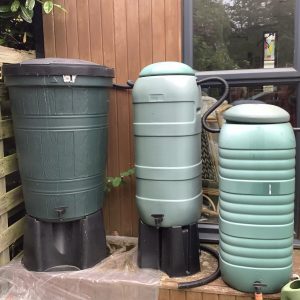
Water butts need to be situated near a downpipe, so along the side of a house or garden office or shed would be ideal. If you have lots of space you can even interconnect multiple water butts. If you don’t have space to tuck one out of sight, you can get more attractive water butts with space for planting on top so if you grew some trailing plants in them they would soon be able to blend into your garden planting scheme. Rainwater is better for watering with than tap water, and it’s free to collect!
Peatlands are important carbon stores and habitats. It is vital they are protected in the fight against climate change and so we don’t use any composts or soils containing peat. We also buy from trade nurseries that have now switched to peat free growing. There is still a long way to go here and the current alternatives are not perfect, but it is a good start.
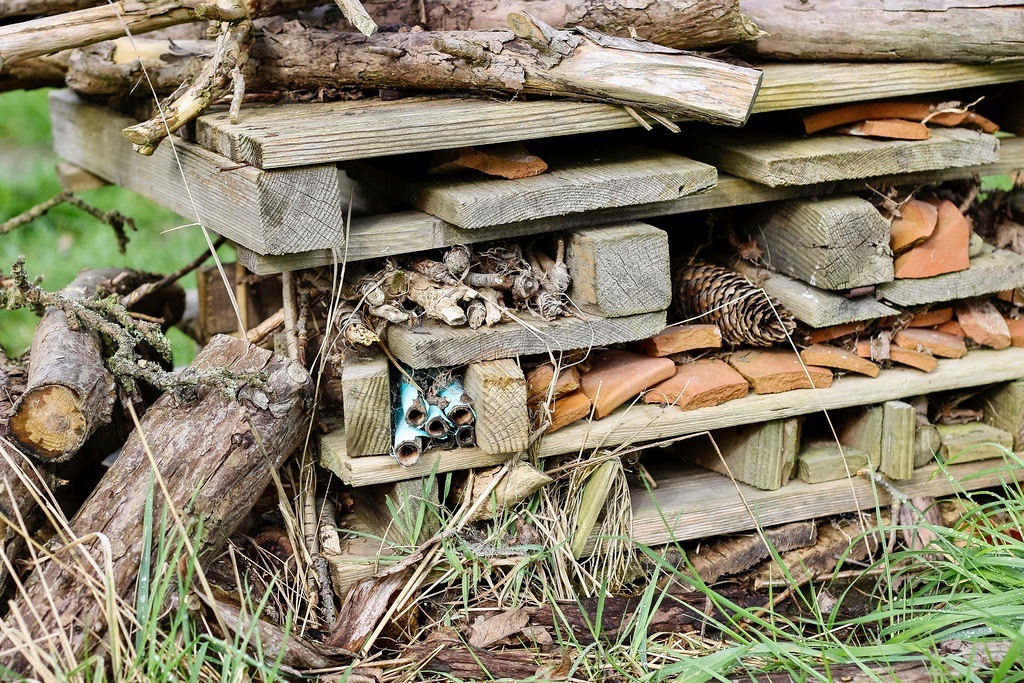
We design our gardens to be spaces for wildlife to prosper and we try to use a variety of habitats which all make great points of interest for children and adults alike. Simple log piles are great places for insects, amphibians and small mammals to feed, shelter, and maybe spend the winter in – as is a compost heap. Solitary bee houses can easily be added amongst planting or wildflower areas. A pond is an absolutely brilliant habitat and supports so many species – see more on this below. Allowing holes/gaps in boundaries enables hedgehogs and other creatures to move between gardens and increases their patch to roam and feed, which gives them a better chance of survival and reproduction. You can also include specific hedgehog habitats and houses, or simply make a large log pile or dead hedge to provide somewhere for them to shelter. Don’t forget to be careful with your compost heap in the spring as you might be lucky enough to find one hibernating in there! You can add bird and bat boxes, and as we mentioned earlier gabion walls can also be a great habitat. In short, we design our gardens to be full of life and to work as well for wildlife as their human inhabitants.
We never use any chemical pesticides in our gardens. These are very damaging for wildlife and really unnecessary. The best way to reduce pests in your garden is to encourage predators such as beetles and birds. Pests such as greenfly, which can damage your plants, can be removed by hand and with the help of a gentle hose. Where pest populations really cannot be controlled, biological controls such as nematodes can be used as a last resort.
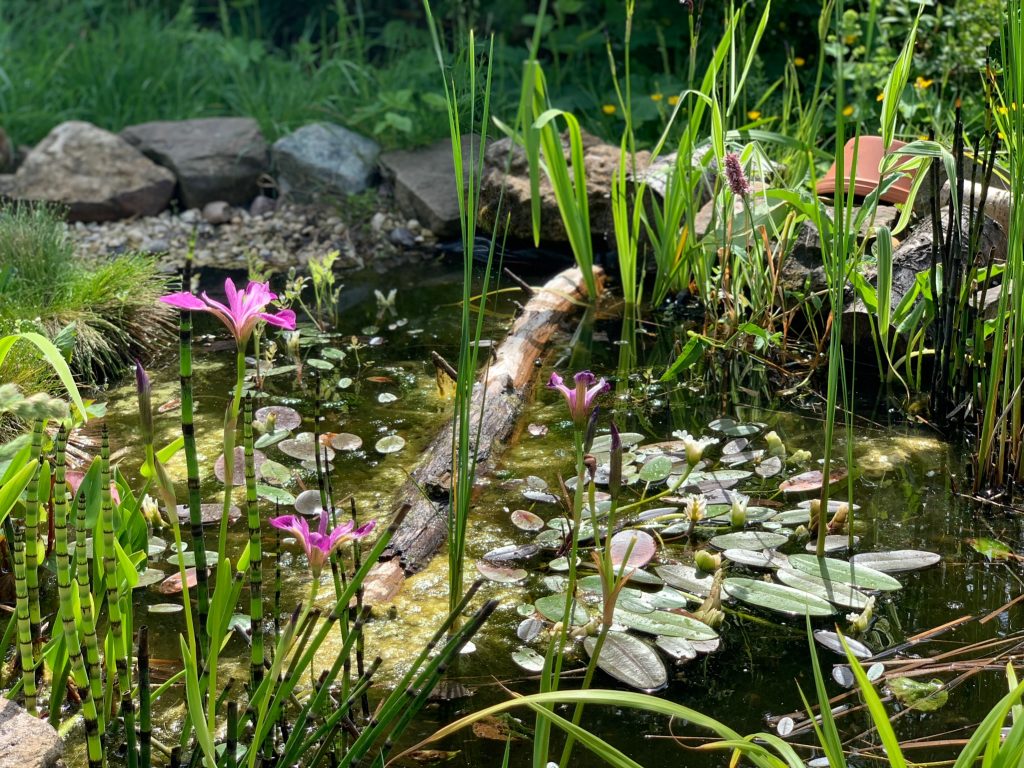
Even small gardens can have space for a pond. A pond is the very best way of encouraging more wildlife to your garden – as well as providing natural bird baths and drinking stations, they also provide a habitat for a multitude of species from pond skaters to dragonflies and damselflies, as well as the more obvious inhabitants such as frogs, toads and newts. Frogs and toads are of course excellent slug and snail predators! Creating a healthy ecosystem is what it is all about, and a pond is the best way to start this off or improve what you already have. They can be as small as just a little barrel with some potted plants, or a much larger, more natural looking pond.
Careful selection of plants is a great way to give back to the environment with your outdoor space. There are lots of things that this can mean including:
We hope this has been food for thought on how you can make your garden design as low impact as possible. If you would like to get in touch to see what we can do for you, please send us a message here.
When we are designing gardens we are almost always asked to include seating areas for dining, relaxing and entertaining. Whilst these spaces are really important for the garden to be enjoyed for meal times, a morning cuppa, and evenings with friends and family, we also love to find a quiet spot, a less obvious place within the garden to go to and relax. Perhaps to use at a different time of day. If it is hidden away from sight that’s even better!
It could simply be a bench in a secluded spot, a different part of the garden, a seat with a view of the pond, or a hammock or swing to daydream in whilst taking in the sights and sounds of the garden. These extra spaces in the garden are so important for a little sense of escapism, and we try to include them whenever possible and whatever the size of the space we are designing.
In this small family garden we created a simple gravel area for a sofa bench and coffee table, surrounded by plants. This spot feels both secluded and cosy.
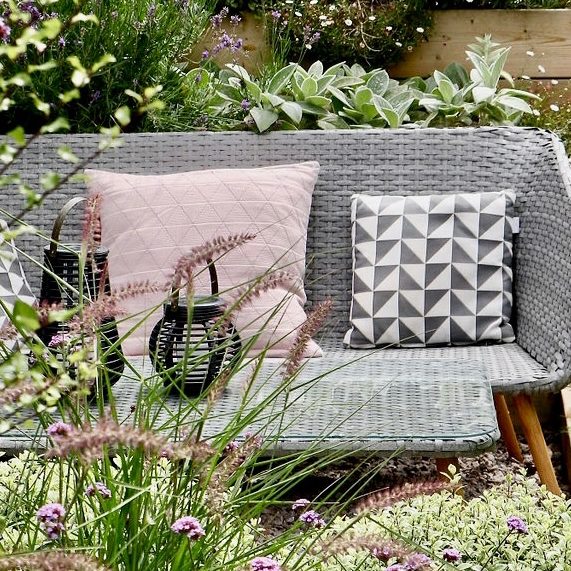
It might seem as though it would be easier to include extra seating spots in a larger garden, but finding the right ones can be tricker and making them feel both private and welcoming in a big space can be more of a challenge in some ways. In this garden which is currently being planted up, we have included a couple of extra spots for benches to be used at different times of day to the main seating areas – one perfect spot for a morning cuppa in the sun and one shady spot to relax in at any time of day.
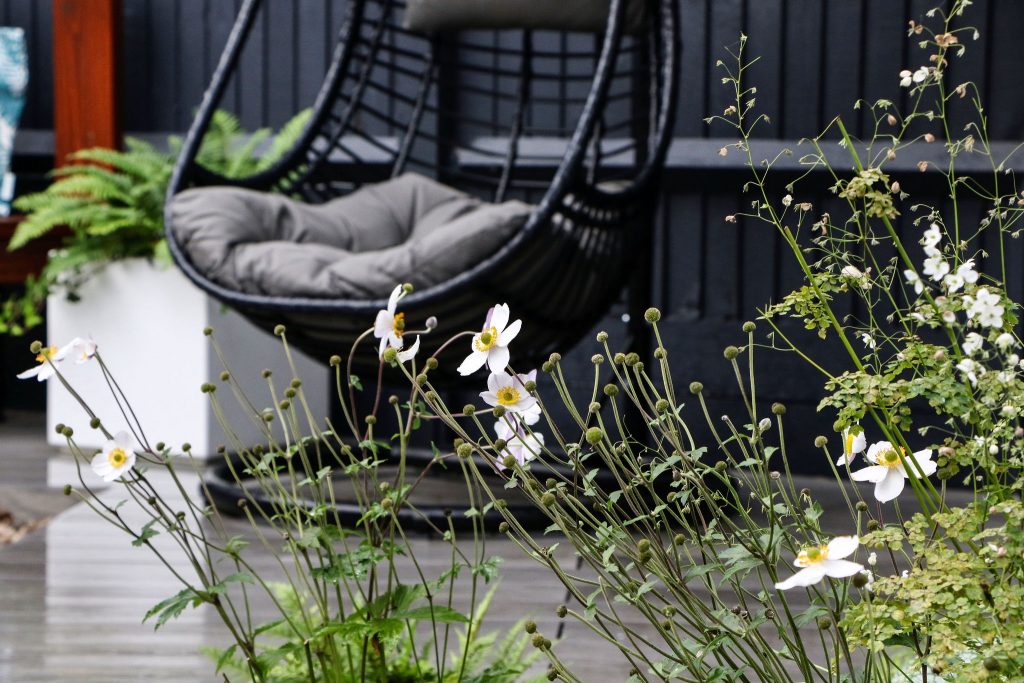
A hanging egg chair in a small space can also provide an additional seating spot which has a very different feel to the main seating area – and is very handy for seating extra people!
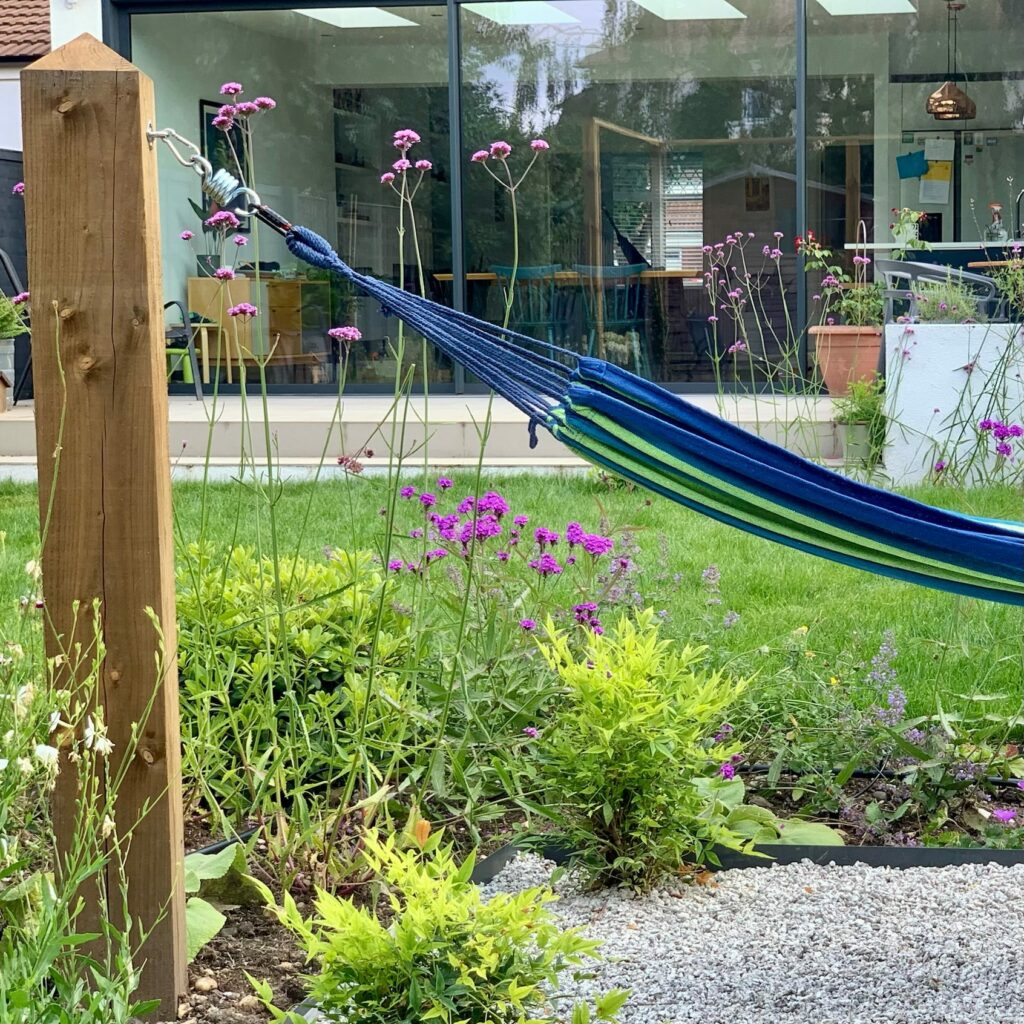
We are also including hammocks in an increasing number of gardens – somewhere to really chill out and relax amongst nature! Here is one in a garden we designed and planted last year – as the new tree and planting fill out around the hammock area it will become a really secluded and special place to go and relax in.
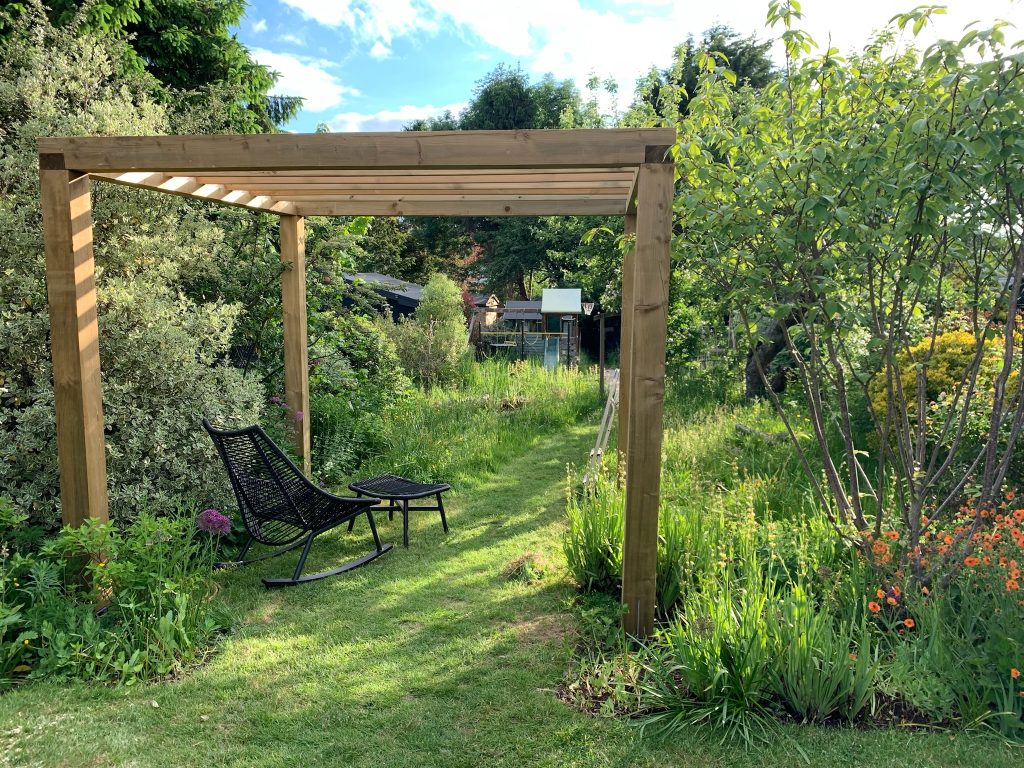
The pergola in this larger family garden creates a divide between different areas but also offers a secluded and shady spot to relax in whilst looking over the long grass and wildflowers towards the pond. It’s a gorgeous spot for one or two people to just sit and soak up the delights of nature around them.
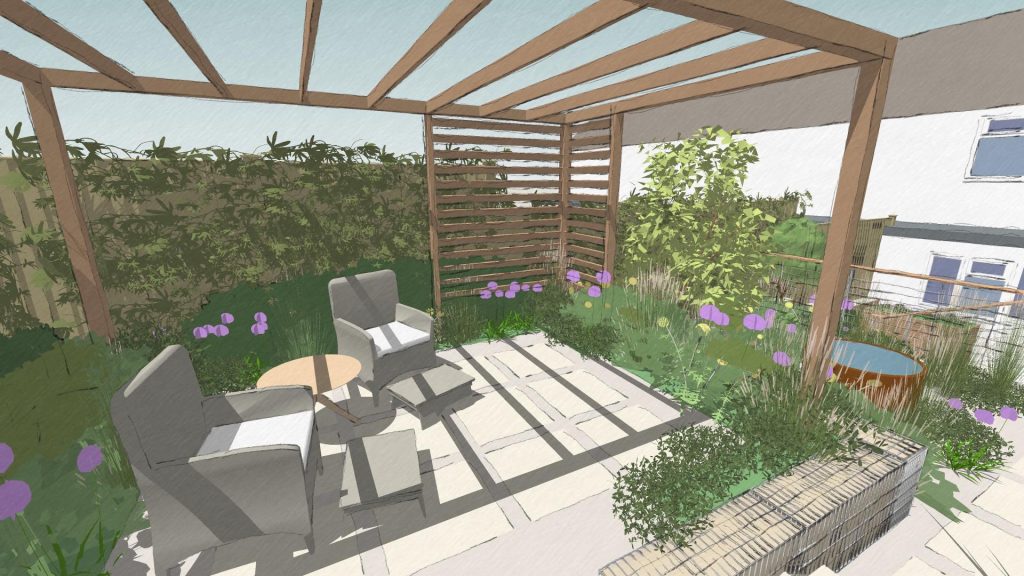
Lastly, in this multi-level garden which is due to be built later this year we have included the main seating area directly outside the house for ease, and in the top section we have also designed a seating area under a pergola for shade, privacy as well as to provide a spot which in which to feel ensconced by plants – one of the best feelings there is!
We hope that this article helps to inspire you to create some additional and interesting seating spots in your garden. We specialise in creating stylish, practical and wildlife conscious outdoor spaces, which work for people and planet. This means helping people to become immersed in their garden and connect with nature, to love spending time out there appreciating the wildlife that will visit their garden and gaining huge benefit from time spent outdoors.
If you would like some help in transforming your outdoor space to create something really special, with extra touches such as secluded seating spots to relax and observe from, please do get in touch. We would love to hear from you.
We love creating stylish, practical and wildlife conscious outdoor spaces, and that includes front gardens too. We believe front gardens deserve as much thought and input as back gardens, if not more – after all they are the first thing to be seen when visitors approach your home, and you probably go through them several times every day. So why not give your front garden/driveway the love it deserves?
The garden and driveway of this double fronted Victorian property in Penge was crying out for some creative input. We kept it super practical, low key and included a range of easy to look after plants including plenty of shrubs and perennials with a long season of interest and which are beneficial for pollinators.
This is how the garden looked when we first visited:
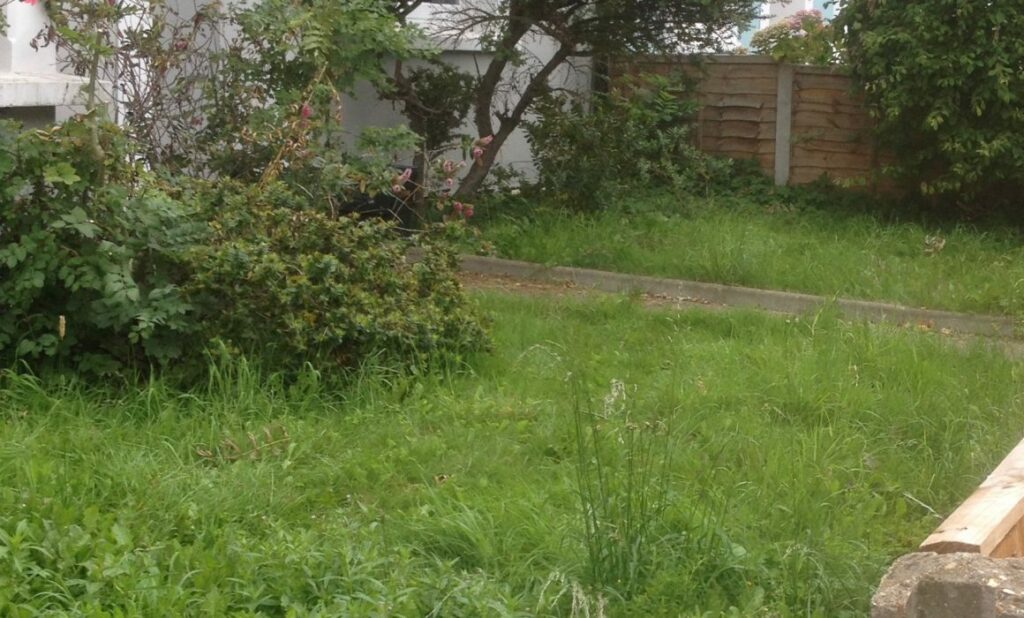
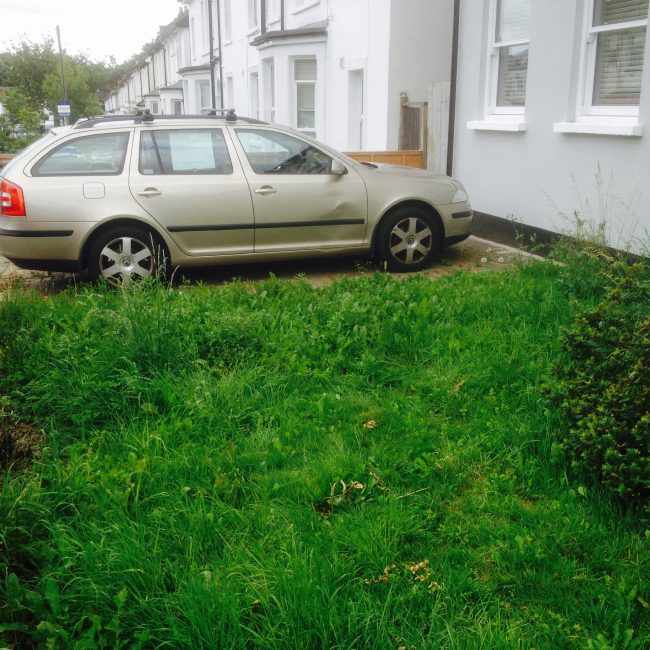
It was an overgrown jumble of grass, weeds and a few shrubs, and was totally at odds with the rest of the stylish and functional house. Access from the front door to the driveway was either across the muddy grass or via the pavement, not ideal when you have young children on a cut-through road where quite a lot of vehicles drive far too fast.
The budget wasn’t huge for this wide plot but fortunately the brief was for a naturalistic, relaxed and low maintenance space which would provide kerb appeal to match the interiors but also meet the family’s practical needs. The brief was not only right up our street but also meant we could reach for some cost saving design solutions.
We re-designed the space to include a smart low slatted fence, bin store and new side gate, and large format porcelain stepping stones through Scottish pebbles giving access from the front door to the car and also to the pavement.
We included a restrained palette of sensible, easy to manage shrubs, perennials and grasses to make it a simple space to look after, with most plants only needing attention a couple of times a year.
The result is a cool and calming space with tones of grey and green and warmth from the slatted fence against the grey render of the house. The family are delighted with the outcome and regularly receive comments from passers-by about how lovely the garden is and how nice it is to see a plant filled front garden – this has helped them to connect with their local community more too. Gardens are good for us in so many ways!
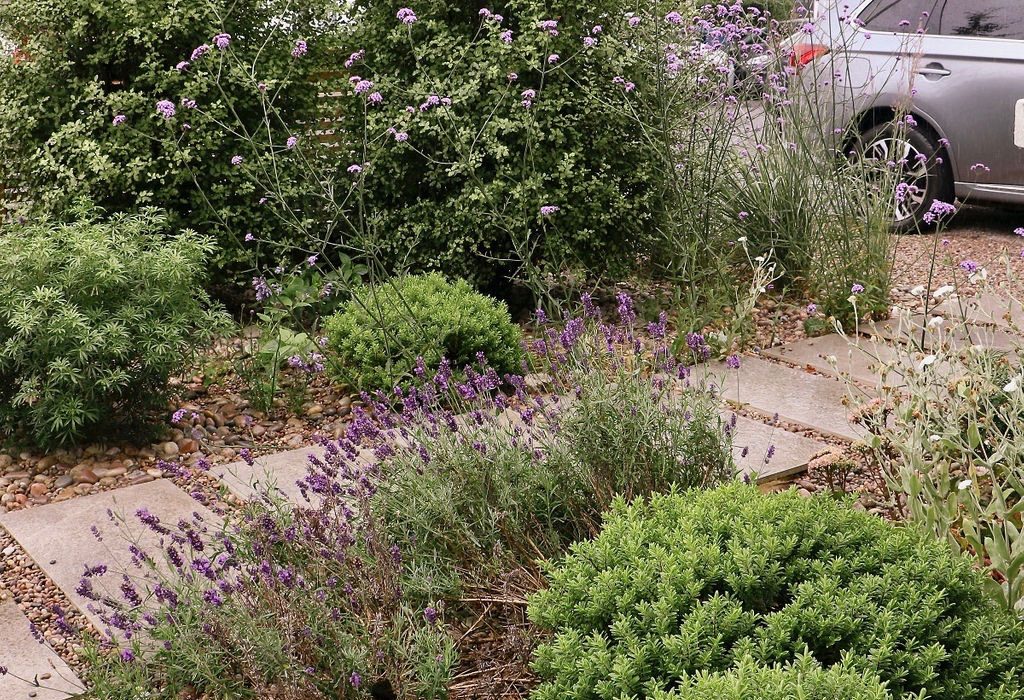
Including structural plants such as a multistem Amelanchier, grasses and small shrubs such as Lavender, Choisya White Dazzler and Euphorbia means that the garden looks good all year round, and then comes alive in the summer with flowering perennials and grasses.
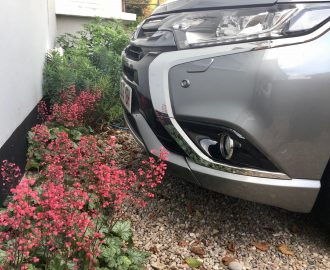
We also introduced some low planting along the front of the house, in and around the parking space – who says plants and cars don’t mix?
We pop back a few times a year to help keep it all looking neat and tidy – cutting back the perennials and grasses, shaping shrubs, making sure everything is ready for the growing season ahead. High quality garden care is just as important as good design and we firmly believe there is no point in having one without the other!
The garden was built and planted 4 years ago for around £12,000. It is a relatively wide urban front garden of approximately 14m in width and 5.5m deep. If the same work was carried out now we would expect it to cost in the region of £15,000-£20,000.
If you would like help transforming your front garden (with or without a driveway) into a naturalistic, wildlife friendly space with masses of kerb appeal, get in touch and send us some photos. We can then arrange a time for an initial chat on the phone to discuss how we could help you with this. Because all front gardens should be beautiful!
Annuals and perennials are usually the first things to spring to mind when thinking about planting for pollinators… bright flowers in summer aflush with bees. But whilst these sorts of flowers are most certainly adored by pollinators, trees and shrubs actually provide 60% of nectar sugar for pollinators in our gardens. So, when choosing trees or shrubs, it really is worth considering whether they will benefit pollinators too. Trees and shrubs will also encourage birds to your garden – they provide shelter for nesting and perching as well as food from their fruits and the insects that will visit them too.
Here’s a list of some of our favourites…

A native small, rounded tree with beautiful large white blossoms with tinges of pink in the Spring and yellowy green or sometimes red tinted fruits in the autumn. Pollinators love the flowers and birds and small mammals the fruits. There are numerous different varieties which vary in size. Malus Evereste is one of our favourites. Be sure to pick a variety with single flowers, not double, so the pollinators can enjoy the nectar.
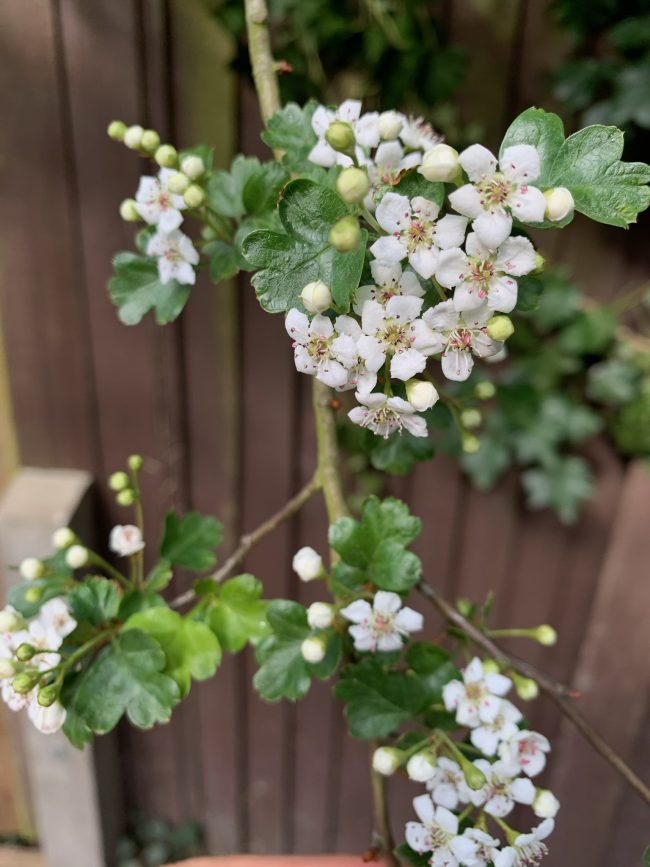
A stalwart of the British hedgerow but equally popular as a standard tree, Hawthorns are loved for their berries by birds and for their nectar rich blossoms by insects. There are two native to the UK, Crataegus monogyna and Crataegus laevigata, both of which work well as trees in small urban gardens. They like full sun to part shade and require little to no pruning, unless you are growing them as a hedge. Look out for Crataegus monogyna compacta, a dwarf variety which is also said to be thornless.
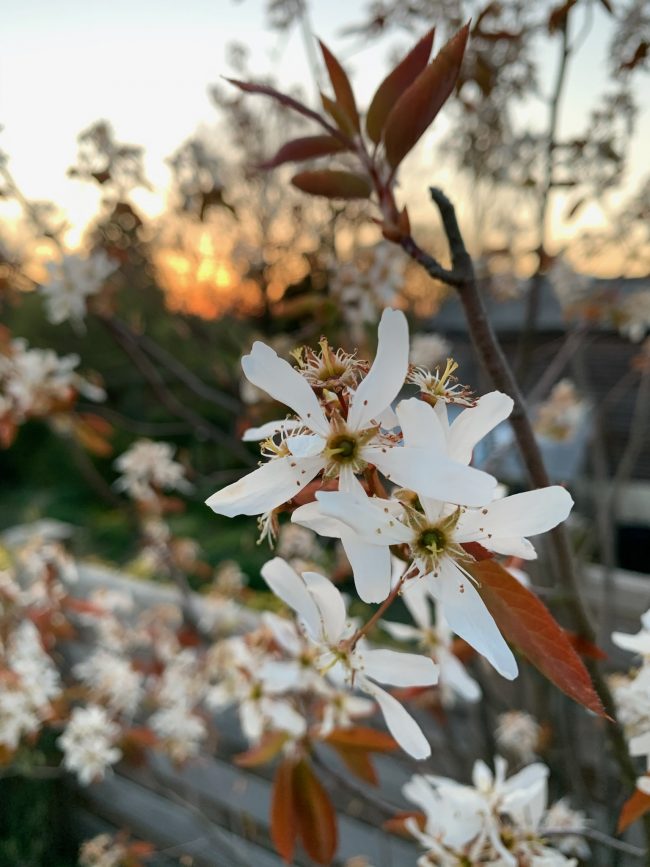
Amelanchiers are beautiful trees or shrubs with delicate white flowers in Spring and incredible Autumn colour. They are an excellent and increasingly popular choice for small gardens for exactly this reason. On top of this, their blossoms are great for bees and the berries will attract birds, especially robins and blackbirds.
There are several varieties to choose from but all have stunning blossoms and autumn colour. Amelanchier Canadensis Rainbow Pillar is a great choice if you are limited on space, it grows to approximately 4m high and 2.5 wide in 20 years so has a narrow shape but all the benefits. As ever, check each variety’s specific needs but generally Amelanchiers do best in full sun but are happy in part shade. You will certainly get the best Autumn colour by planting in a sunny spot.
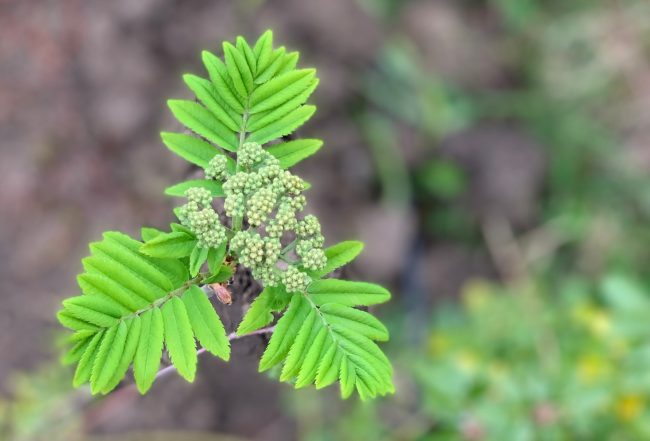
Attractive to bees, butterflies, other beneficial insects and birds, Sorbus aucuparia – otherwise known as Mountain Ash or Rowan – is a great choice as a wildlife friendly tree. With blossoms in spring and berries in the autumn it provides much food for wildlife as well as seasonal interest for us. It has an upright habit and likes full sun to partial shade, and gives lovely leaf colour in Autumn. There are many varieties with different colour blossom and berries, just be sure to check the expected eventual size.
Shrubs can sometimes be a little undervalued but often provide the structure in a planting bed, evergreen colour, pretty blossom and a beautiful foil against which perennials and annuals can be set. We love the following not only for their appearance but for the fact that they are pollinator magnets too!

Mahonia provide a pop of yellow at a time when colour in the garden can be lacking, and they have the most beautiful scent. Flowering time varies from variety to variety but is generally sometime between November and March. Adored by bees, these early sources of nectar come in many varieties from low ground cover plants to large focal shrubs for architectural interest in a border. They are evergreen and have a deep green leaf with serrated edges and produce a blue/black berry in the autumn. One of our favourite smaller varieties is Mahonia eurybracteata ‘Soft Caress’ which has slender leaves and is happily grown in a container too. Plant it in part shade and it will reward you with it’s pretty foliage and sweet scented blooms.
Commonly known as sweetbox, Sarcococca is an evergreen shrub which produces tiny but highly fragranced white flowers in winter, followed by glossy black berries. Requiring full or partial shade, Sarcococca offers a great choice for sometimes trickier sites and when planted along a pathway or near an entrance, the scent can be enjoyed even when we are spending less time outside in winter. What’s more, honeybees especially enjoy the nectar in the winter when there is little else to forage from.
A multi stemmed deciduous shrub, Heptacodium miconioides is a fantastic specimen plant for full sun or partial shade. It can reach up to 6m tall and has creamy-white flowers in the late Summer that are fragranced and followed by pinkish-red calyxes. The leaves are rather exotic looking and the bark is decorative too and peels off in yellowish flakes. If you raise its canopy, Heptacodium can be made to look like a small tree too making it rather versatile in a planting bed.

Ceanothus are also known as Californian lilac and most commonly are evergreen with a profusion of blue flowers in April and May. They prefer a sunny sheltered site and their flowers are loved by bees and butterflies. After flowering, many varieties produce berries which are loved by birds. There are many varieties to choose from and many can be both free-standing shrubs or wall-trained. You can also look out for evergreen white and deciduous pale pink varieties.
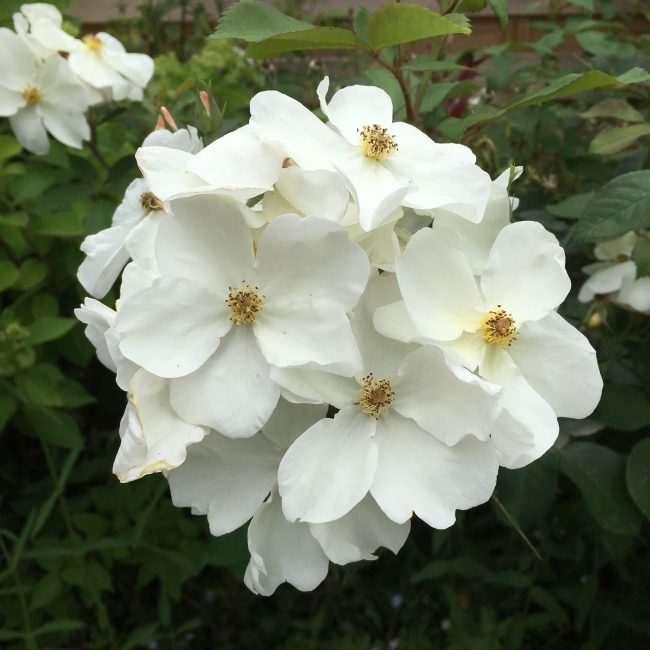
An English Garden classic, roses are not only beautiful but can be a great source of nectar for pollinators if you choose the right varieties. You need to choose an open flower where the insects can access the nectar. Some of our favourites include Kew Gardens, Tottering-By-Gently and Scepter’d Isle and many of the Rosa Rugosa varieties. Roses that produce hips are also beneficial for wildlife with lots of birds including thrushes and blackbirds feeding on them over winter. Two of our favourites for hips are Tottering-By-Gently and most of the Rugosa varieties. If you spot aphids on your roses don’t worry too much! Whilst you don’t want them to overrun the plant, they are an important food source for birds and insects and will encourage them to your garden. If the birds are not getting them simple remove the aphids by hand.
This is another shrub where there are many varieties to choose from, coming in various sizes and growth habits, from ground cover, to large shrubs and small trees. Some are evergreen whilst others are deciduous. Most commonly the plants have white blossoms and red berries. We love Cotoneaster frigidus ‘Cornubia’ which has evergreen elongated leaves, pretty blossom loved by bees and gorgeous red berries in the winter. It is quite fast growing but responds well to pruning and can form a beautiful multistem or single stem shrub/small tree depending on how you train it.
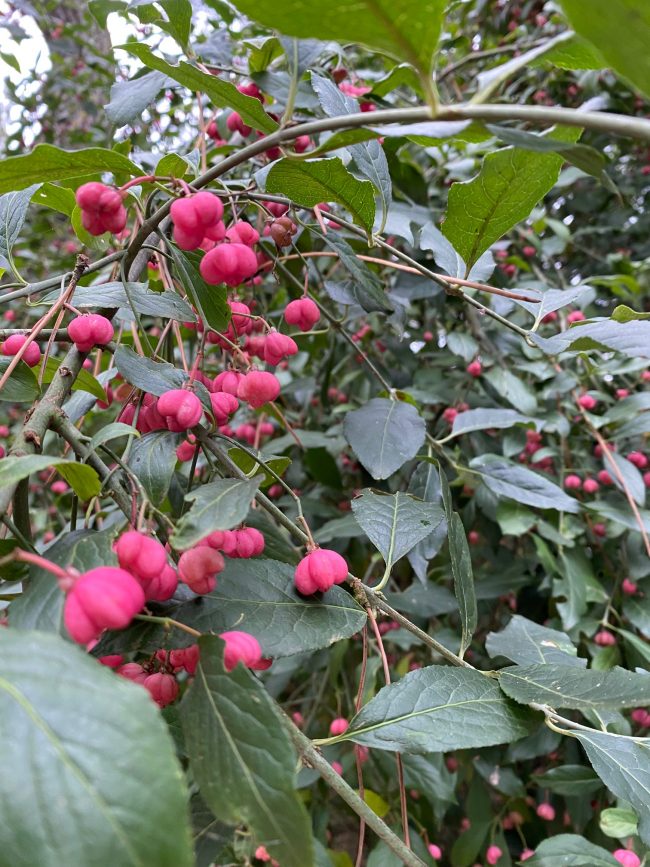
Euonymus europaeus is a deciduous shrub that has yellow flowers in Spring and green leaves that turn yellow or red in autumn. What really sets this shrub aside though are its fruits… striking pink lobed fruits crack open to reveal orange seeds in autumn. They are just beautiful! Happiest in full sun or partial shade, Euonymus europaeus is best planted where it can be viewed from the house in autumn to really enjoy the autumn leaves and fruits. Birds love its seeds.
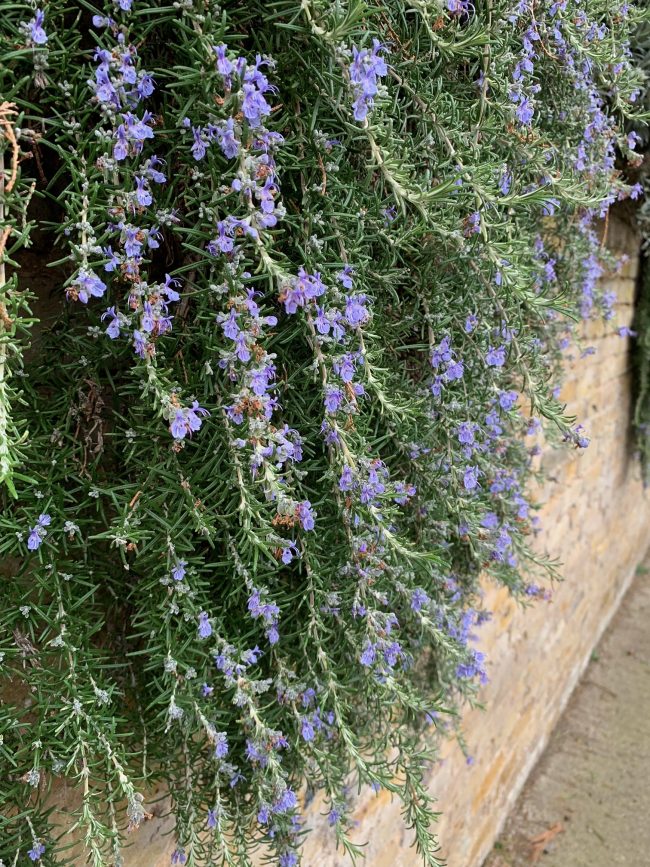
Rosemary is a versatile evergreen herb. It grows well in pots and provides a lovely scent when the sun shines on it. As well as using it in cooking, the small delicate lilac flowers are a good source of food for bees. It works well as an evergreen shrub in mixed borders, as well as in a herb garden. It requires full sun but little else to thrive, doing well on poor, dry soil. If you have heavy soil you can plant it in raised beds or pots as long as they have good drainage. There are various varieties to choose from ranging in sizes and habits, as well as the trailing/creeping variety Rosemarinus Prostratus which looks beautiful trailing over plant pot edges, a wall or as ground cover in Mediterranean or gravel gardens.
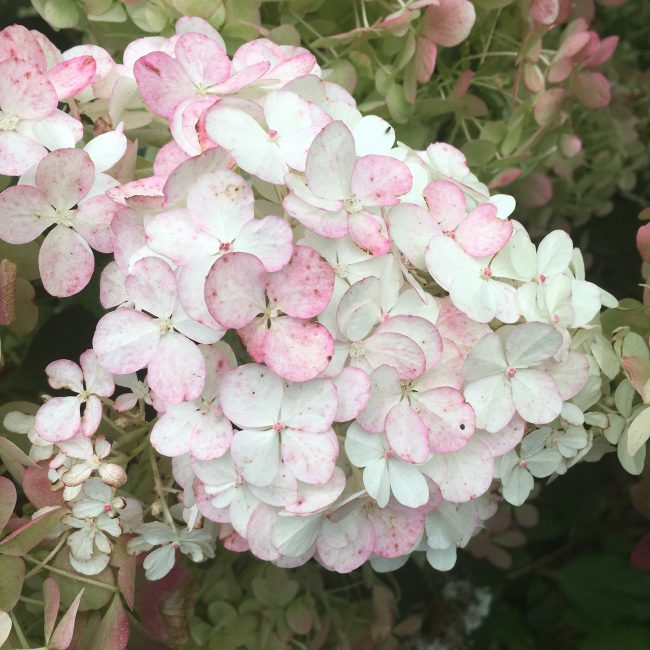
Lastly, we’re including some hydrangeas. This listing comes with a big caveat… not all hydrangeas are equal when it comes to benefitting pollinators. Hydrangeas are never going to be the very best plants for pollinators, but they are really beautiful and so if you are after a hydrangea, it is certainly worth considering whether you could choose one that pollinators will like too. Varieties such as Hydrangea paniculata “Confetti” which has green buds which open to white and mature to a pinker tone, and “Big Ben” whose flowers start out white, fade into green and then deep pink are good choices. Please note not all Hydrangea paniculata are visited by bees.
We hope this list has provided some inspiration for trees or shrubs to add to your garden. We always consider wildlife when designing new gardens and planting plans. If you would like to see what we can do for you, please get in touch.
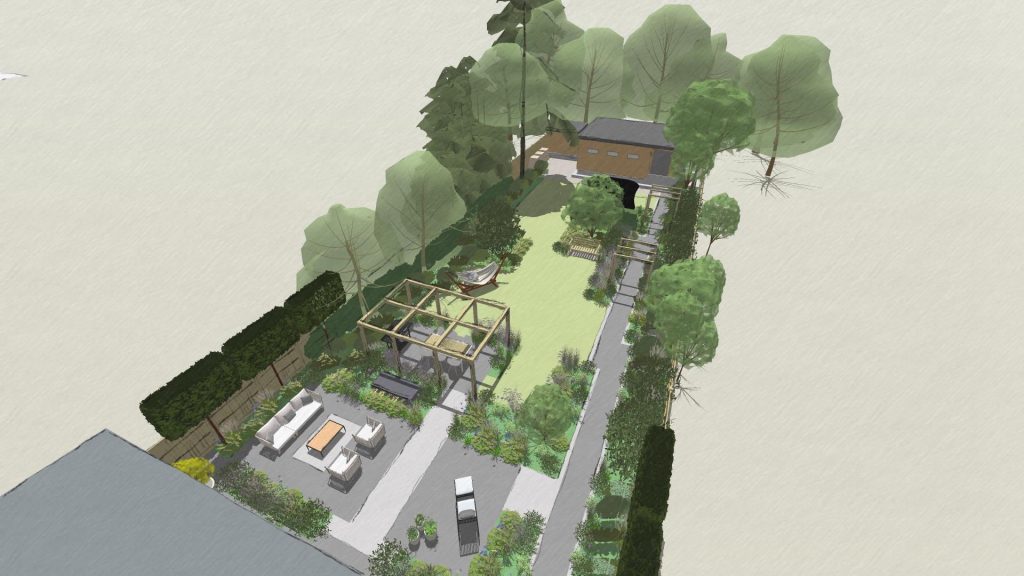
I wanted to share one of our latest design projects with you, and explain a bit about our design decisions and how we have used different materials and planting beds to create a really exciting and stylish space.
Our clients have undertaken a major renovation and extension of their property, creating a fabulous family home with a multi-use living space including a large open plan kitchen, dining and living room leading to a separate cinema room in the centre of the house. From the dining area there are two super-sized single frame patio doors leading to the garden, effectively creating a framed view of the outside space. Therefore the new garden design really needed to bring the wow factor as well as reflect the modern but relaxed style of the interiors.
The garden already has a mature woodland feel especially towards the end of the garden where there are several large trees in neighbouring gardens, including several oaks along the rear boundary. It is south-west facing which means that the area closest to the house is in full sun for much of the day, so we wanted to maximise this whilst also creating a space to sit in some shade when needed, especially important with our changing climate and increasingly warm summers.

The main aspect of brief was to design a large multi use patio close to the house, making the most of the sun and the picture-frame view from the large patio doors, but also to create a partially shaded area in which to enjoy lunchtime and evening meals. One half of our client is a professional carpenter, so we needed to incorporate a space for a large carpentry workshop at the end of the garden and a solid path all the way down the garden to the new workshop. Another key aspect of the brief was to include lots of planting for pollinators and other wildlife, and to retain a relaxed and more naturalistic feel to the planting – which as you may already know is right up our street!!
Our clients had already chosen a 1m x 0.5m porcelain paver, but recognised that this needed to be broken up by the introduction of another complimentary material. We have used small format Belgian clay pavers to break up what would have otherwise been a huge expanse of paving, and to zone the patio into gently defined areas, making it feel much more interesting and creating pathways as well as a ‘rug’ area between two sofas which can have both a coffee table and fire bowl interchangeably placed on it.
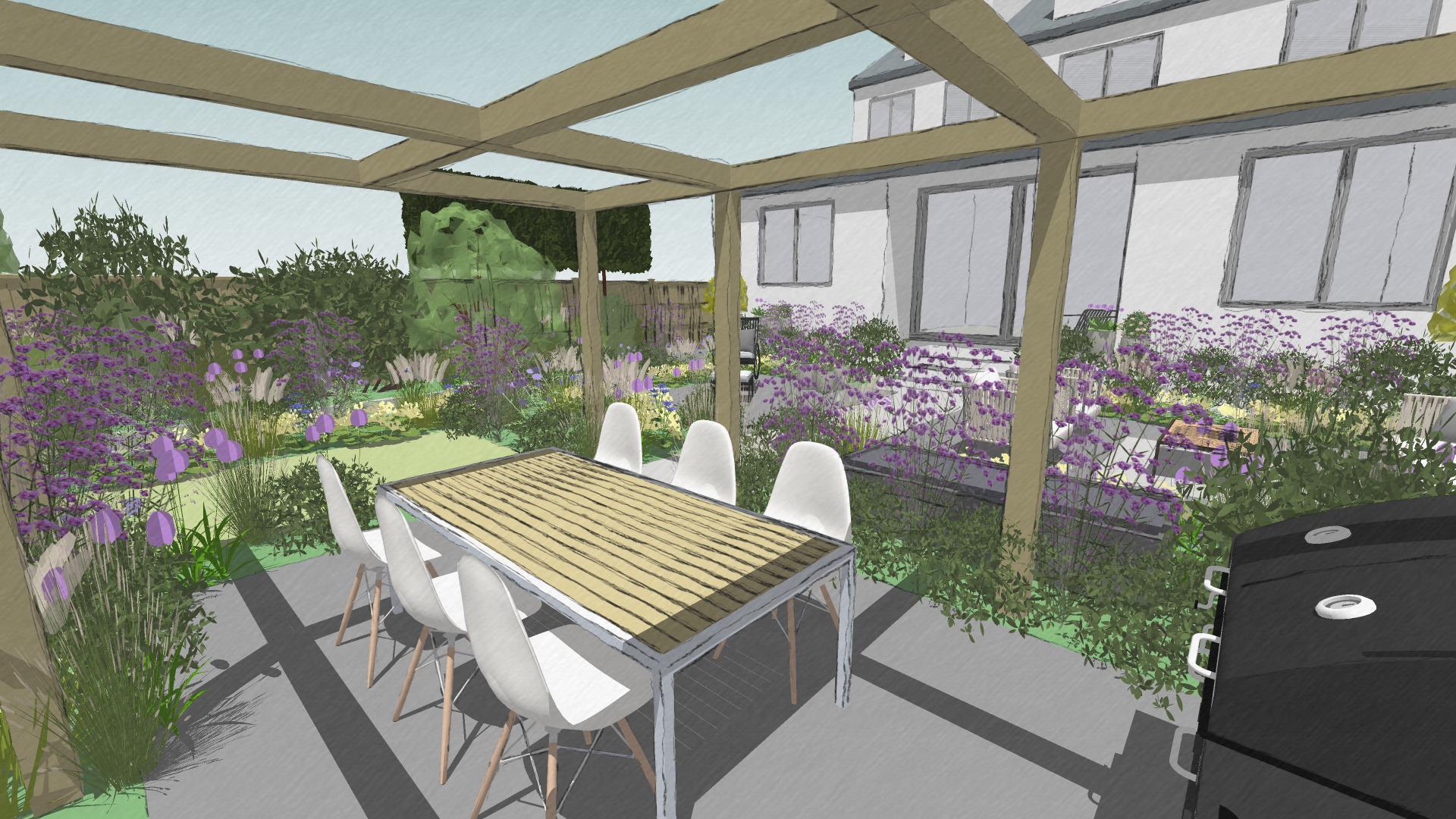
We have also included lots of planting beds to help create zones and to soften the hard landscaping. A rectangular water feature will sit within one of the beds, between the main patio and the second patio/dining area. The gentle rippling of the water will be enjoyed from the sofa seating area as well as the dining space. Along with our carpenter client, we have designed a large pergola to frame and provide shade for the dining space. The timber pergola will also provide a structure for lots of climbers to soften the hard edges and create a tranquil and green space in which to enjoy meals.

The steps from the house lead onto a clay paver path which also zones the main patio into two areas. The area on the right is a multi-use space for either relaxing in a modern-style rocking chair or wheeling out the table tennis table for some active fun! The clay paver pathway extends through planting beds, passing the water feature on the left, and leads to second patio area for dining and a small kitchen/BBQ. Surrounded by shade loving plants on one side, sun loving on the other and with the slatted pergola roof overhead to allow climbers to be trained over the top of it, this will in time be a beautifully ensconced dining area.
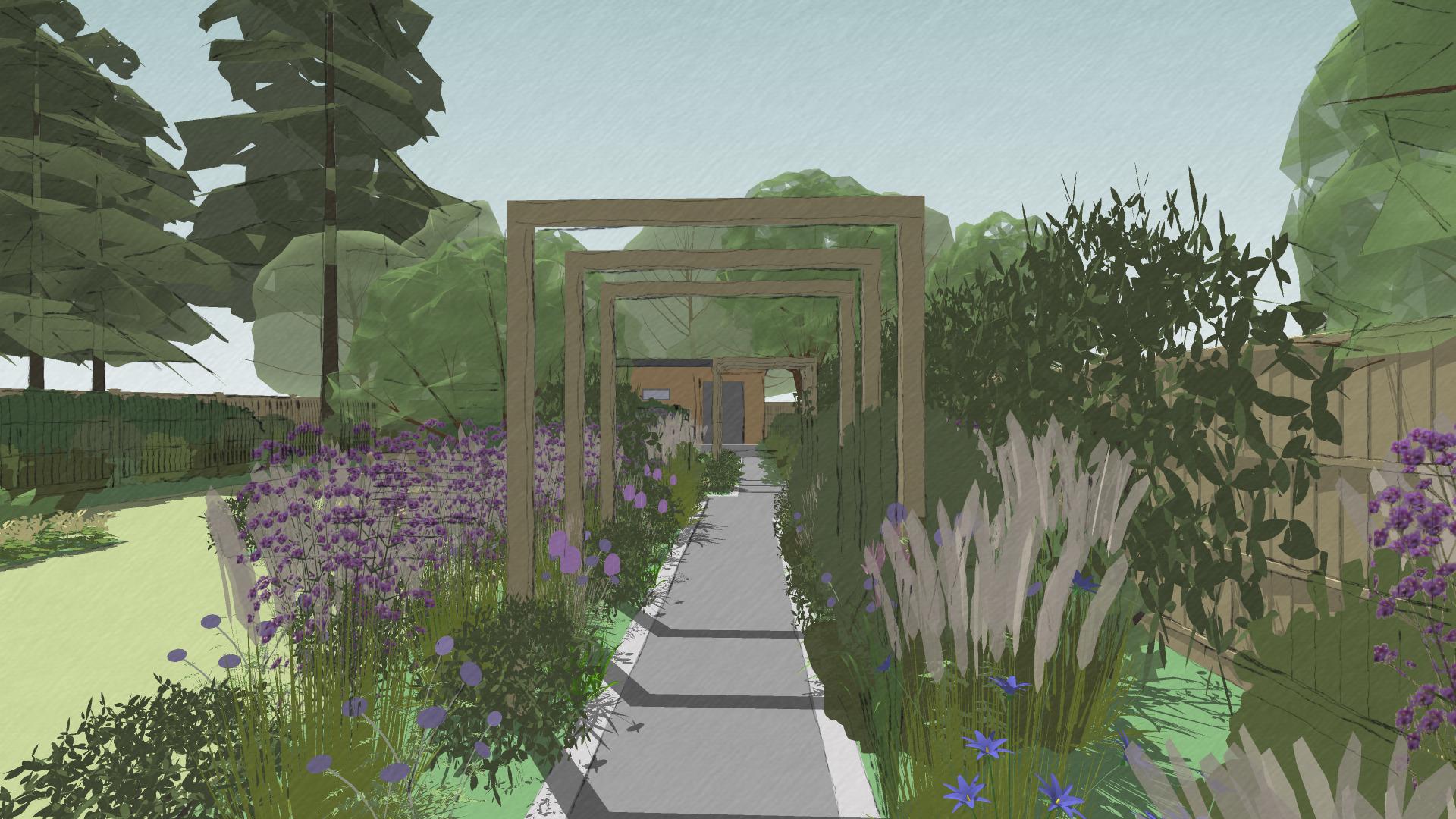
We knew it would be a challenge to include a practical but aesthetically pleasing path the whole way down the garden to the workshop. We have made this more interesting to this by designing a slight change of direction as you progress down the path and offering a wider planting space in one section alongside the path. The addition of three rows of clay pavers to edge the path makes a feature of the hard landscaping instead of it becoming purely functional. We have also included a trio of archways over the path in two locations, adding a different dimension to pathway and creating interest and opportunity for lots of climbers.
Further down the garden we are including a bench amongst planting to enjoy a morning cuppa, with a new mutlistem tree and Beech hedge behind it to partially screen the large trampoline. Our client also intends to build a swing frame in the shady woodland feeling area on the left hand side, for kids and adults alike to enjoy!
The planting style will be quite soft and naturalistic with lots of pretty grasses and perennials – our trademark purple will feature strongly as always, and there will be pops of orange and some deep pinky-red flowering perennials too. Plants will be woven rather that planted en-masse, to create a more naturalistic feel, and the beds will be alive with pollinators. In the shady areas there will be lots of lush green and pretty flowering shade loving species.
The build of this garden is well underway and the hard landscaping is really taking shape. Planting will begin at the end of March/early April – we can’t wait to share some photos soon!


Gardens by Anna Butterfield offer professional garden and planting design across London and the South East.
Our expert, organic garden care service is available across South East London as well as parts of Kent and Surrey.