September is here and with it autumn, and of course finally some much needed rain! It’s amazing how so many plants bounced back so quickly with the downpours earlier in the month – colours are much more vivid again, both the greens of trees, shrubs and grasses and the various colours of flowers. There are of course some plants which are not recovering as well – read on for our advice on these.
Growth in the garden is certainly slowing but we’re enjoying the colours of late summer/early autumn and making the most of being outdoors while it’s still warm enough to sit out without a coat!
Here are some jobs to keep on top of this month.
To start with there are the regularly needed jobs of selected weeding, deadheading and tying in climbers. Weeding selected plants out on a regular basis will stop any unwanted plants from crowding out your intended beauties. We’ve seen a lot of bindweed recently curling itself around plants. Be sure to remove as much of weed roots as possible to help keep this invasive plant at bay for longer.
Deadheading will encourage some plants to keep flowering well into autumn – including penstemon, dahlia, delphinium, some salvias and repeat flowering roses. One exception is roses that produce hips – it’s best to leave the faded blooms on these so that they go on to form hips which will give you winter interest and provide food for birds in the colder months. Did you know that rose hips are high in Vitamin C and were collected during WWII to make a syrup for children?
You can also cut back any messy looking spent plants that won’t provide any interest over autumn or winter, such as some geraniums which may now be starting to die back and collapsing over other plants. If you have grown any sunflowers, you can leave the flower heads on these to provide seeds for the birds. The same goes for verbena bonariensis, the seeds of which are often enjoyed by finches all through the colder months, and many other perennials. Our motto is – if it’s standing upright and has a seedhead, leave it for interest and wildlife!
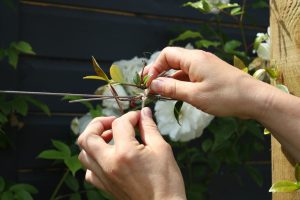
Keep checking and tying in your climbers as lots of them have had a sudden growth spurt this month! Doing this now and throughout the rest of the autumn will ensure they are well secured for any wild and windy weather we get in the coming months.
As the weather cools, and assuming that we continue to get rain and the ground remains damp, you can move shrubs that you wish to reposition. Be sure to dig them up carefully, with as big a rootball as possible, to minimise damage to the roots and stress for the plant. A rule of thumb often used is to dig a hole the same diameter as the plant itself which can help to avoid cutting in to any roots. Once repositioned, be sure to water the shrub regularly to give it the best chance of establishing in its new spot.
This month is a good time to give hedges and bushy shrubs such as pittosporum and taxus their final trim of the year. Using shears, reshape and tidy up the appearance of the shrubs and remove any diseased or damaged stems that you see. Hebes can also be given a prune. Take no more than a ⅓ off their foliage to help maintain a good bushy shape and keep them from becoming too leggy, don’t cut into bare stems though. If you don’t get round to this by mid October it would be best to wait until the spring.
While we have had a little bit of rainfall this month, we are still very much in a drought so pay close attention to how the plants in your garden are faring. Anything that looks to be thirsty should be watered with a watering can, ideally with collected rainwater or grey water.
If you don’t have water butts, or in addition to them, it’s a good idea to leave out buckets/other containers when rain is forecast, to collect the water to then be used for any potted plants. Remember that rainfall often doesn’t reach container grown plants as the plants themselves shelter the soil from getting wet. Make sure you water directly into the pot, rather than on top of the plant.
Bulb planting can commence this month! If you are planning on planting a lot of bulbs there are some excellent drill attachments that you can buy which significantly speed up the process so do take a look online at what’s available. Remember tulips shouldn’t be planted until November, and also that whilst you can start your bulb planting now, many of the bulbs will be fine if stored in a dry, cool place to be planted anytime between now and mid December.
When deciding where to plant your bulbs you can think about whether you’d like them to be woven through your planting beds, or planted in clumps. We like planting Daffodils in multiple groups of 7-10, as each group will fill a nice space at a time when your perennials are not present. With later flowering bulbs such as Camassia and Alliums we like them woven through the beds, dotted through your perennials – many of which will be emerging and even flowering by the time the bulbs are in flower. You should also consider the time of flowering, plant height and colour. We have a blog on some of our favourite bulb combinations here which should provide some ideas for you.
Mild case of powdery mildew
We have seen quite a bit of powdery mildew this year, largely we expect due to the drought. If you have any affected plants you can try following this advice to reduce the likelihood of it coming back severely next year.
We hope these tips help you to enjoy nurturing your garden this month. If you have any questions or comments please do let us know below. See you in October!


Gardens by Anna Butterfield offer professional garden and planting design across London and the South East.
Our expert, organic garden care service is available across South East London as well as parts of Kent and Surrey.