Deciduous ornamental grasses such as Calamagrostis and Miscanthus can be cut back now before their new growth gets too tall. You want to wait until the risk of hard frosts is over, but before the new growth has got too tall. Last year’s growth which by now will be straw-like and dry can be cut back using secateurs or shears, cutting it down to about 15cm.

We have written about pruning and dividing ornamental grasses in more detail here, so do take a look if you have some in your garden. The right care now will make for a much healthier and good-looking plant in the coming months. If you have a compost heap, the cuttings can be added to that in place of other brown material (not green) as they are higher in carbon. Layer them between green clippings, or chop them up and leave them in a pile for birds to use for nest building.
Perennials that you have left the seed heads on over winter can also be cut back now to make way for new growth. Plants such as sedum, verbena, veronicastrum and phlomis. Cut these down to just above the new growth. Less hardy perennials such as penstemon, gaura and shrubby salvia should be left until the risk of frosts has passed – which could be as late as early April, even down here in the South.
If your ornamental grasses or perennials have become congested and didn’t flower as well as usual last year, or if they are well established and you just want to create some new plants for elsewhere in the garden – now is the time to divide/split them. This is not a scary as it seems and well worth the effort! We have written about how to do this in detail here.
Most buddleia can be pruned from the start of the month here in the South. They will likely be showing new growth already but that doesn’t all need to be kept. They are hardy plants that can get tall very quickly so good pruning is really beneficial. It makes for a better shaped plant with flowers in sight rather than high above our eye lines. They are simple to prune, just cut all of the previous year’s growth down by between a third and two thirds, cutting just above a new bud of growth as shown here:
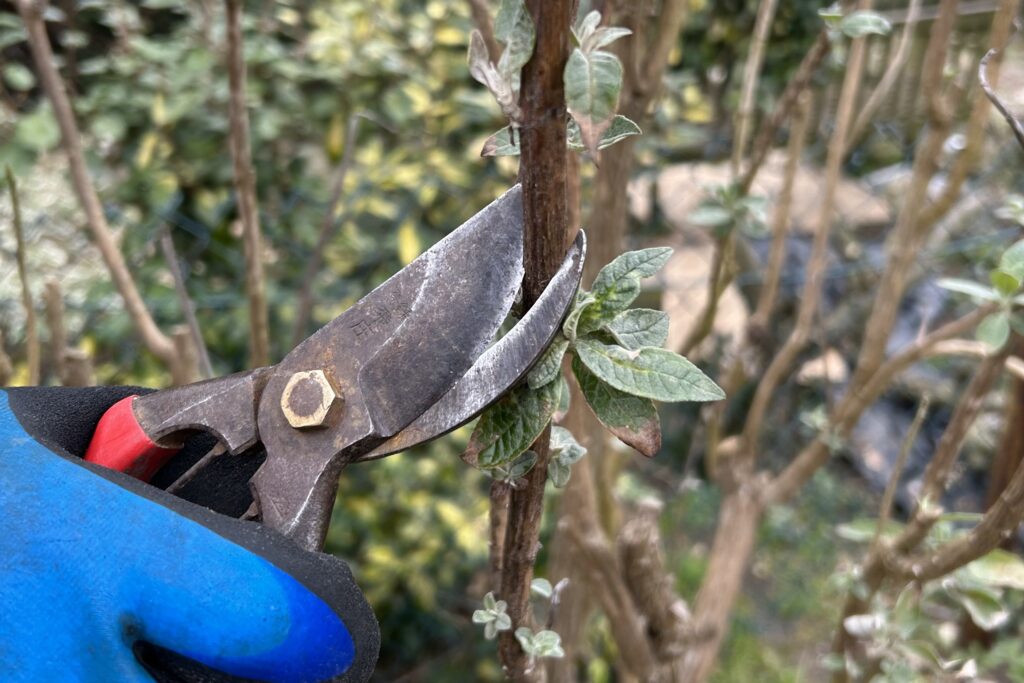
There are some less common varieties of buddleia which require different pruning. These include the varieties which flower on last year’s wood and the globosa variety. If you have a less common variety, do check its specific requirements so as not to impede flowering this year.
Even when it rains, pots will benefit from a weekly watering. Rainfall often fails to get into the soil in pots as the plants block it from reaching there so it’s important to not let them dry out. Use rainwater from a water butt if possible as it’s better for your plants (and of course saves on water!). Watering any pots with tulips in is especially important to avoid having short, stubby tulips. Just make sure the pots can drain so that they don’t get too soggy. This can be achieved by raising them on feet or having them on a permeable surface, and always using pots with drainage holes and crock or other drainage material in the bottom to prevent the holes getting blocked.
As the weather warms up, both annual and perennial weeds will be starting to grow. Removing the unwanted ones regularly will help you to keep on top of them and stop them impeding the growth of intended plants. We recommend checking around perennials for any seedlings which could block or compete with their new growth. If you aren’t sure whether the plant is a weed or a self-seeded flower or intended plant, wait a little until it develops more and you can identify it. As ever, we like to leave some ‘weeds’ (aka wildflowers!) as wild, native flowers are often really beneficial and excellent resources for pollinators, so if it’s not in anyone’s way, won’t impede growth or damage nearby plants, then you may well choose to leave it in place. We do, however, always recommend removing pernicious weeds which might destroy other plants, such as bindweed.
As herbaceous perennials are starting to grow, now is a good time to work out what needs supporting. Heavy flowers such as peonies and delphiniums and many roses often benefit from support. We also find that in newly planted gardens especially, where the planting is not yet dense enough to offer surrounding support, plants such as verbena bonariensis, gaura and penstemon may need a supporting structure. There are lots of options to choose from, ranging from bamboo or willow stakes, grids made from twine or metal hoops and grids. It’s worth spending some time now working out what supports you will need and getting them in place towards the end of the month, before too much growth is put on. Most plants will then grow up through the supports and they will become barely visible amongst the foliage.
As a minimum, mulch around newly planted trees and shrubs, but the whole garden will benefit if budget and time allow. It will help retain moisture in the soil and condition it, as well as inhibit weeds from growing. Homemade compost is a great option to use but it can be hard to make enough in suburban gardens to cover the whole garden so we use fine composted bark. Weed the ground before spreading a good 5cm across the soil. For the mulch to be effective it needs to be this deep so if you only have enough for a smaller section of garden, do a defined area properly rather than spreading it too thinly.
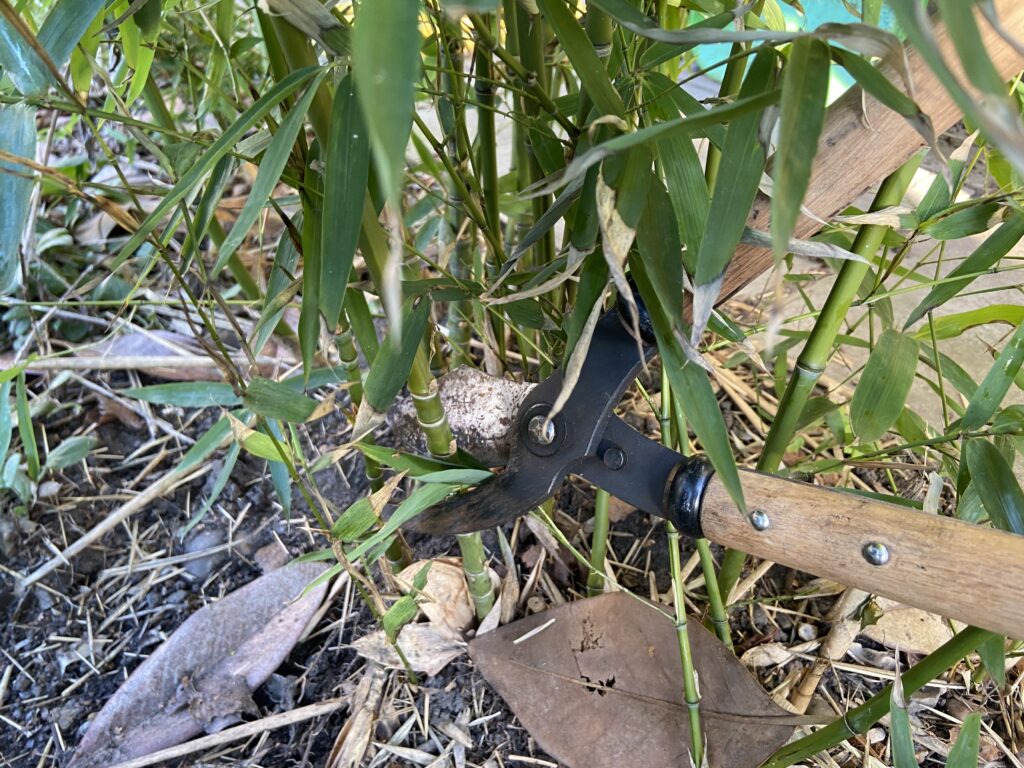
Rake up the fallen foliage around the base of the bamboos – this would take a very long time to decompose so is best removed. You can weed the area if necessary as well as removing some of the oldest stems to reduce congestion. Cut the canes down at the base of the plant using loppers. You can also reduce the height of the canes if they have become too tall. The cut-out canes can have the foliage removed and be used for stakes in the garden.
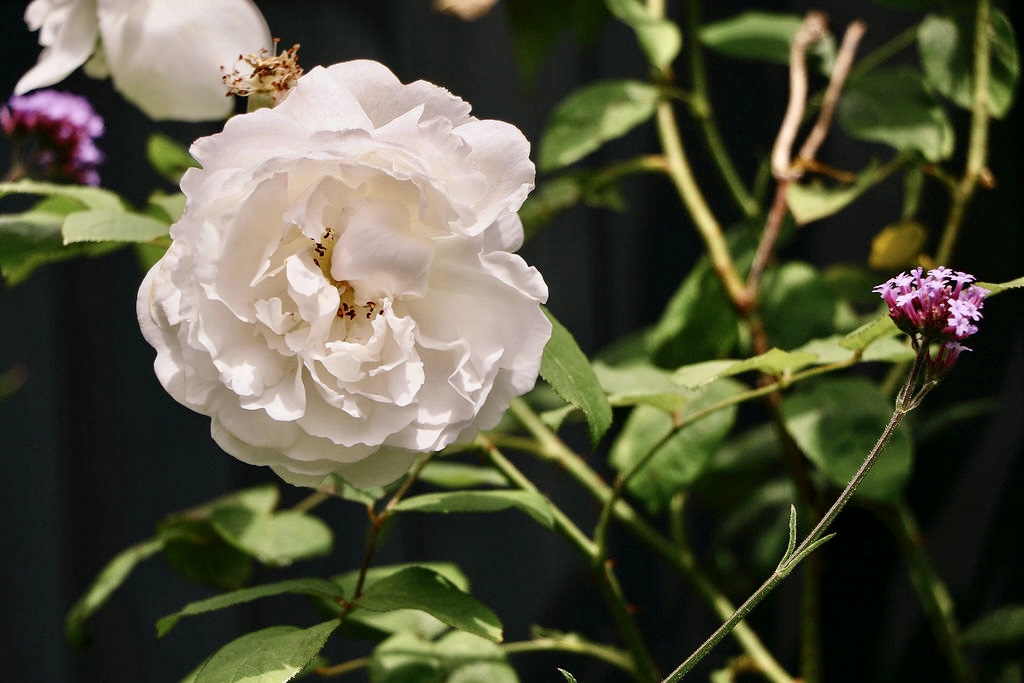
Ideally your roses would have been pruned by now, but if you haven’t had chance, it’s definitely better to do it now rather than not at all. We wrote in detail about how to prune roses in our February blog. We really recommend doing it as it will result in a much better display of flowers this year. Look what we have to look forward to!
If you are wanting to add any new roses, trees or hedging to your garden, we are now nearing the end of bare root season. This is more cost effective and better for the environment too as pots and compost aren’t needed. The plants will come with their roots bare (as opposed to in a pot of earth). Simply soak the roots in water for an hour or so and then follow the planting instructions. If you’re looking for some inspiration for what rose to add to your garden, we have written about some of our favourites here.
More mature trees and shrubs will be rootballed – which means their roots and soil will be wrapped in hessian and wire. These should be planted as they come (hessian, wire and all!), just check for and cut back any wire which is tight around the base of the trunk. This keep the rootball happy and the hessian and ungalvanized wire will naturally degrade in the soil over time.
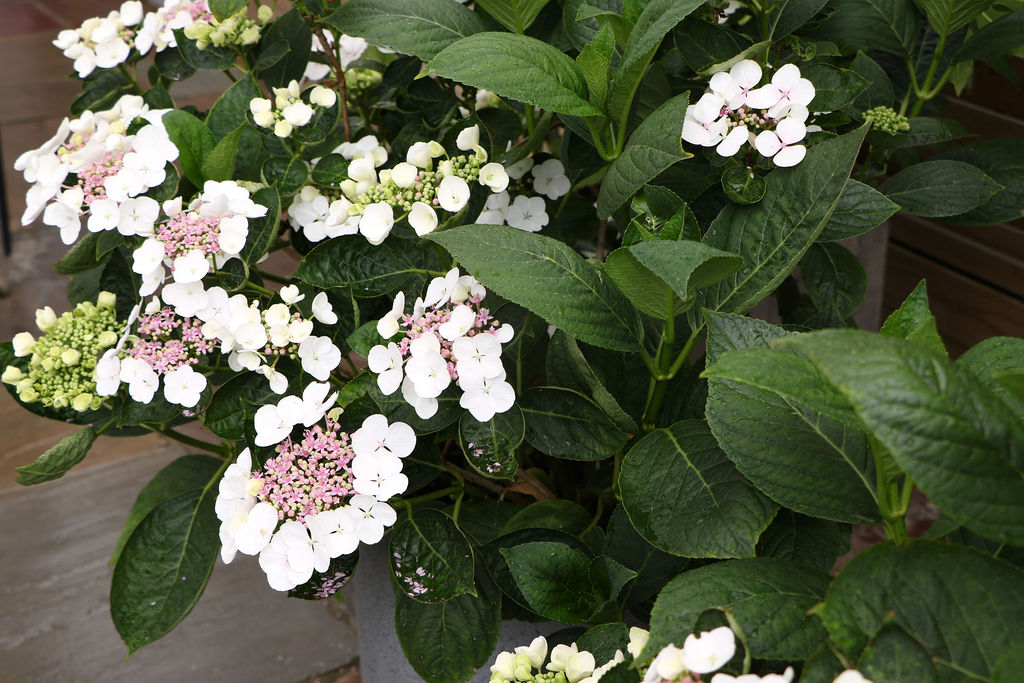
Mophead, lacecap and serrata hydrangeas can be pruned towards the end of the month, only once the risk of frost is over – do keep an eye on the weather forecasts for this and don’t be tempted to do it early. They don’t require a lot of pruning, just deadheading to the first pair healthy buds. If your plant is well established, you can cut one or two of the oldest stems out from the base of the plant. This will encourage new growth which should flower better.
Paniculata and Arborescens can be pruned towards the end of the month as well – again do check the weather forecast. They can be deadheaded back to the first pair of healthy buds, the same as the mopheads and lacecaps, or, if you want the plant to produce larger flower heads on stronger, more vertical branches, you can give them a harder prune. Cutting them back to around their lowest pair of healthy buds should achieve this. This type of pruning will result in a framework of stems around 25cm-60cm in height initially. Choose the height you prune to depending on how tall you want the plant to be once it grows this year. If you need a taller plant (for example to grow up behind some seating or to hide a wall), go for around 60cm in height, but if a slightly smaller plant works for you, go shorter and you will be rewarded with strong, healthy stems and a bounty of flowers.
Don’t prune climbing hydrangeas – they can be pruned after flowering in the summer.

We are delighted to share our latest garden design in Bromley to get underway. The build for this multi-level garden has recently started, following on from some complex detailing works. Here we share with you some of our design decisions that will really make the most of the level changes in this garden and show how they can often be a great asset.
When we first saw the garden it had a very small patio outside of the back doors and steep steps up to a sloping lawn area with narrow planting borders to both sides. The view from the house really lacked interest – your eye was either drawn straight to the garage building at the back of the garden, or to the bare retaining wall. Our client found that their dog got the most use of the garden, with them rarely venturing far from the chairs by the back door, except to walk to the garage. As well as totally dominating the view, the unused garage took up a huge proportion of the plot and the slope of the main part of the garden made it impossible to use that area for anything.
Upon meeting with our client, we discussed how they wanted to use their garden. Their original brief was to create a soft and naturalistic space with areas to both relax and socialise in, and to retain an area of lawn for their dog and for younger family members. During the consultation process, which included discussing and looking at lots of different garden styles together, our client loved imagery of gravel gardens with soft planting running through them.
Equipped with a full brief, we began the design process. We knew we needed to add lots of plants to the garden and to create individual areas for our client to want to spend time in. The garden is in full sun for most of the day so we needed to make the most of this, but also needed to provide a shaded seating area too.
As we worked through the design we found that, as expected, with the narrow width and the steep slope of the site, it was a major challenge to fit everything in. Our initial design proposed that the mid-level of the garden remained as lawn, and whilst it would have made for a perfectly nice garden it just didn’t quite fulfil the brief.
So we designed and presented a second option as well, with a smaller middle level that would become a gorgeous gravel area with soft planting and a water feature. Not only did this deliver a huge tick on the aesthetic side of the brief, it also enabled us to create two distinct, really good-sized areas for our client to relax in: one larger patio at the house level, and one seating area under a pergola at the top level. The levels will be joined together with the transition area (the gravel, soft planting and water feature) which also make for a beautiful view from the patio, pergola and also the house.

We really loved this second design option, and whilst it didn’t deliver a lawn area it did meet every other aspect of the brief and more. We were really pleased when our lovely client agreed with us!
As we developed this design we worked to make sure that the transition between the areas was gentle and beautiful. Due to the level changes we needed to include a railing or balustrade, but didn’t want this to be too imposing, especially from the back of the house looking up to the garden. So we designed a slim profile balustrade with wire ropes and a tactile timber handrail, which is as discreet as possible and crucially will be easy to see through to the garden beyond.
The steps themselves are going across the garden, rather than up it. This enabled a gentler gradient in a space efficient way, but also creates more of journey and the opportunity to take in different views of the planting as you move through the garden. It also means that you don’t look at a large set of steps from either of the seating areas (or the house) as they are partially hidden from view. We softened all hard landscaping and surrounded the seating area with planting, which will also help our client to feel enclosed and relaxed in each space.
We have made the patio outside of the house much more usable. It will be large enough for a stylish and comfortable garden sofa, as well as plenty of planting. The retaining wall has been pushed back to achieve this and clad with paddle stones. This will make for a really lovely view from the house, as well as providing little nooks and crannies for insects to use.

Lastly, we are using high quality woven fence panels for a much softer look. The fence will sit quite a bit higher than the patio near the house due to the upwards slope of the land. Woven fence panels offer a much softer option than a traditional fence and will also complement the naturalistic style of the gravel areas and planting.
We are so excited to see this build progress. There is lots of work to do before the plants can be added, but we will be using lots of soft planting including ornamental grasses and verbena, scented plants, new trees and climbers to soften the pergola and fence lines. We really look forward to sharing the finished garden with you later in the year.
If you would like help transforming your own garden and really maximising your use and enjoyment of it, as well as adding value to your property, we would be delighted to hear from you. We offer a full design service as well as planting designs too. You can get in touch with us here.

Our client’s brief was to create a calming and tranquil space for a family to find peace during a really hard time, whilst also meeting the needs of three primary school aged children. The garden needed to be low maintenance, usable all year round and enable the children to connect with nature.
We utilised the irregular shape of the garden by designing and creating a bespoke curved bench in collaboration with a local sustainable carpenter which the family now enjoys whilst sitting around a fire bowl, and other areas of the garden have been punctuated with smart, low maintenance planters.
Being a shady garden, we knew that it would be challenging for turf to grow. So to avoid using artificial grass for aesthetic and environmental reasons, we opted for a hard wearing and low maintenance composite decking. The design of the garden has been complimented with plants which suit shady conditions, meeting the brief of creating a tranquil and beautiful space whilst also creating focal points and softening the decking.
Three tree ferns of different sizes are a key feature of the garden creating height and mass, framing the seating area, and bringing beauty from their lush greens fronds. New fences give additional privacy and painting them dark grey compliments the light tones of the decking and render on the house.
Pebbles have been used to dress the planting areas and provide an opportunity for the children to be creative giving them a canvas to draw and paint on, making it a really fun and social space. A simple lighting scheme including lanterns and strings of solar lights along the fence adds ambience and gives our client the opportunity to enjoy the garden in the evening with friends and family.
We featured in March’s edition of Pro Landscaper magazine giving our opinions on the View From The Top article featured in February’s magazine and why we believe in our industry’s ability to make a huge difference. The full article is below.



Gardens by Anna Butterfield offer professional garden and planting design across London and the South East.
Our expert, organic garden care service is available across South East London as well as parts of Kent and Surrey.