April is here and with it more spring blossom as well as forget-me-nots, later flowering daffodils and the first tulips – not to mention lots of fresh new growth of perennials and shrubs. There is much to be getting on with in the garden while enjoying the longer days and lighter evenings. Here are my top jobs for April, I hope you can get outside over the long Easter weekend and get your hands in the soil….
By now you should have pruned your roses. If you haven’t, you really must! I wrote about how to do this last month which you can read here. You should also feed your roses now with an organic seaweed feed and mulch them with a rich compost or well-rotted manure. You’ll be glad of this extra care when you are rewarded with magnificent blooms soon!
Hopefully you have been leaving this job until the risk of frosts has passed, which is still not quite yet in South East London – we’ve had a few frosty mornings which have taken their toll on the new growth emerging on my mophead Hydrangeas. They will recover but will need some fiddly snipping in order to remove the damaged leaves in a few weeks’ time. However, you should be safe to prune away in the next couple of weeks – do just check the forecast in your area before doing so in case of any cold snaps in the week ahead. Different Hydrangeas require different pruning – here is a basic guide:
Paniculata varieties (such as Limelight and Snowball) and Arborescens varieties (such as Annabelle) –pruning these fairly hard will encourage better flowers for this year. It also keeps their size in check as some varieties can get up to 2.5×2.5m – if left to get to that size you probably won’t get the best view of the beautiful blooms! First remove any dead, damaged or crossing stems. You should then cut back all stems to a pair of healthy buds – either to a high bud if newly planted and you’re looking to grow a larger plant, or hard pruning to the lowest pair of healthy buds to create a low framework of branches and large flower panicles.
Mophead and lacecap varieties – with these it is more deadheading than full on pruning as they flower on last year’s growth. Again, remove any dead, damaged or crossing stems. With more mature plants, you may need to remove some of the oldest stems at the base, to create space and air within the plant. Deadhead the remaining stems by cutting just above the highest pair of buds, or possibly the one below that in order to keep all stems approximately the same length.
Now is also a good time to feed, water and mulch them for an extra boost as they grow and develop their flower buds.

With the weather warming up and the fair amount of rain we have had, you may have noticed a lot of ‘weeds’ springing up in the garden. It’s a good idea to get on top of those that you don’t want before they establish too much and, while you’re at it, it is an excellent time to mulch as well.
Mulch will suppress weed growth and both improve your soil quality and plant health. As it breaks down over time it will add nutrients to soil as well as decrease water loss and give a lovely appearance to your beds. Weed your beds, ensure the soil is moist, add a layer of mulch 2-3inches in depth – it’s well worth the effort! We recommend using an organic, biodegradable mulch such as good quality peat free compost, homemade compost or Melcourt fine composted bark.
Of course, not all weeds are bad! The definition of a weed after all is simply a plant growing where it is not wanted. One of my favourite phrases is ‘one person’s weed is another’s wildflower’. Many ‘weeds’ are excellent for pollinators – for example dandelions, which are probably one of the most maligned wildflowers! However, they are brilliant for bees, so I would encourage you to consider leaving the flowers and cutting them off before they go to seed. The same can be said for lots of our wildflowers/weeds – many of which are native species which have evolved alongside our pollinators, and therefore are often the most beneficial for them. I do suggest removing weeds that are likely to get out of hand, are too close to herbaceous perennials so could out-compete the intended plants, and/or any that you really don’t like the look of – but leave some if you can!
Where space allows, having a nettle patch is a great thing to do as there are some species of butterfly which only feed and lay their eggs on nettles.
Now that many narcissi/daffodils and hyacinths are coming to an end, be sure to dead head them so that all of the energy can go back into the bulb for next year’s flowers, rather than be used on making seeds. You can cut the flowering heads off and leave the stems, and most certainly leave all the foliage. It’s needed to feed the bulb and must be left to die back naturally. If you spot a bulbous growth below the fading flower head, this is where the plant is setting seed so you should snip it below this. It used to be quite common to tie the fading stems up, especially with Narcissi/daffodils, but this really isn’t necessary (and in my opinion looks a bit strange!). I recommend simply tucking the fading foliage under nearby emerging perennials and letting them turn completely brown until they come away when tugged gently. These can then be added to your compost heap.
Slug susceptible perennials such as hostas, lupins and delphiniums will be starting to grow now. As they do, you may wish to protect the really tasty ones from slugs and snails. We’ve had success with copper rings and you could also try “Strulch” (a mineralised organic straw mulch). What do you normally use? Whatever you do, please don’t use any chemicals or poisons. They’re incredibly harmful and can be ingested by other wildlife such as hedgehogs, foxes, badgers – even by domestic dogs and cats. A better idea is to use non-harmful deterrents such as copper rings/a dry mulch and also to encourage predators to your garden. Plant trees and shrubs to attract birds, and why not establish a wildlife pond to encourage frogs? You can also include a log pile somewhere in your garden for beetles to hide in. Not only will these alternative options attract slug and snail predators but I promise they will also bring you a lot of joy from watching the wildlife that will visit them!
This is another job to do once the last risk of frosts have definitely passed.
Once you see signs of lots of new growth at the base of your penstemons, or low down on existing stems, they are ready to be cut back. When you see the new shoots, cut to just above the lowest ones. Don’t worry that you are reducing the plant size significantly, it will grow back and this type of pruning will stop penstemons from becoming too woody and leggy.
There are three main types of perennial salvias that you may have in your garden. Each one requires slightly different care.
Firstly, there are herbaceous perennial salvias which are hardy and come back year on year, in the right conditions. These include Salvia nemerosa such as the popular ‘Caradonna’, and Salvia x sylvestris such as ‘Mainacht’. These should be cut right to the base of the plant as all the new growth emerges from below the soil every spring.
Secondly, there are tender perennial salvias which include Salvia Amistad and Wendy’s Wish. These can come back year on year but might succumb to cold weather and/or soggy soil. These can be pruned as per the hardy herbaceous perennials if they’ve survived the winter, which they may well do, especially here in the South. If you love these Salvia and want to grow them, it’s worth taking cuttings from fresh growth to root and grow on under cover as an insurance policy, in case those planted out in the garden do die off over winter.

Lastly there are shrubby salvias which are woody and hardy, some are evergreen or semi-evergreen. These are our favourite Salvia and include Salvia x jamensis (such as ‘Hot Lips’ and the rest of the ‘Lips’ series), Salvia greggii (such as ‘Icing Sugar’) and Salvia microphylla (such as ‘Trebah lilac white’). These don’t require too much pruning – you can simply remove the twiggy ends down to where the new leaves are emerging, and as always cut back any dead, damaged or diseased stems. You might choose to reduce the size of the plant by about a third to a half so that it doesn’t get too big or leggy. Always cut to just above a growing point, where there are a pair of leaves with a shoot between them.
Before climbers such as clematis, climbing roses and jasmines really get going, make sure they have a solid structure to climb up and be attached to. Tie in shoots as soon as they become long enough to ensure a sturdy start for growth. This will make for a healthier plant overall and it’s much easier to have the structure waiting for the plant, rather than trying to fit wires in around existing growth. We like using flexible steel wires which can be tightened up over time, and we use natural twine to attach the climbers to the wires.
As well as taking care not to use chemicals in the garden and aiming to introduce more plants for pollinators (see our article about some of the best small trees and shrubs) you could also think about increasing habitats for wildlife. A compost heap provides a home for many small creatures and also does wonders for your soil health. We will be writing an article soon on the benefits of making your own compost, so do get in touch if you have any specific questions about this.
Remember not to be too tidy, but to allow some piles of leaves and twigs at the backs of borders or under shrubs, as well as creating log piles if you have suitable material. If you have any old wood which is starting to rot down, you can create a beetle habitat by partially burying the wood in the ground – the buried wood might even attract stag beetles which are now an endangered species, as well as offering shelter for other insects and small creatures such as frogs and toads above ground.
There are so many things you can to do encourage and support wildlife in your garden – we’ll be writing more about this soon so let me know if there are any areas in particular you would like us to cover.
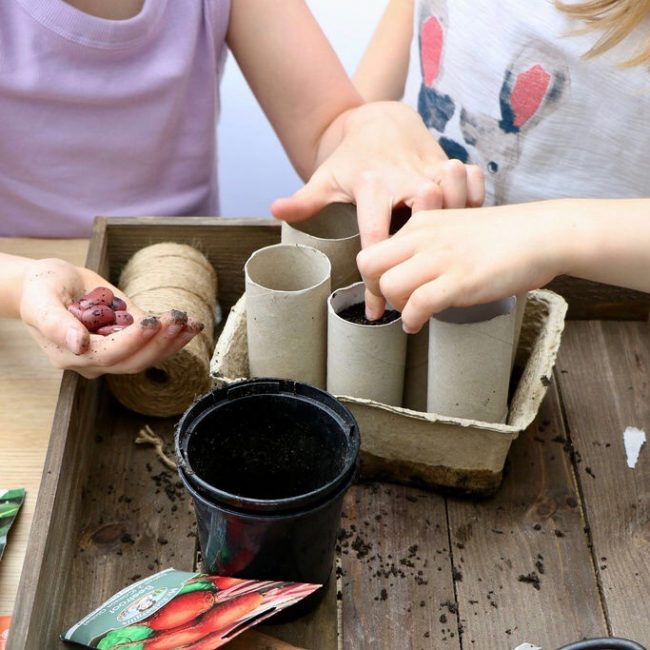
With the days and the soil gradually warming up we are now in full on sowing season – pretty much all crops can be sown now (except those which need to be started off earlier like peppers and aubergine – if you haven’t sown them you can look for small plants, or wait until next year to try growing them from seed). You can now sow beetroot, squashes, cucumbers, courgette, peas, beans and sweetcorn directly where they are going to grow – although with the chilly nights we are having they would still benefit from being started off in the greenhouse or even in the house – just be sure to plant them out once the risk of frosts has passed, but before they put on too much growth and become leggy and weak.
If you don’t have much space to grow, why not try dwarf varieties of runner beans, compact cucumbers and tomatoes for containers or hanging baskets? There are several dwarf varieties available. Try to buy high quality organic seeds from companies such as Vital Seeds or Real Seeds.
You can also still sow annual flowers including sweet peas, cosmos and sunflowers.
Start or keep sowing salad leaves and herbs to give you a succession of crops – sowing a small sprinkling of seeds in one pot every few weeks is much better than sowing multiple pots all at once, as they will all be ready around the same time and you might not be able to use them all.
Last on the list is planning and planting. Have a think about anything you’d like to add to your garden this year. Where were there gaps last year? Do you want more colour or more structure? Do you have bare fences or walls that a climber could be grown on? Now is a good time to start assessing what you would like to change or add, keep observing through the summer months and plan your additions for the Autumn – it’s never worth rushing these things!
If you can’t bear having gaps you could plug them with some hard working annuals for the summer such as Cosmos. These will be great all summer but won’t come back next year, so keep note of any gaps, get to know your soil and start researching and planning the right plants for the right places. If you’d like some ideas on small plants to add to the garden, have a look at our suggestions here, or perhaps you’re after a larger specimen such as a tree. We have a list of some of favourites to support pollinators here too, do take a look.
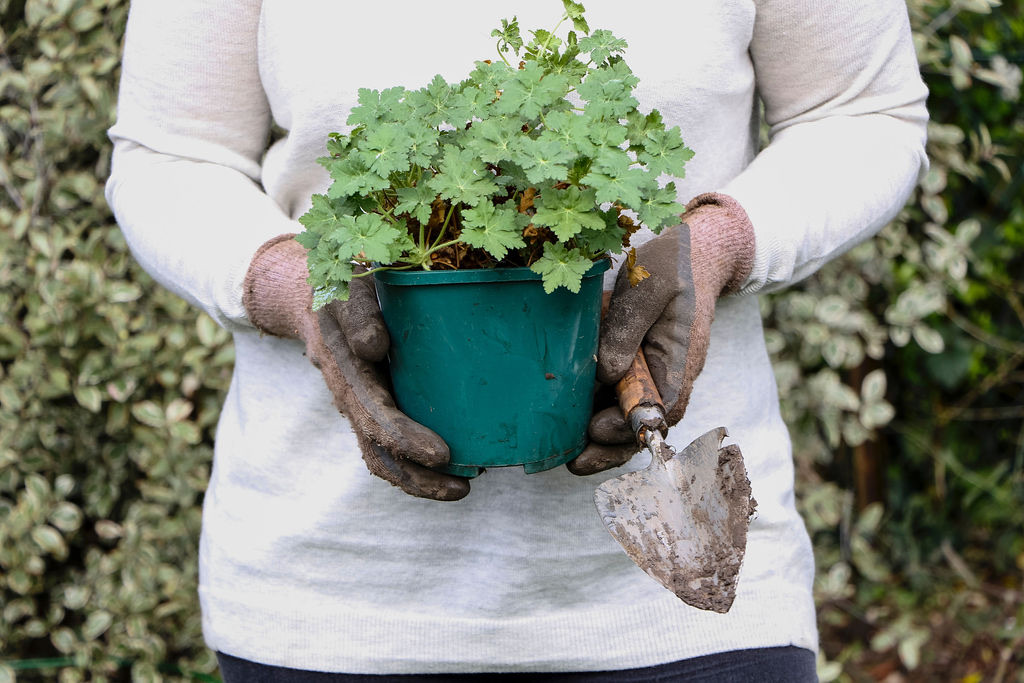
So, there you have my top jobs to be getting on with in April – from cutting back tender perennials and feeding your roses, to supporting wildlife and having a go at growing some of your own veg and flowers. Do let me know if you have any questions, and happy gardening!
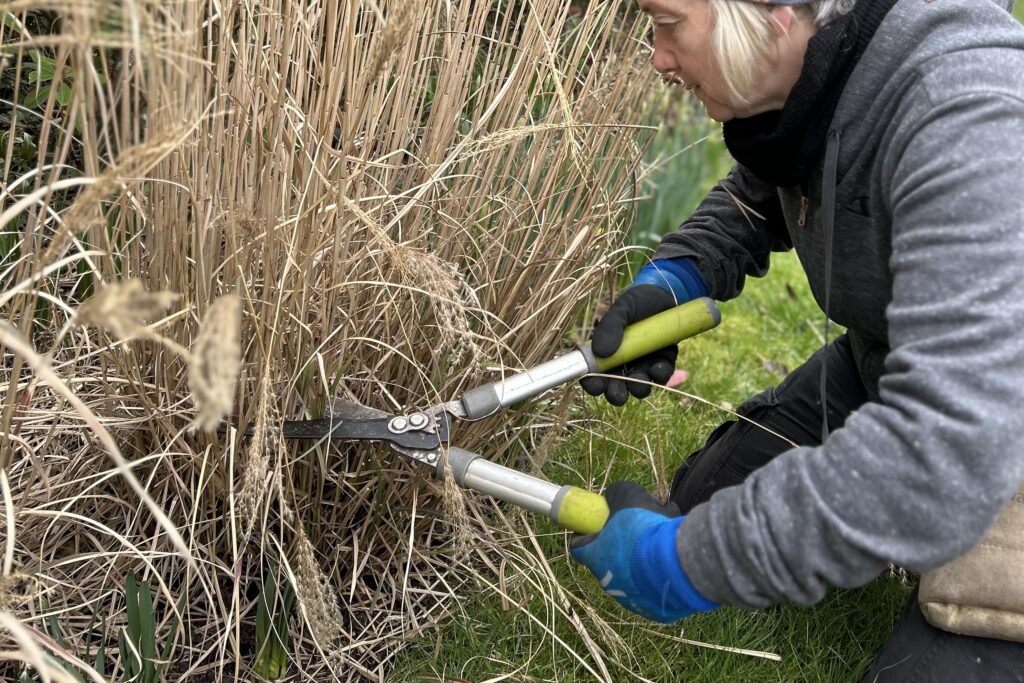
Many perennials can be divided at pretty much any time of year as long as you water them well afterwards, but doing them now – when the soil is cool and damp – puts less stress on the plant. They will also soon be going into active growth so it’s a great time for them to be putting new roots down to re-establish themselves after splitting.
Grasses from cool climates (such as Carex, Calamagrostis, Deschampsia, Hakonechloa, Molinia and Stipa) will benefit from being divided every few years. They generally come into active growth from late winter to early spring, so this is the best time to divide them.
Grasses from warm climates (such as Miscanthus, Panicum and Pennisetum) do not need to be frequently divided.
I hope this helps you to keep your plants happy and healthy as well as creating some new plants for your garden. Happy splitting, and please do let me know how you get on!
March is a really exciting time in the garden with blossom, bulbs and new shoots emerging and seeming to change almost every hour. There are plenty of jobs to be getting on with too, mainly cutting back and pruning to make room for the spring growth, maintaining healthy and happy plants throughout spring and summer. Here are my tops tips :
We always recommend leaving as many perennials and grasses as you can standing throughout winter – for interest in the garden as well as for insects and small mammals to shelter in. However, now is definitely the time to cut them down if you have not already done so! Click here for further information about how to do this (as always there are a few exceptions!).
If your grasses and perennials have become congested and didn’t flower as well as usual last year, or if they are well established and you just want to create some new plants for elsewhere in the garden – now is the time to divide/split them. This is not a scary as it seems – although the method we explain here might sound a little brutal I assure you it is not as harsh as it seems, plus you get free plants so why not give it a go!

Last call for rose pruning! Your roses will be putting on new growth and shoots now, but it is still worth giving them a good prune if you have not already done so.
Check through your evergreen shrubs for any dead, damaged or diseased growth and remove this. If any of them have been damaged by the winter weather now is the time to remove it to make way for fresh spring growth. With the mild winter we had your shrubs are unlikely to have suffered too much frost damage, but if they have it’s a good time to remove anything looking worse for wear – cutting back to just before the healthy foliage or a new bud. Now is also a good time to prune for shaping and reducing the size of evergreen shrubs if needed – they will be starting to put on new growth now so will recover quickly.
Deciduous shrubs – don’t prune the spring flowering ones yet. Shrubs such as Forsythia, Lilac and weigela will flower on last year’s growth, so should not be pruned until just after they have flowered. Later flowering deciduous shrubs such as Buddleia, Fuchsia and Hydrangeas should be pruned now, although if you live in a colder area you might want to wait until the end of March for your Hydrangeas as they can be prone to frost damage.
It’s also a good time to plant new roses, climbers and shrubs – take a bit of time planning out any new additions and check which plants will suit your soil and sunlight levels. You can read our blog about small plants for pollinators if you want to do your bit to support their declining numbers.
Now is also a great time to sow some annual native wildflower seeds. If you have the space you can dedicate an area of your garden to these, but if not they can be grown in large containers too. Annuals such as cornflowers and poppies are great for pollinators and add a lovely burst of colour to your garden. These would work in pots as they tend not to come back year on year, unless they self-sow successfully which can be rather hit and miss. Mixes of seeds can be bought online and in most garden centres. Choose a native and organic seed mix to bring the most benefits for our native wildlife.
Most perennial wildlfowers (including many of our favourites such as Oxeye Daisy, Ragged Robin and Knapweed) need a period of cold before they will germinate and won’t flower until their second year, so they are best sown in the Autumn. If you can’t wait that long (I don’t blame you!) why not order some wildflower plugs now? There are several online retailers – try and find one who uses peat-free compost and no chemicals, for maximum environmental and wildlife benefit. You can either plant your plugs straight into your borders if you have time to keep a close eye on them and make sure they are well watered – they don’t have big root systems yet so are not as able to cope with lack of water or anything else that the elements throw at them. If you have the space, it’s a good idea to plant them on into small pots (using homemade/peat-free compost if you can) and grow them on until their roots fill those pots, then plant them out. They will still need regular watering and care but will be just that little bit more resilient.
If you are looking for more inspiration about what to plant in your garden this spring, check out my article about our top 10 small plants for pollinators.
There is still time to order Nerines, Crocosmia, Gladioli, Dahlia tubers and more for pops of colour in late summer and Autumn. Our favourite bulb supplier is Peter Nyssen – they have a brilliant range to choose from and are completely checmical and plastic free. Bulbs are sent out in starch or paper bags which can go straight into your compost heap or food waste caddy.
Use leaves and logs to create wildlife habitats. Don’t be too tidy – leave some piles of leaves/twigs for wildlife to shelter in – they still need protection from the chilly mornings and nights, as well as from predators!
If you have any fallen trees/branches from the recent storms, you could ask your tree surgeon to cut them into manageable sizes and instead of removing them, use them to make a logo pile and/or partially bury them upright in the ground – the rotting wood below ground will make a fantastic beetle habitat.
If you have a pond, check it regularly for frog spawn and other signs of life. In my pond the spawn appeared last week so there is still time!! You can find more wildlife tips here.
Many fruit and vegetable seeds can start to be sown in March. If you’ve never grown any produce before, why not try some tomatoes this year? There are many varieties to choose from but if you’re short on space, and without a greenhouse, Tumbling Toms are perfect for hanging baskets, window boxes or containers.
If you have a greenhouse, coldframe or a cooler window sill (such as in an unheated porch) you might have already been sowing peas, sweet peas, broad beans and the like. But if you are going to sow indoors with heating, you should hold off until at least mid March. Sowing earlier can be hard to resist as it is really exciting when things start to sprout and grow really quickly due to the warm indoor temperatures, but the seedlings always become leggy and run out of steam, especially when there is still a risk of frost so you cannot plant them outside to slow them down. So in many ways, the longer you can hold off the better (if you have a greenhouse – go ahead and get sow sow sowing if you haven’t already!).
Here are some crops which can be sown now in an unheated greenhouse (we are sticking to easy to grow options as frankly, this is all most of us have time for!) :
Here are some crops which can be sown indoors from the end March onwards, for planting out in April/May, once the risk of frosts has passed :
So, there you have my top tips for getting your garden ready for the growing season, supporting wildlife and having a go at growing some of your own veg and flowers. Do let me know if you have any questions, and happy gardening!


Gardens by Anna Butterfield offer professional garden and planting design across London and the South East.
Our expert, organic garden care service is available across South East London as well as parts of Kent and Surrey.