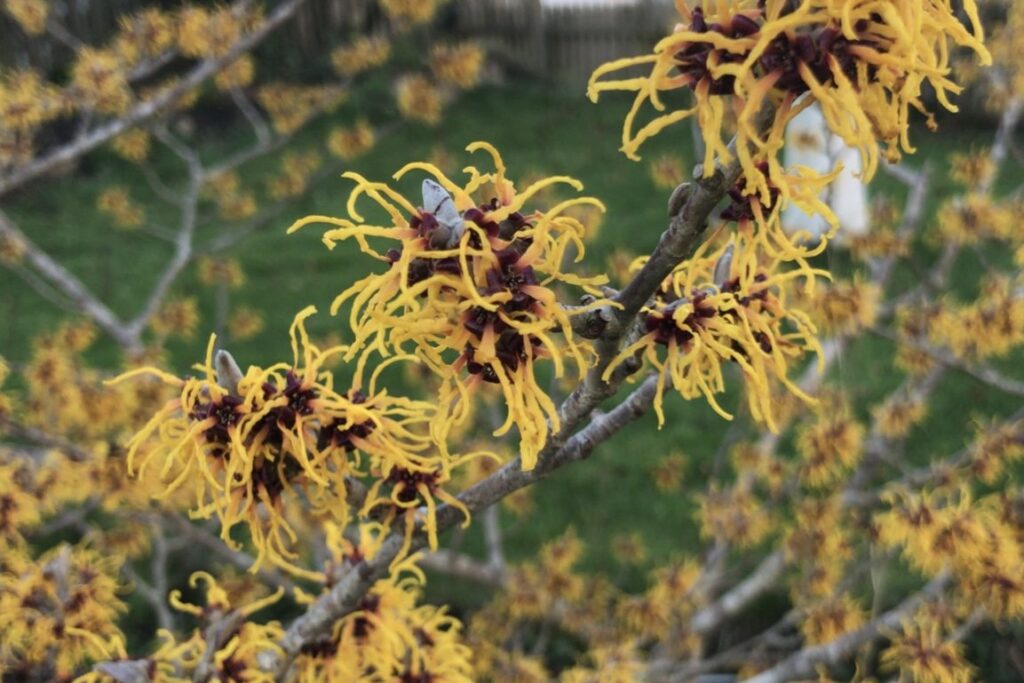
A good place to start! We’ve had a really cold winter and have seen lots of frost and snow damage in our garden care clients’ gardens. As tempting as is it to cut back browned or bare plants such as penstemon or shrubby salvia, it is really important to leave these until the weather warms up. We could easily have a another long spell of cold temperatures and recently pruned plants will be at a much greater risk of frost damage. Hydrangeas should also be left alone as the flower heads will help protect new growth too.
Many shrubs have been severely damaged by the snow and frosts, especially it seems Pittosporum and Hebes, many of which are looking really sad or have completely defoliated. We haven’t seen them suffering this much in the past and believe it could be due to the sudden change in temperatures from a fairly mild early December, to the extremes of sub zero temperatures and an extended period of snow and frosts. We strongly advise leaving all of the above shrubs and perennials alone until we reach consistently warmer temperatures, and with any luck they will start to regenerate come spring.
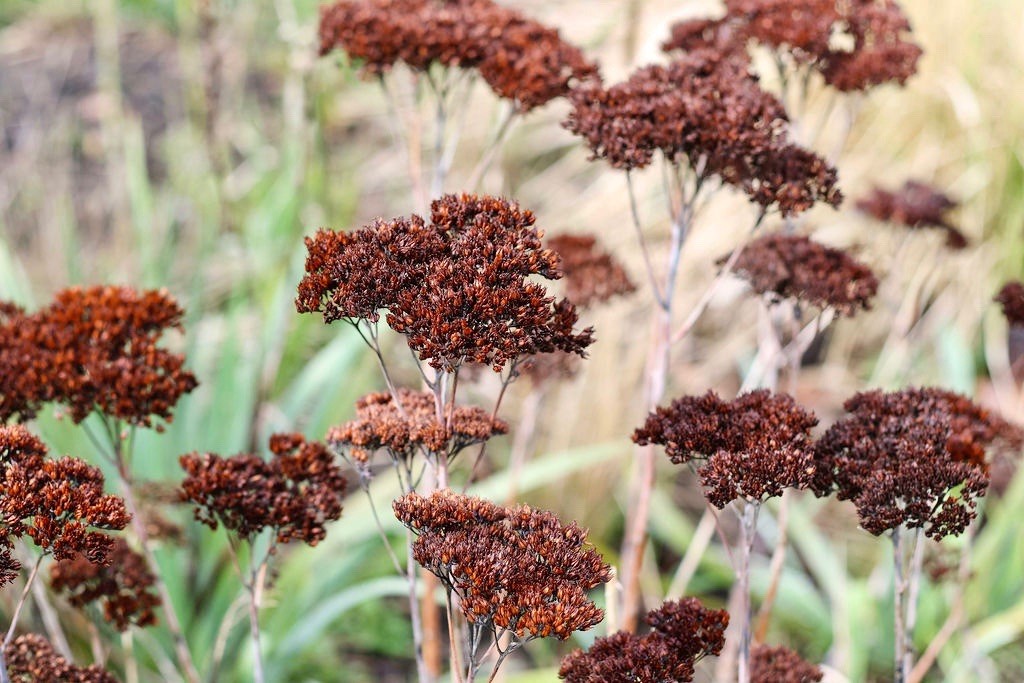
We also advise you not to cut back seed heads on plants such as Sedum or Verbena, unless they are collapsing. These are useful for invertebrates who shelter in their hollow stems, as well as adding some interest to the winter garden while we wait for the bulbs to really get going. Anything collapsing can of course be removed for plant health. You should also leaving deciduous grasses standing until the start of March, as it is too early to cut them back at the moment – and besides that they still look great!
Pruning wisteria should be one of the first jobs you do this month, if you haven’t done it already. It’s important to prune wisteria twice a year – once in Winter (January or February) and once in Summer (July or August). This will maintain its shape and size as well as ensuring beautiful flowering.
If your wisteria has been pruned in the summer, the winter prune is relatively straight forward. You just need to prune the growths to 2-3 buds. Remove any dead, damaged or diseased wood too.
If your wisteria has not been maintained for some time, it will likely need a harder prune now. The same aim applies: you want to be left with growths 2/3 buds in length coming from the main framework of the plant. You may have to untangle excess growth to reach this stage, tracing back branches to their source and unwinding them as you go, or even cut back sections of the plant to the base. This needs to be done when the plant is overcrowded and too large. Aim to be left with a balanced framework of relatively evenly spaced branches. Severe pruning can sometimes result in delayed flowering, either later than usual that year, or not flowering that year. It will be worth it long term though.
Hellebores will be flowering now and they are a beautiful source of very early nectar. If you haven’t already done so, cut back the previous year’s leaves so they don’t cover the flowers, and to help reduce the chances of spreading hellebore leaf spot disease.
In the South, roses can be pruned in late January or February. Firstly, as with all pruning, make sure your loppers and secateurs are clean and sharp. This will allow for precise, clean cuts to be made and not introduce any diseases to the plant. It’s essential to prune roses to ensure they flower well. Without pruning, they can become leggy, woody looking shrubs or gangly climbers with scare flowers. The only exception to this rule is rambling roses which only need pruning if you want to reduce their size.
If a rose is in its first year, only a light prune is needed. Cut back stems by 3-5 inches, and any disproportionally long stems back to match the rest of the plant. Cut at an angle and above a node on the outside of the stem.
If the rose is in its second year, cut it back by around a third, again bringing any disproportionately long stems back in line with the rest of the plant. From the third year onwards, cut the rose back by a half if you want to reduce its size, by a third to maintain its size and by less than that if you want it to grow larger.
Always remove any weak stems as they won’t be strong enough to hold flowers. With older roses, you will also want to remove any crossing stems that will look congested when in leaf and flower. Look at the plant and make a judgement on which stem will provide the best overall shape and appearance, and remove the other one.
The key to a really successful climbing rose is to have a secure frame work for it to be tied in to. This can be a decorative framework such as an obelisk, archway or pergola, or a structural one such as a fence or wall. Wires need to be attached securely to the structure for the rose to be tied to, if it can’t be tied to the structure itself. We space wires on walls at 2ft intervals horizontally. While pruning your climbers, check their supports are sturdy.
If your rose is in its first year, a light prune will suffice. Remove dead, damaged or diseased stems as well as any that can’t be tied in. Evenly fan out the remaining stems as best you can, trying to get them to at least 45 degrees and tie them in to their supports with garden twine. Having the stems like this encourages shoots to grow along the stem which will result in a fuller looking rose with more flowers.
If your climber is two years old or more, repeat the exact same process as above but also cut back flowering stems to around 6 inches from the main stem. Any weak stems should be cut back to the base of the plant too, as they won’t be strong enough to support the flowers later in the season.
With all roses, remove any remaining leaves so as to reduce the chance of passing on disease spores to new growth. All fallen leaves should be cleared away and removed from your garden. Don’t add them to compost heaps as they may carry disease spores. Check your roses are secure in the ground and not rocking around in the earth. If they are, add some more soil or compost to steady them and tread the ground in around them. This should prevent any further rocking (known as wind rock) which can really damage growth.
Fig trees need pruning when the tree is dormant at the end of winter. For us here in the South, that’s now – a long, hard frost is unlikely and the days are starting to warm up. The aim for a fig tree is to create an open, goblet shaped head. You want to remove any dead, damaged and diseased stems, and any that are crossing or rubbing on other stems. Use a pruning saw to cut them back to as near the base of the plant as you can. If your tree is older and hasn’t been managed for a while, you can also remove the oldest one or two stems at the base to help open up the shape and to promote new fruiting growth for the following year. If you want to reduce its size, in addition to the above, you should prune all branches back by about a third. This will result in no or few fruits this year but be worth it in the long run.
It’s important to know what group your clematis is in. If you know what you have, check its group. If you don’t know, a rough rule of thumb is clematis that flowers with quite large flowers in May/June is group 2, and those that flower after mid-June and later are group 3.
Group 2 clematis should be pruned now. Find the end of each stem and cut it back to the first pair of healthy buds. You are leaving the old growth as it is because the flowering stems grow from it. The exception to this if it is a newly planted, young plant. If it doesn’t have three or four healthy stems growing from the base then it should be pruned to about 30cm from the ground, just above a pair of healthy leaf buds. This will encourage more stems to grow giving you a fuller, bigger plant.
Group 3 clematis should be pruned back to about 30cm from the ground however old the plant is. you need to leave at least two pairs of healthy buds and cut above these. This type of clematis will grow back quickly and flower on the new Spring growth.
Now is a great time to mulch. It will help inhibit the growth of both perennial and annual weeds as well as help retain moisture in the soil and condition it. Homemade compost is a great option to use but it can be hard to make enough in suburban gardens to cover the whole garden so we use fine composted bark. Weed the ground before spreading a good 2 inches across the soil. For the mulch to be effective it needs to be this deep so if you only have enough for a smaller section of garden, do that bit properly rather than spreading it thinly.
Bulbs such as snowdrops and native bluebells are best planted “in the green” (meaning when they have grown, rather than the bulb on its own). Order yours now so that you can enjoy them next year.
If you have any shrubs you would like to move, now is a good time to do so (unless they are currently in flower). Bet sure to dig out as many of the roots as possible. Water the plant in well once it is in its new position, even if it rains. It will need to be watered regularly until it establishes in its new site.


Gardens by Anna Butterfield offer professional garden and planting design across London and the South East.
Our expert, organic garden care service is available across South East London as well as parts of Kent and Surrey.